How to Become a Lighting Technician in India: Start With Live Events
A practical guide for aspiring lighting technicians in India: learn the crew workflow, get supervised event experience, document real responsibilities and build a credible technical portfolio.
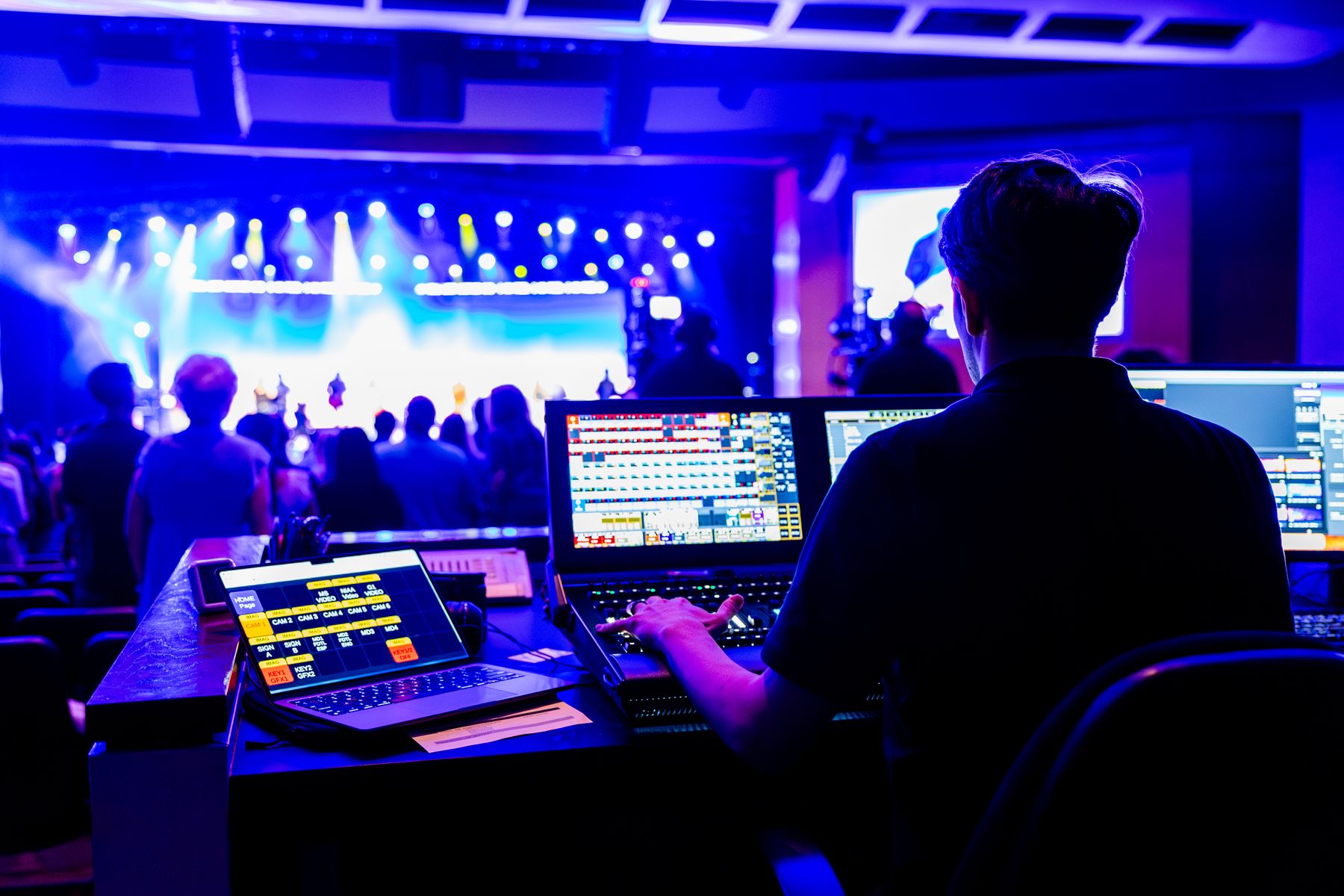
Cover photo: Caleb Oquendo via Pexels, used under the Pexels License.
The reliable route into live-event lighting in India is to become useful on a supervised crew before you try to program or operate a major show alone. Learn how a rig, fixtures, power, control and cueing process fit together; take bounded responsibilities seriously; and document the events where a lead trusted you with real work. A lighting technician is hired for calm preparation and safe handovers as much as for a dramatic look.
This guide is for aspiring lighting technicians, electricians moving into events, stage crew, visual artists and production assistants. It does not promise that a console tutorial or a lighting course makes someone ready to operate a concert without a competent lead.
Key takeaways
- Start with supervised, reversible work: prep, labelling, cable discipline, fixture checks and show notes.
- Learn the crew workflow before touching an unfamiliar lighting desk during a live show.
- Ask for a clear role, safety briefing and escalation path on every event.
- Build a portfolio around accurate technical credits, not photographs beside a console.
How a live sound engineer starts building useful room experience
What does a lighting technician do at a live event?
A lighting technician helps turn a show plan into a working, safe and repeatable system. Depending on the role, that can mean preparing fixtures, checking addresses, running cable, supporting a console operator, following cues, assisting a load-in or striking equipment after the audience leaves. The lead designer, lighting director, operator and technician can have very different responsibilities, even on the same stage.
India’s National Qualification Register lists a 2025 Assistant Technician of Creative & Dynamic Lighting System qualification for entry-level roles supporting lighting assistants and production teams in events, entertainment, architectural installations and theatre. Its outline covers setup, programming and maintenance of lighting systems, plus lighting-control software, hardware, DMX and networked protocols. Use it as a current map of the work—not as permission to take on an unsupervised show. National Qualification Register
| Role on a call | A useful responsibility | What not to claim |
|---|---|---|
| Production assistant | Keep the crew’s checklist, labels and timing organised | That you designed or operated the lighting |
| Lighting trainee | Observe the patch and take an assigned prep task | That you programmed the show from scratch |
| Lighting technician | Prepare and check clearly assigned equipment under the lead’s process | Authority to change power, rigging or cues alone |
| Console operator | Run agreed cues and respond within the production plan | Credit for the entire design if someone else created it |
The fixture is not the whole system
Lighting work touches other people’s responsibilities: stage management, rigging, power, video, sound, artists and venue operations. The job is therefore communication-heavy. A well-labelled cable path, a concise problem report and a clear handover can be more useful than adding another visual idea five minutes before doors open.
New technicians often chase the desk because it looks like the important job. Crews remember something quieter: who kept the work area safe, who followed the patch correctly, who asked before changing a setting, and who made the next person’s job easier. That is how you earn the next responsibility.
Which skills should you learn before asking for a lighting shift?
Learn the language of the system well enough to understand instructions: fixture, truss, patch, address, universe, cue, blackout, focus, gobo, wash, spot, power distribution and control. You do not need to memorise every manufacturer’s menu before your first event. You do need to know when to stop and ask the lead.
The NQR qualification describes an entry-level pathway with practical exposure to lighting setup, programming, maintenance and DMX or networked protocols. That makes a sensible learning sequence: understand the physical system, learn how the control information travels, then practise cueing and troubleshooting under supervision. National Qualification Register
Start with tasks that do not create a new hazard when you make a mistake:
- Read a fixture list or plot with the lead and ask what every label means.
- Prepare approved cables, clamps, safety equipment and labels according to the crew’s process.
- Watch the line check and note how the operator confirms each fixture.
- Learn the show’s cue language and who calls a hold, a change or a blackout.
- Keep a short private log of your actual role, equipment and lessons after the event.
Do not independently rig fixtures, work on live electrical systems, climb, alter load-bearing equipment or rewrite a running show file because a tutorial made the controls feel familiar. Venue rules, equipment, power arrangements and crew procedures differ. Follow the qualified lead and the event’s own safety process.
How can you get supervised experience in India?
Look for teams that deliver events repeatedly: local venues, theatre groups, college cultural teams, event-production suppliers, rehearsal spaces, houses of worship and community festivals. Ask for a bounded role at load-in, a fixture-prep call, a soundcheck observation or a strike shift. A smaller call with an experienced lead is more valuable than being left alone with expensive equipment.
College festivals can be useful places to learn the shared vocabulary of artists, technical crews and show schedules. Read our college-festival guide from the performer’s side, then ask the production lead how artists’ technical requirements are passed to lighting, sound, stage management and backline.
Independent festivals add more moving parts: several stages, visiting artists, compressed changeovers and shared systems. Our independent-festival guide explains what performers need to prepare. Lighting teams need the same precision about schedules, responsibility and communication.
Ask for a task, not an empty title
Send a short note to a venue technical manager or production company. State your city, availability, relevant training or experience, and one or two tasks you can assist with. Ask who leads lighting and what would make you useful on the next call. Do not say that you can “run lights” if you have only watched a show.
Good first questions are practical: “What should I bring?”, “Which parts of load-in need help?”, “Who approves fixture placement?”, “Where should I store my bag?”, and “May I observe the cue workflow after the stage is ready?” Those questions respect the fact that the show, not your lesson, is the crew’s priority.
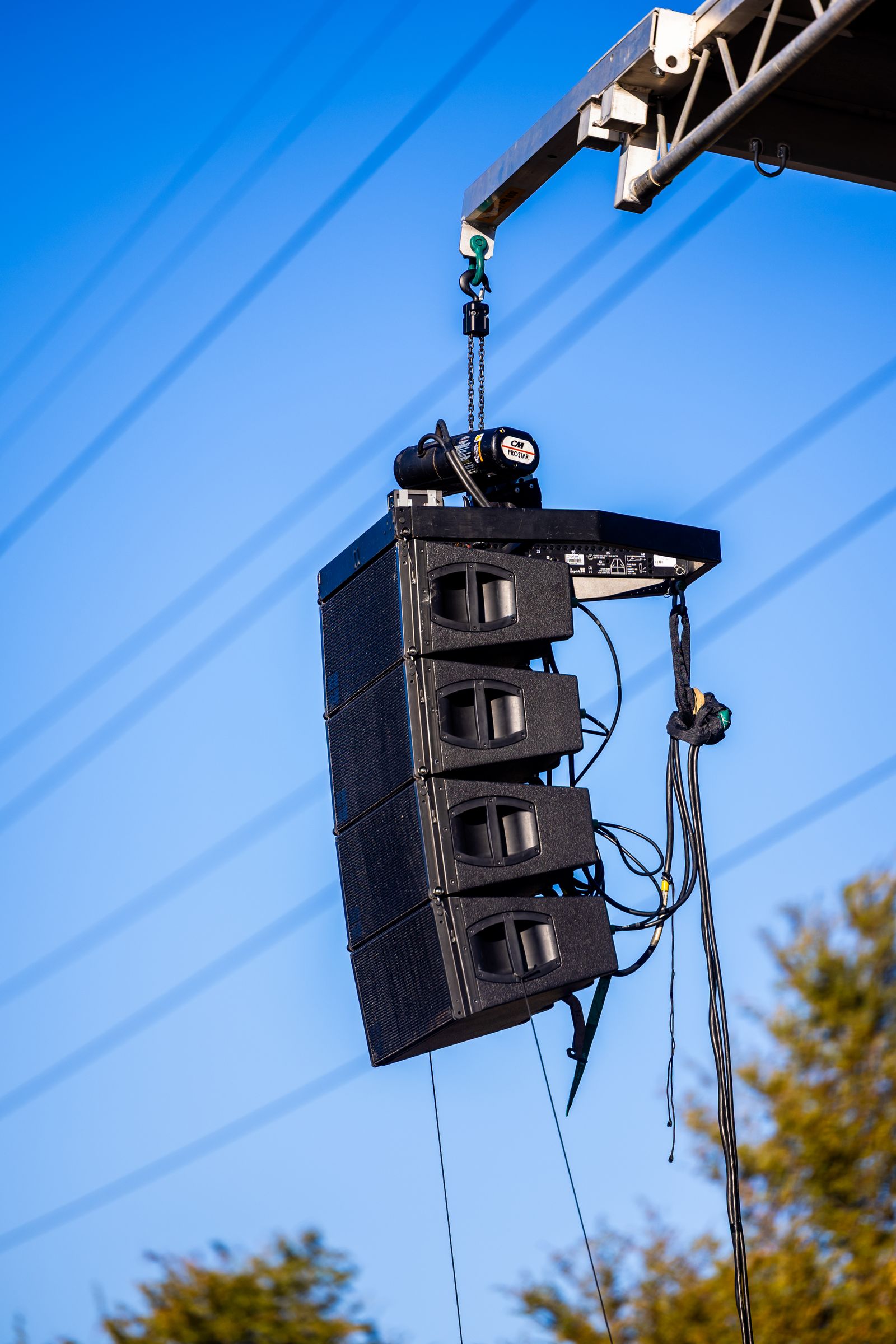
Photo: Caleb Oquendo via Pexels, used under the Pexels License.
Build a portfolio production teams can use
A lighting portfolio should show trustworthy work, not just colourful stage photographs. Keep a private log for every permitted event and turn only approved entries into public proof. Record the date, city, venue or event type, your exact role, the lead or production company, equipment categories, and one useful lesson. Never share production files, venue documents or backstage images without permission.
| Portfolio field | Why it helps |
|---|---|
| Exact role | Distinguishes a prep call from a console-operator credit |
| Event context | Helps a future lead understand the size and type of room you have worked in |
| Lead and crew credit | Keeps the collaboration record accurate |
| Permission status | Stops confidential material becoming public portfolio content |
| Reflection | Captures the lesson while it is still useful on the next call |
Our creative portfolio guide for freelancers in India explains how to turn a contribution into a clear case study. Use the same principle here: “Assisted with fixture prep and post-show strike” is more helpful than a vague “lighting professional” headline if it tells the next lead what they can safely ask of you.
Technical credits become more valuable when they are precise. An honest assistant credit gives a production manager useful information. An inflated lighting-designer credit creates risk for an artist and for the next crew that believes it.
How should you work with artists and the wider production team?
Before an artist arrives, understand the run-of-show, the person calling cues, stage access rules, special visual needs, guest performers and what changes need approval. Do not discuss sensitive production decisions casually with artists or audience members; route questions to the lead who owns that decision.
During a show, speak in short, observable reports. Identify the fixture or area, what you saw, what you checked and whether the lead needs to decide. Avoid announcing theories across the room. If you do not know, say so early and bring the right person in.
For a freelance call, clarify role, hours, equipment responsibility, travel, payment route and schedule-change expectations before the event. The creative freelance contract checklist provides a useful scope conversation. Before you quote for an independent project, use our creative pricing guide for India to define the work rather than guessing from a poster’s size.
Make the work behind the show easier to recognise. Build a Kredl profile around the projects, crew roles and collaborators that reflect your actual responsibilities: kredl →
Frequently Asked Questions
Do I need to be a lighting designer before I can work on an event crew?
No. The National Qualification Register’s 2025 assistant-technician pathway is designed for entry-level support roles in lighting-system setup, programming and maintenance. Start by learning under an experienced lead, taking defined technical responsibilities and documenting your real contribution. NQR
Can I operate lighting at a concert after learning a console online?
Online learning can help you understand controls, but it does not replace a venue briefing, an equipment-specific check or a competent lead. Live systems involve power, rigging, control networks, schedules and people. Practise under supervision and do not take responsibility that the crew has not assigned to you.
What should I include in a lighting technician portfolio?
Include permission-cleared work with the event context, your exact role, approved crew credits and a short note on what you handled. Do not post show files, venue plans, confidential rider material or backstage content without consent. Accurate scope makes a technical credit useful.
How can I find lighting-crew opportunities in India?
Contact local venue technical teams, production companies, theatres, college-event organisers and rehearsal spaces with a concise note about a bounded task you can assist with. Ask who leads lighting and when a supervised load-in, prep or strike shift could use support. Build repeat trust rather than pursuing unauthorised console access.
Be useful before you are visible
Lighting is part of what makes a performance feel intentional, but the people doing it are often invisible when the show goes well. Your early advantage is reliability: arrive prepared, follow the crew’s process, protect the work area, communicate cleanly and make the handover easier.
Build one truthful credit at a time. That gives you better learning, a safer portfolio and a stronger chance of being called back when the next show needs help.
Sources, methodology and image credits
- National Qualification Register, “Assistant Technician of Creative & Dynamic Lighting System,” 2025, retrieved 2026-10-16. Used as an entry-level competency reference; it does not replace an event’s safety procedures or lead technician.
- National Qualification Register, “Lighting artist,” 2022/ME/MESC/05205 V3.0, retrieved 2026-10-16. Used for additional role context around lighting as an established creative style.
- Cover photo by Caleb Oquendo on Pexels, retrieved 2026-10-16, stored locally and used under the Pexels License.
- Inline event-system photo by Caleb Oquendo on Pexels, retrieved 2026-10-16, stored locally and used under the Pexels License.