How Raghu Dixit Built a Kannada Folk-Rock Career Without Hiding His Roots
Raghu Dixit's career offers Indian musicians a useful model: build a recognisable live identity, make regional language a strength and keep a band at the centre of the work.
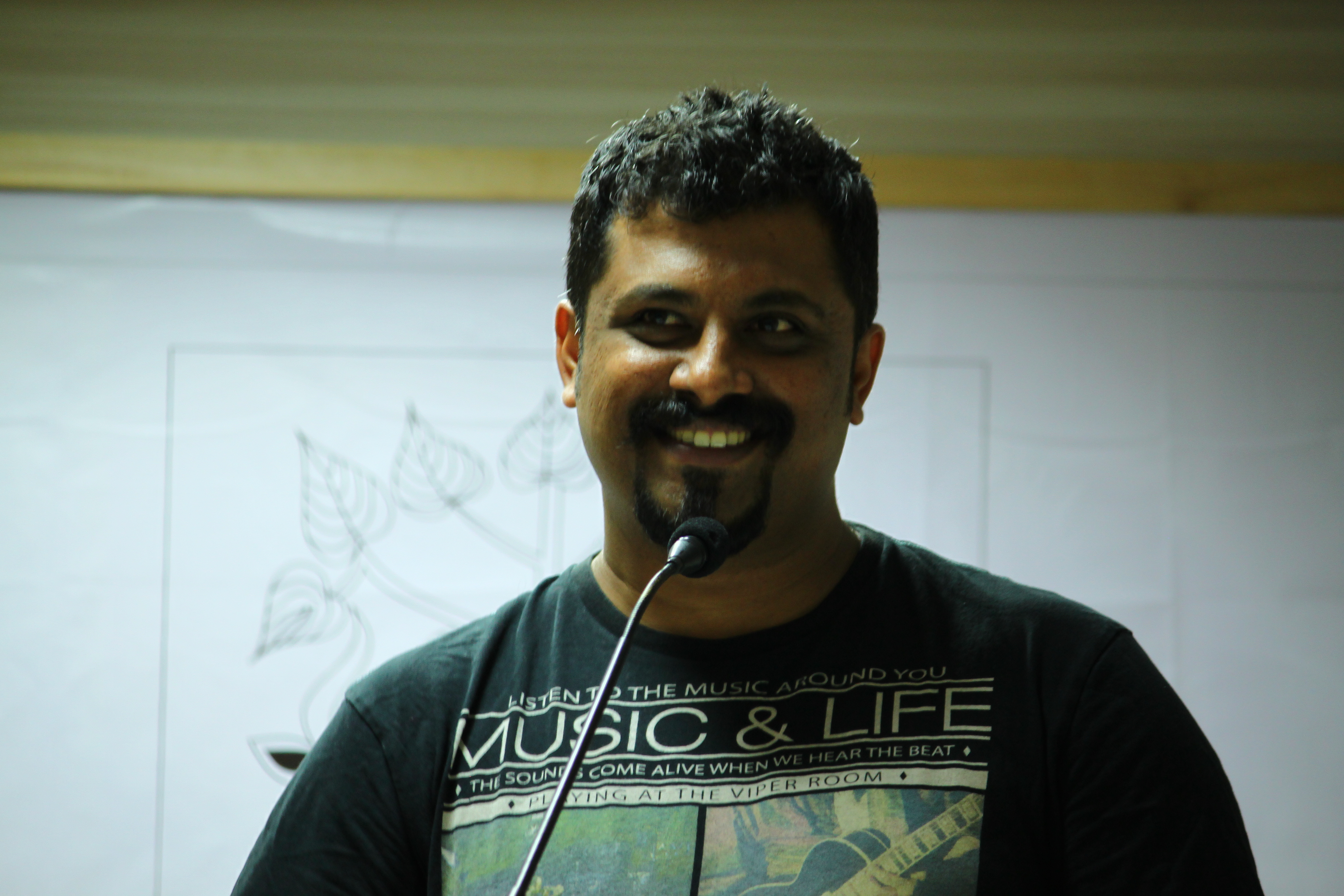
Cover photo: Raghu Dixit, by Omshivaprakash H L, via Wikimedia Commons, used under CC BY-SA 2.0.
Raghu Dixit built an independent music career by making his Kannada language, folk references and unusually physical live presence more visible, not less. The lesson for an Indian artist is not to copy his sound or stage clothes. It is to make the details that are genuinely yours easy for listeners, collaborators and bookers to recognise.
Dixit’s official site says The Raghu Dixit Project has played more than 2,000 concerts across five continents. Its account of the band is unusually clear about the artistic choice behind that reach: Kannada songs, mystic-poet writing, a lungi and ghunghroo on stage, Carnatic violin and electric guitar in the same frame. The Raghu Dixit Project, “About”
Key takeaways
- Dixit turned a regional-language and folk-rooted identity into the centre of an independent live act, rather than treating it as a limitation.
- His early Bharatanatyam training, then guitar and singing, shows how an artist’s first discipline can inform a later musical identity.
- The Raghu Dixit Project’s band-led approach offers a practical reminder: a durable live career depends on relationships, repertoire and a repeatable show.
How Nucleya built an independent music career in India
Where did Raghu Dixit’s music career begin?
Raghu Dixit’s route into music did not begin at a recording studio. In a 2024 interview with The Indian Express, he said he trained in Bharatanatyam from age seven into his early twenties while pursuing a master’s degree in microbiology. During university, a challenge from a guitarist friend pushed him to learn guitar and sing an English rock song; the experience became a lasting attachment to making music. The Indian Express, “Raghu Dixit on how being ‘mocked as effeminate’ pushed him to learn guitar”
That beginning is useful because it rejects the tidy idea that an artist must have one obvious origin story. Dance gave Dixit an understanding of movement and performance. Academic work trained another kind of discipline. Guitar and song gave him a new medium. A career can be coherent even when the skills arrive from different rooms.
For a musician, the practical question is: what are you already practising that could deepen a live identity? It might be dance, theatre, poetry, a regional instrument, DJ technique or a visual practice. Those are not decorative add-ons if they change how you write, rehearse or hold a room.
The mistake is trying to invent “authenticity” for a campaign. A stronger move is to notice the habits already present in your work, then make them dependable enough for an audience to encounter again at the next show.
Why did Kannada and folk references become a strength?
The Raghu Dixit Project’s own description makes the strategy plain: it foregrounds Kannada songs, poetry from his home region, folk-rooted presentation and a mixed instrumental palette. Its official site says the band has travelled from college festivals in India to Glastonbury, while retaining those signals instead of sanding them down for an imagined international listener. The Raghu Dixit Project, “About”
That is a more practical model than the vague advice to “go global.” Global audiences do not require an artist to sound generic. They need an entry point: a compelling song, a clear performance and enough context to understand what they are hearing. Language can carry that context when the artist treats it as a creative resource.
In a 2026 interview with The New Indian Express, Dixit described singing in Kannada, Tamil, Telugu, Hindi and other languages, and said that using a few local words can help an audience connect. His point was not that every release needs several versions. It was that language can reduce distance when it is used with care. The New Indian Express, “Raghu Dixit on ‘Amma’, Indian folk music, and finding purpose after decades on stage”
For an emerging act, try documenting three things in a one-page artist note: the languages you work in, the musical references that actually shape the songs, and the kind of room you want to create live. It gives a promoter, journalist or new collaborator something specific to work with.
If you are planning a release with writers, producers or musicians from different scenes, make the creative specificity visible in the paperwork too. Our song split-sheet guide for India explains how to record contributions and ownership before distribution begins.
How did a band become part of the career, not just the backing?
The Raghu Dixit Project formed in 2006 after Dixit’s earlier band Antargni disbanded, according to The New Indian Express. In the same 2026 interview, Dixit said the current lineup had been together for almost a decade and described the group as equal participants rather than a vehicle for one name. The New Indian Express
That decision changes the work. A band with a shared musical language can develop arrangements, recover from on-stage surprises and build a show that is more than a solo artist playing over stems. It also asks for professional habits: rehearsals, communication, clear compensation, credits and a realistic advance for every date.
For independent artists, “build a team” is often too broad to be useful. Start with the people who make the show repeatable: the musical director or bandmates, a sound person who knows the set, and one person who can keep dates, files and communication from disappearing into DMs.
Before sending a band to a venue, put the actual show on paper. Our technical rider and stage-plot guide covers the information that helps a venue crew set up a smooth changeover and soundcheck.
What did his live work teach about growth?
The Raghu Dixit Project’s official site counts more than 2,000 concerts across five continents, but that total is the outcome of a long live practice, not a shortcut. Dixit’s 2026 interview recalls early Delhi appearances at India Habitat Centre and college festivals, and the band’s 2011 UK tour included Glastonbury, Later... with Jools Holland and a performance for Queen Elizabeth II. The Raghu Dixit Project The New Indian Express
The useful pattern is accumulation. College festivals, cultural spaces and small venues can be places to refine a set, make working relationships and learn what an audience remembers. An artist who only thinks about the biggest date can miss the work that makes that date possible.
Treat every early show as a small professional system:
- Confirm the fee, payment timing, set length, soundcheck and cancellation terms in writing.
- Send an accurate stage plot, input list and contact number once the date is confirmed.
- Keep a setlist version, notes from the soundcheck and a record of who played which role.
- Ask for usable live photos or footage only after the performance and credit the people who made it.
The final point matters. A performance archive is not vanity; it becomes evidence for the next booker. For a careful way to turn a show into a coherent performance, see our guide to building a live setlist for gigs in India.
What did Shakkar show about returning to independent work?
Dixit’s 2024 album Shakkar came after a ten-year gap from his prior independent album, a gap he linked in The Indian Express to time spent on film work. He told the paper that jams with Kolkata musician John Paul produced 45 tunes, eight of which became the album; the process took four years and involved other collaborators, including Béla Fleck. The Indian Express
There is no need to turn a difficult period into a branding lesson. The more useful takeaway is narrower: a comeback can begin with a working relationship and repeated sessions, not an announcement. When an artist’s energy is low, a collaborator who can set a date, show up and make something small may be more valuable than a grand reinvention plan.
In the same interview, Dixit said each Shakkar song existed in Hindi, Kannada, Tamil and Telugu. That is a substantial production decision, not a social-media trick. If you take a similar multilingual route, plan translation, pronunciation, credits, masters, metadata and release timing early. Otherwise, use one version well instead of spreading a fragile release across several.
A distinct identity needs practical care
Raghu Dixit’s career is a reminder that an independent musician can make local language, folk memory and a collective live show part of the offer. The choices worked because they were sustained through performances, collaborators and songs, not because they were packaged as novelty.
For artists building now, begin with the details you can keep doing: a body of songs, a live set, a circle of reliable people and clear credits. Kredl can help you present the real work, collaborators and confirmed credits behind a project to people who may need to understand it quickly. It cannot replace rehearsal, relationships or good songs; it can make that work easier to find.
Frequently Asked Questions
What is Raghu Dixit known for?
Raghu Dixit is a Bengaluru-based singer-songwriter and the frontman of The Raghu Dixit Project. The band’s official account describes Kannada songs, folk-rooted presentation and a mix of Carnatic violin and electric guitar; it also says the project has played more than 2,000 concerts across five continents. The Raghu Dixit Project
Did Raghu Dixit study music formally?
In a 2024 interview, Dixit said he was a trained Bharatanatyam dancer but had not formally studied music. He learned guitar and singing after a university challenge, then developed compositions with his musicians. That path shows that disciplined performance training can inform a music career without being a conventional music-school route. The Indian Express
When did The Raghu Dixit Project begin?
The New Indian Express reported in 2026 that The Raghu Dixit Project formed in 2006 after Dixit’s earlier band Antargni disbanded. The same report says the then-current lineup had been together for almost ten years, showing why lasting ensemble relationships can matter as much as an artist’s individual profile. The New Indian Express
What can new Indian musicians learn from Raghu Dixit’s career?
Make the parts of your practice that are genuinely yours easier to recognise, then support them with reliable professional habits. Dixit’s public story connects regional language, a folk-rooted aesthetic, a band and repeat live work. For a newer act, that means clear repertoire, credited collaborators and a show people can book with confidence.
Sources, methodology and image credits
This editorial profile is based on first-party band material and established Indian cultural journalism. It does not claim to be an authorised biography.
- The Raghu Dixit Project, “About”, official band biography and live-performance claim, retrieved 2026-10-25.
- The Indian Express, “Raghu Dixit on how being ‘mocked as effeminate’ pushed him to learn guitar, sing English rock song”, published 2024, retrieved 2026-10-25.
- The New Indian Express, “Raghu Dixit on ‘Amma’, Indian folk music, and finding purpose after decades on stage”, published 2026, retrieved 2026-10-25.
- Cover image: “Raghu Dixit (15359662925)”, by Omshivaprakash H L, CC BY-SA 2.0, retrieved 2026-10-25.