
How to Build a Setlist for Live Gigs in India
A practical way for Indian musicians, bands and DJs to build a live setlist that fits the room, protects the performance and gives the audience a reason to stay.
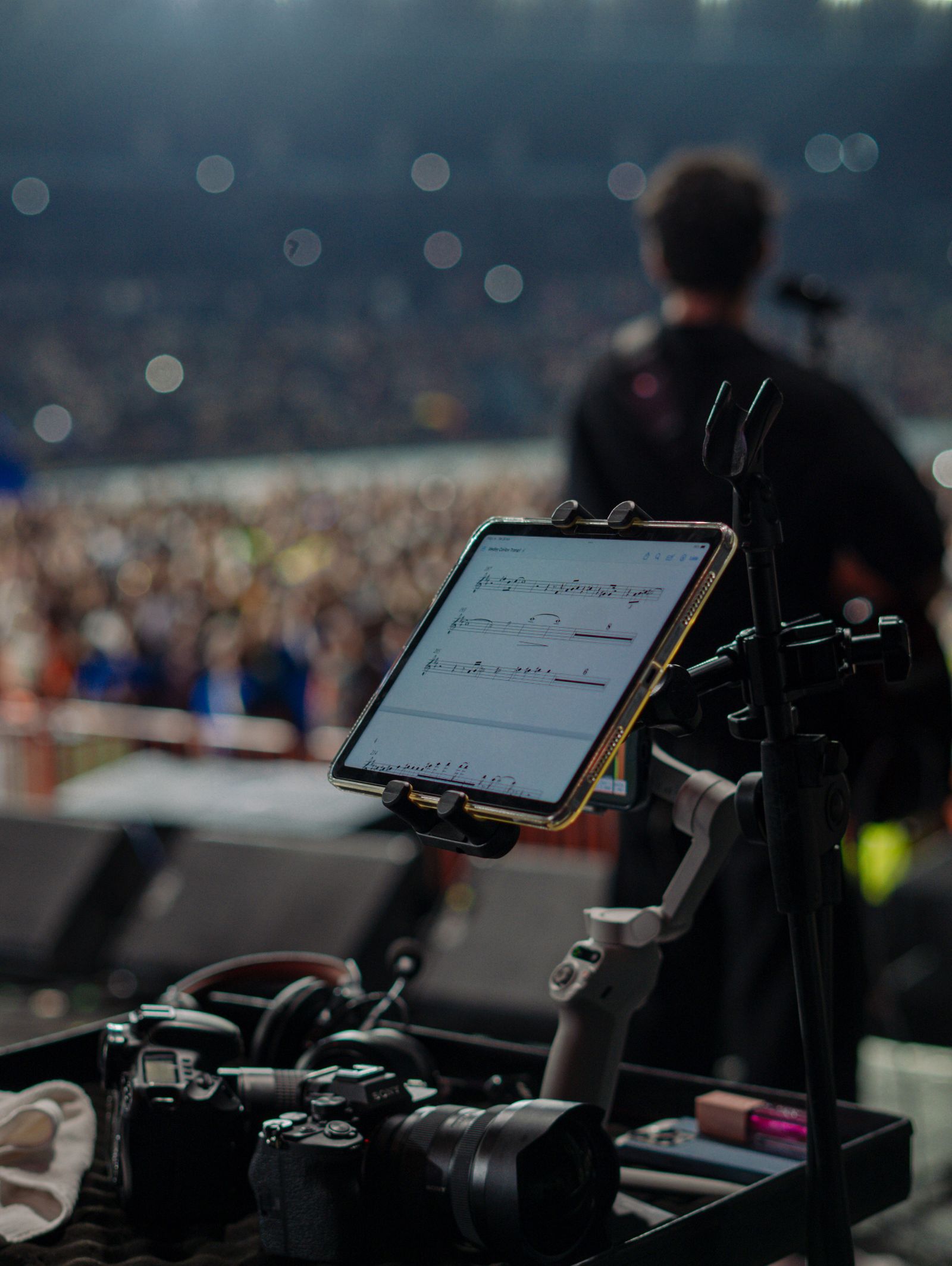
Cover photo: Arti.tic via Pexels, used under the Pexels License.
A setlist for a live gig is not a list of your best songs in release order. It is a working plan for the room: the first minute that earns attention, the transitions that keep momentum, the songs that give the audience a way in, and the final moment they remember. For an Indian musician, band or DJ, build one around the actual brief, then keep enough flexibility to respond to the room.
India's organised live-events segment grew 15% in 2024, according to the Ministry of Information and Broadcasting's India's Live Events Economy whitepaper. That growth puts more artists in more kinds of rooms—from cafés and college festivals to ticketed clubs and brand stages—and each room asks a different question of a set. Ministry of Information and Broadcasting
Key takeaways
- Build the show around the venue, audience and slot, not just the songs you want to play.
- Open with a clear statement of your sound; do not make a cold room wait for the point.
- Plan transitions, tuning, backing-track cues and spoken moments as part of the setlist.
- Keep a primary route and a few safe swaps so you can react without improvising the whole show.
How to perform at college festivals in India
Start with the brief, not the tracklist
Before sequencing songs, write down what this specific show is. A ninety-minute club headline, an afternoon college-fest slot, an opening set before a larger act and a wedding or corporate performance have different attention levels, audience expectations and production limits. The Ministry's live-events whitepaper notes that event participation is expanding beyond the largest metros, which is another reason not to assume every audience has discovered your catalogue in the same way. Ministry of Information and Broadcasting
Ask the organiser for the set duration, stage time, changeover plan, soundcheck access, audience profile, language preferences and any programming restrictions. Then make a working list of songs or segments you can genuinely deliver with that setup. For a DJ, that might mean BPM ranges, crates and key transitions; for a band, it may mean tunings, instruments, playback and guest appearances.
The goal is not to predict every reaction. It is to remove surprises you can control before you reach the stage.
A useful setlist is a contract with your future self under pressure. If it says when to tune, who speaks, which guitar comes next and how the ending lands, it leaves more attention for the audience.
How should the first few songs work?
The opening should answer one simple question quickly: why should this room keep watching? Choose a song that represents your sound and that your current line-up can start confidently. It does not need to be your biggest streaming track. It needs to be reliable when the monitors are unfamiliar, the crowd is still arriving and the band is settling into the stage.
Put low-risk setup work before the show whenever possible. A long explanation, an onstage search for a capo or a silent key change can drain the opening even if the song is excellent. If you need to introduce yourself, make it short and place it after the room has heard something memorable.
For an original artist, one early song with an easy chorus, a clear rhythmic hook or an obvious call-and-response can do more than a speech about the project. For a cover or function act, begin with a recognisable mood rather than treating the first number like a warm-up. For a DJ, establish the first tempo and texture deliberately instead of jumping between unrelated ideas.
Build energy in chapters, not a straight line
A good live show does not have to get louder at every song. It needs contrast. Think of the set as a few chapters: arrival, connection, release, a change of texture, then a finish. In each chapter, decide what the audience should feel and what the performers need technically.
One practical method is to mark every song with four notes: energy, tempo or pulse, tuning or setup, and audience role. An acoustic song can be high-energy if the audience is singing; a fast song can lose a room if it follows another song with the same feel and no transition. The labels help you spot accidental repetition before rehearsal.
Place demanding songs where the vocalist, drummer and players can deliver them well. Avoid treating the setlist as a test of endurance. If a slower song creates a valuable breath before your strongest ending, it belongs there. If it stalls a short showcase set, save it for a different room.
Make your technical rider and stage plot for music gigs
Treat transitions as songs between the songs
Most awkward moments in a live set happen between tracks, not inside them. Write the transition beside each title: count-in, loop, pad, guitarist swap, tuning, spoken line, lighting cue, playback cue or no gap. Then rehearse those moments at performance speed.
This is where a setlist becomes connected to the production plan. Your technical rider and stage plot should make the show buildable; your setlist should make it playable. A playback-dependent act needs a clear person responsible for starting and stopping cues. A band using multiple instruments should know where an extra minute is safe and where it is not.
Do not fill every gap with talk. A short, specific remark can make a show feel human: thank the host, name a collaborator, invite a chorus or tell the audience what is coming. But when a transition has no purpose, a clean count-in is usually stronger.
The best place to test a new song is not automatically the middle of the set. Put it where its failure mode is manageable: after a dependable transition, before a known recovery song, and never at a moment that requires flawless technical changeover.
Where should the familiar songs go?
For an original act, familiar does not only mean a hit. It can be the track people request, the one that has worked at open mics, or the chorus your existing listeners know from short-form clips. Use that recognition with intention. An early familiar moment can win permission to play deeper material; a late one can give the ending weight.
For a DJ or cover act, do not rely on a fixed list of obvious songs. Read the room: age mix, language, genre tolerance, whether people are watching or dancing, and whether the organiser needs a particular atmosphere. Keep alternatives ready rather than forcing a planned sequence after it stops working.
That flexibility must be rehearsed. Create a short “if the room is quiet” path and a “if the room is with us” path. The band should know the cue for each route. A DJ should know the next compatible transition. The singer should know whether a spoken section can be shortened. Flexibility works when it is prepared, not when it is panic.
Make one versioned show file
Keep the latest setlist in a form every performer can open before the gig. A shared PDF, notes document or setlist app can work; the format matters less than the version control. Include the show date, venue, total target time, contact, song order, keys or tunings, transition notes, cue owner and backup options.
Send it to the musicians and production contact before the show, then print or download an offline copy for stage. Do not rely on a group chat from three weeks ago being the source of truth. If the show changes, change the document and say what changed.
For a newer act, this discipline also makes rehearsals more useful. You are not merely practising individual songs; you are rehearsing the experience a promoter, audience and crew will receive. Pair it with the advice in our live-sound engineer guide so the performance and the people mixing it have the same map.
A simple pre-show setlist check
Run this check before you lock the show:
- Does the opening state the act clearly within the first song?
- Does every transition have an owner and a cue?
- Are there any repeated tempos, keys or moods that will feel accidental?
- Is the most technically difficult changeover placed somewhere safe?
- Do you have a shorter and longer path if the schedule shifts?
- Does the printed or offline version match the one the band rehearsed?
Your setlist will keep changing as your material and audience grow. That is a strength. Record what worked after each performance—the opening, the point where energy dipped, the line that got a response, the transition that went wrong—and revise the next show from evidence, not memory alone.
Frequently Asked Questions
How many songs should be in a live set?
There is no universal number because song length, talk, transitions, tuning and encore expectations all change the total. Build from the confirmed stage time, then rehearse the full show with transitions. Keep one or two prepared swaps instead of assuming an exact song count will fit every room.
Should the biggest song open or close the set?
Either can work. Open with it when the act needs immediate recognition; close with it when the earlier songs have built enough anticipation. The deciding factor is whether the song gives the room a strong first impression or a memorable final one, not its streaming position.
Can a band change the setlist during the gig?
Yes, if the changes are prepared. Agree on visual or musical cues, safe replacement songs and who makes the final call. Avoid unplanned changes that create missing instruments, incompatible tunings or playback confusion.
What should a DJ include in a setlist?
Use a flexible performance map rather than a rigid list: opening mood, tempo ranges, transition options, key tracks, clean edits, cue points and alternate crates for different audience responses. The same principle applies: prepare routes that fit the brief and can change with the room.
Sources, methodology and image credits
This is practical performance guidance based on live-show planning. It does not replace the venue's safety requirements, contract terms, licensing obligations or the judgement of your production team.
- Ministry of Information and Broadcasting, “India's Live Events Economy: A Strategic Growth Imperative” (PDF), 2025, retrieved 2026-10-21. Used for the India live-events context and 2024 growth figure.
- Cover image: Arti.tic, “Live Concert Stage with Musician and Equipment”, Pexels License, retrieved 2026-10-21. The image shows a generic performer and an on-stage digital score/setlist; it does not depict or claim to depict a named artist.