Why Indian Concerts Are Becoming Experiences, Not Just Performances
Indian concerts now compete through community, stage design, merchandise and fan participation. Here is what that shift means for artists and creative teams.
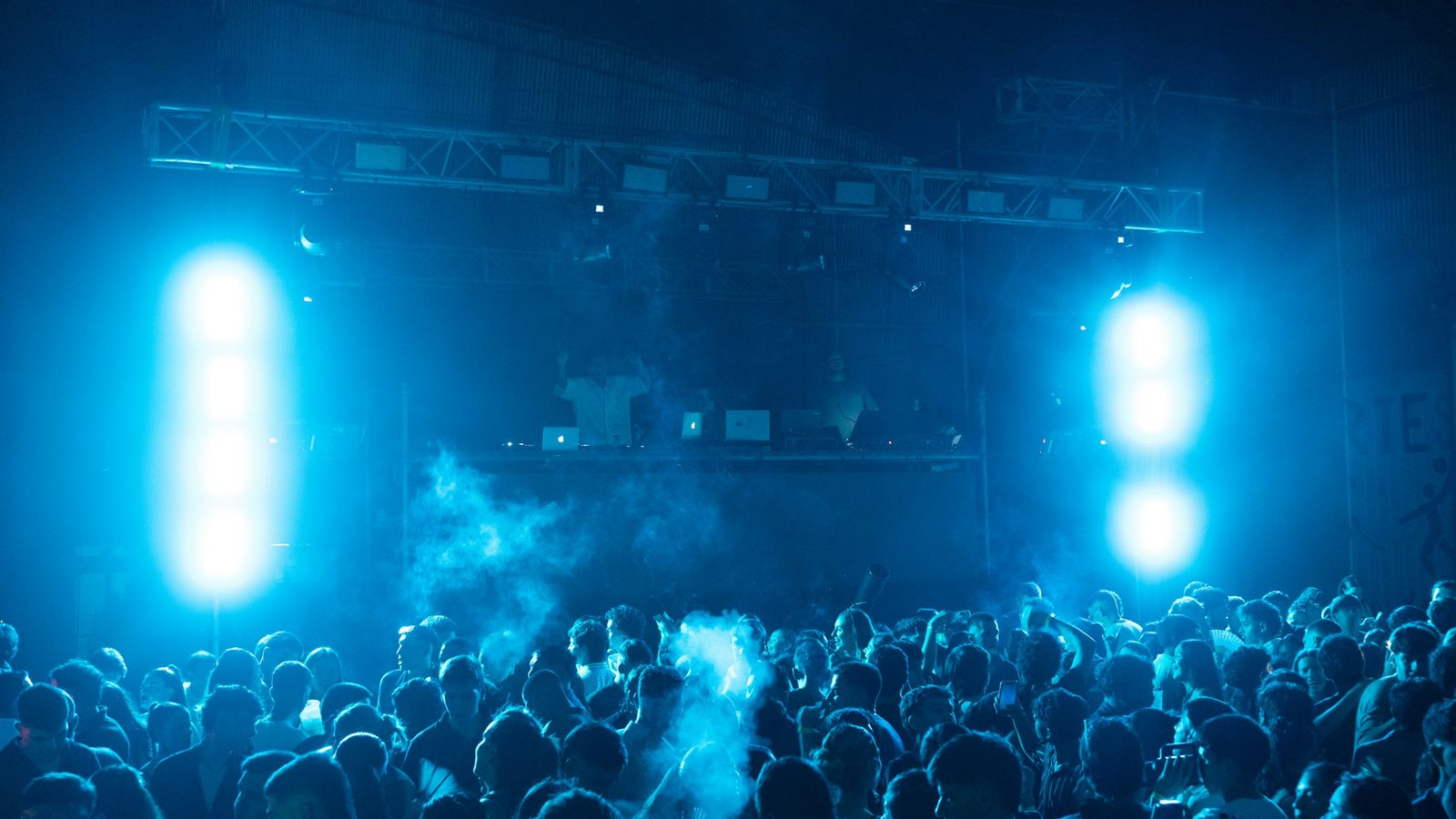
The Indian concert begins before the first note: in the ticket queue, group chat, journey and first glimpse of the stage. It continues through fan zones, merchandise and videos posted afterwards. The performance matters most, but its surrounding world determines how memorable it feels.
That change sits inside a much larger boom. In 2025, India's broader organised live-events segment grew 44%, according to the FICCI-EY report Stories, Scale and Impact. That category includes ticketed shows as well as weddings, government events and religious gatherings, so it is context rather than a concert-only growth rate. A year earlier, India's live-event segment had crossed ₹12,000 crore, while EY and BookMyShow projected roughly 19% annual growth over the following three years.
Cover image: Nicolás Flor via Unsplash, used under the Unsplash License
How India's independent music festivals book artists, structure deals and build their lineups
Key takeaways
- India's broader organised live-events segment, which covers more than concerts, grew 44% in 2025 according to FICCI-EY
- A concert experience now includes discovery, ticketing, travel, access, stagecraft, community, merchandise and post-show content
- Diljit Dosanjh's 2024 India tour drew 38% of attendees from outside the host city, showing that the experience can begin hundreds of kilometres from the venue
- Better experience design creates work for lighting designers, production managers, videographers, stylists, merch designers, fabricators and many other creative professionals
- Spectacle cannot rescue weak sound, poor crowd management or an artist-audience connection that never forms
What changed when concerts became experiences?
India did not suddenly discover live music. What changed was the scale, frequency and cultural visibility of ticketed shows. EY's report India's Rising Concert Economy counted between 70 and 80 concert days with audiences above 10,000 in 2024. A concert now competes with every other way a fan could spend a weekend, so promoters design a sequence rather than a two-hour set: discovery, ticketing, arrival, participation, performance and post-show content.
The Ministry of Information and Broadcasting's whitepaper India's Live Events Economy describes the market as increasingly fan-centric and experience-led. It also estimates that nearly half a million fans travelled between cities for live music events during the period it studied. Once travel becomes part of the purchase, the concert becomes a destination product.
The important shift: audiences are not paying only to hear songs they can stream at home. They are paying to enter a temporary world with other people who care about those songs.
Why are fans paying for more than a setlist?
Fans pay for belonging, scarcity, travel and a memory that streaming cannot reproduce. The strongest evidence comes from Diljit Dosanjh's Dil-Luminati India Tour. EY's 2026 socio-economic impact study estimates that the 2024 tour generated ₹943 crore across direct revenue, indirect spending and government receipts. It sold more than 320,000 tickets across 14 shows in 13 cities. About 38% of attendees travelled from another city, and more than half of those travellers extended their stay.
Those numbers reveal the real product. A fan buying a ticket may also be buying a flight, a hotel room, a meal, a new outfit and a weekend with friends. EY estimated ₹276 crore in direct tour revenue, including tickets, sponsorship and on-site spending. Indirect activity across travel, hospitality and tourism reached an estimated ₹553 crore. The show was the centre of a much larger economic orbit.
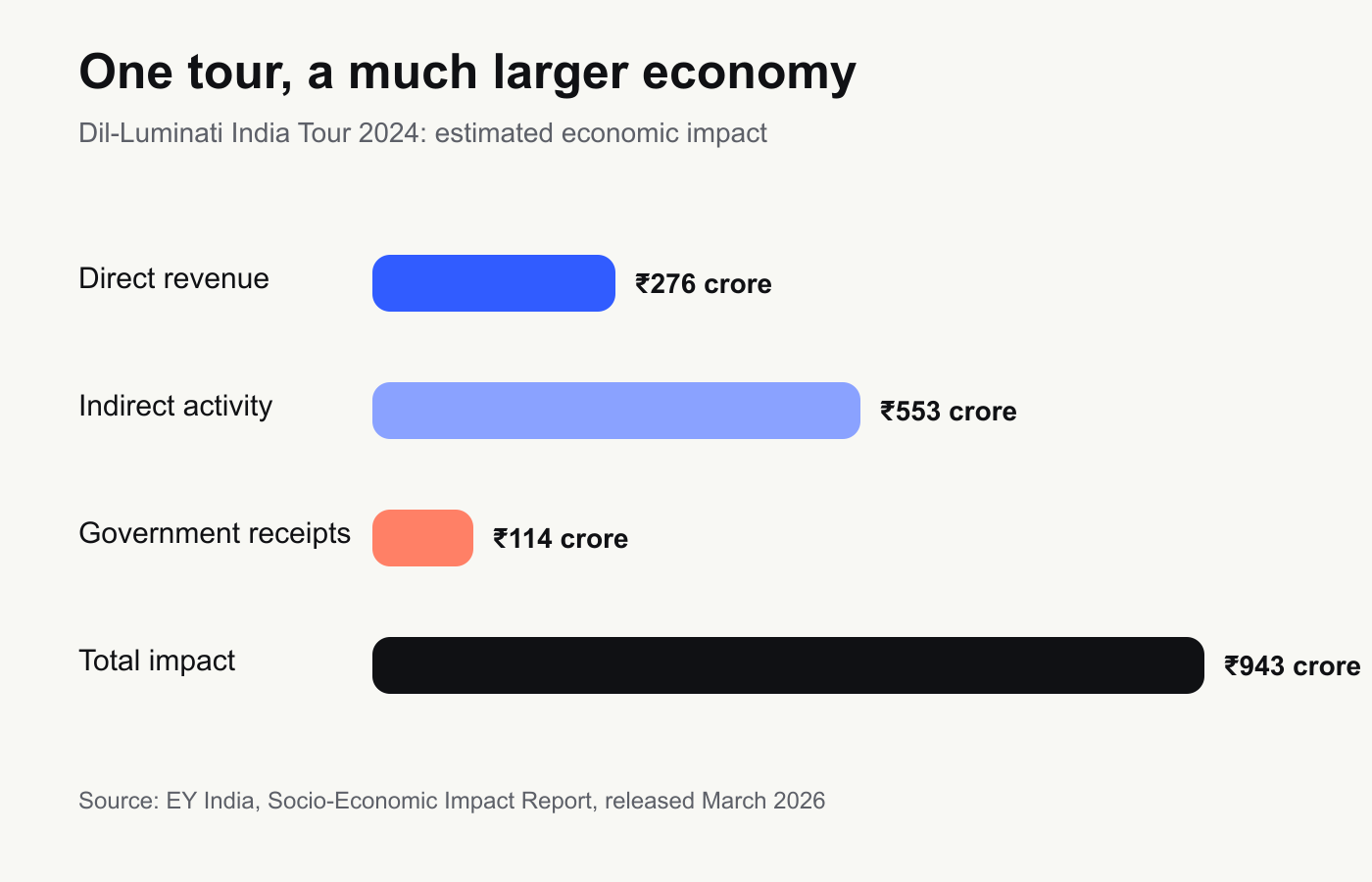
Source: EY, Diljit Dosanjh's Dil-Luminati India Tour 2024 Socio-Economic Impact Report, released in 2026.
Belonging matters as much as logistics. Fans learn chants, coordinate clothes and recognise recurring visual symbols. Merchandise makes that identity portable. The Hollywood Reporter India noted in 2026 that artist merchandise is shifting from souvenir to fashion product, judged on its design rather than bought only to support an artist.
Surprise adds value. When Ed Sheeran brought Diljit Dosanjh onstage in Mumbai in 2024 and sang in Punjabi, the moment travelled beyond the venue because it happened only once.
What makes up the modern concert experience?
A concert experience is the path from anticipation to memory, combining ticketing and transport with visual language, collective rituals and surprise.
Before the show
Artwork, teaser films and venue explainers teach fans how to imagine the night. A confusing sale can damage the experience before the artist arrives. Clear ticket categories, accessibility details, entry rules and transport guidance turn anticipation into confidence.
Scarcity can create urgency, but it can also produce resentment. Rolling Stone India's festival assessment pointed to staggered ticket drops and resale behaviour that sometimes pushed prices above face value, while other events later saw resale prices fall below the original ticket. Experience design cannot be separated from trust. Fans remember whether the transaction felt fair.
At the venue
Sightlines, sound, toilets, water, shade, exits and security form the physical foundation. Lighting, screens, set pieces and interactive installations sit above it. Spectacle works only when the functional layer works.
At Lollapalooza India 2026, H&M built claw machines, beauty touch-ups and an immersive visual sphere. The activation gave fans something they would voluntarily enter, use and photograph instead of placing another logo beside the stage.
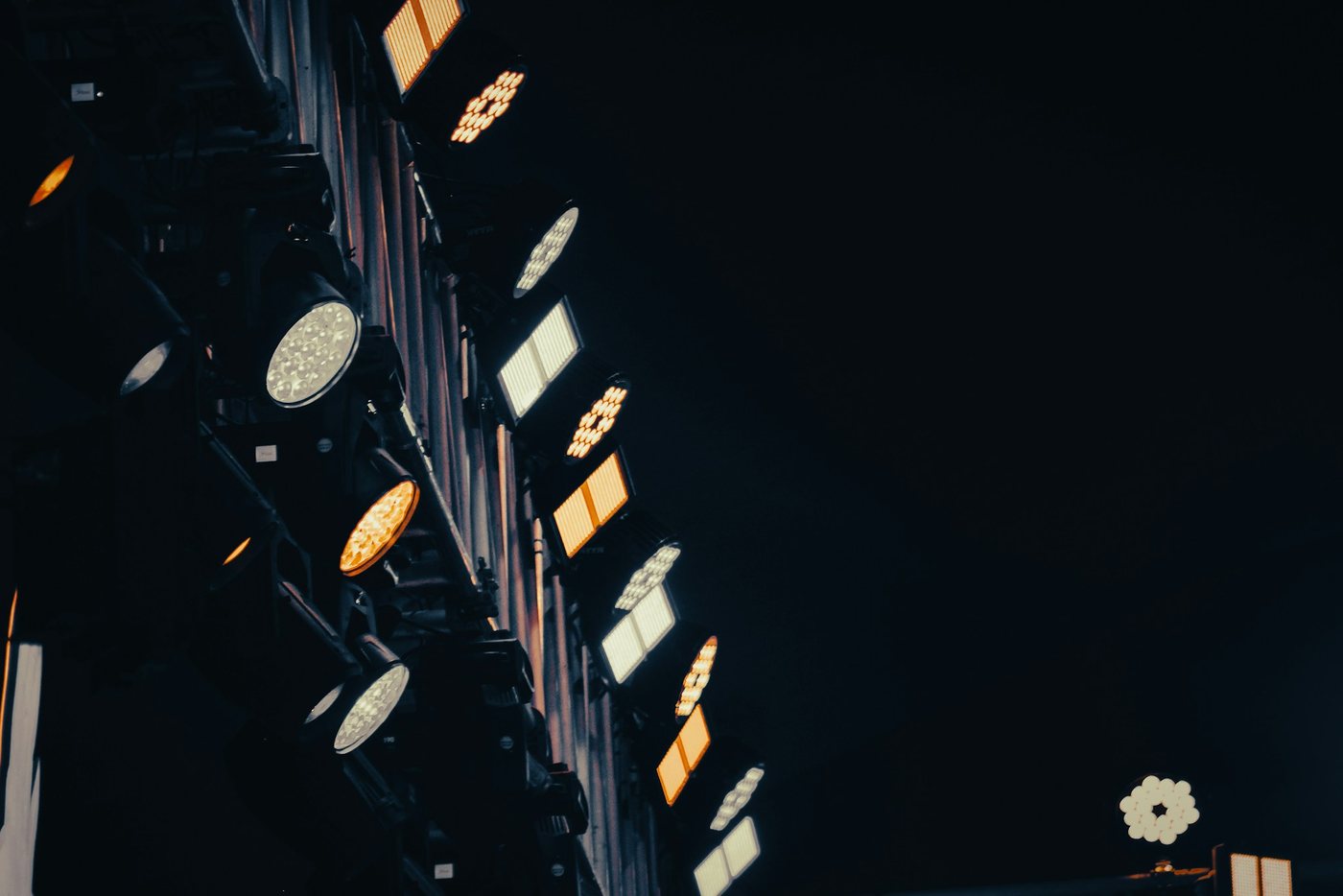
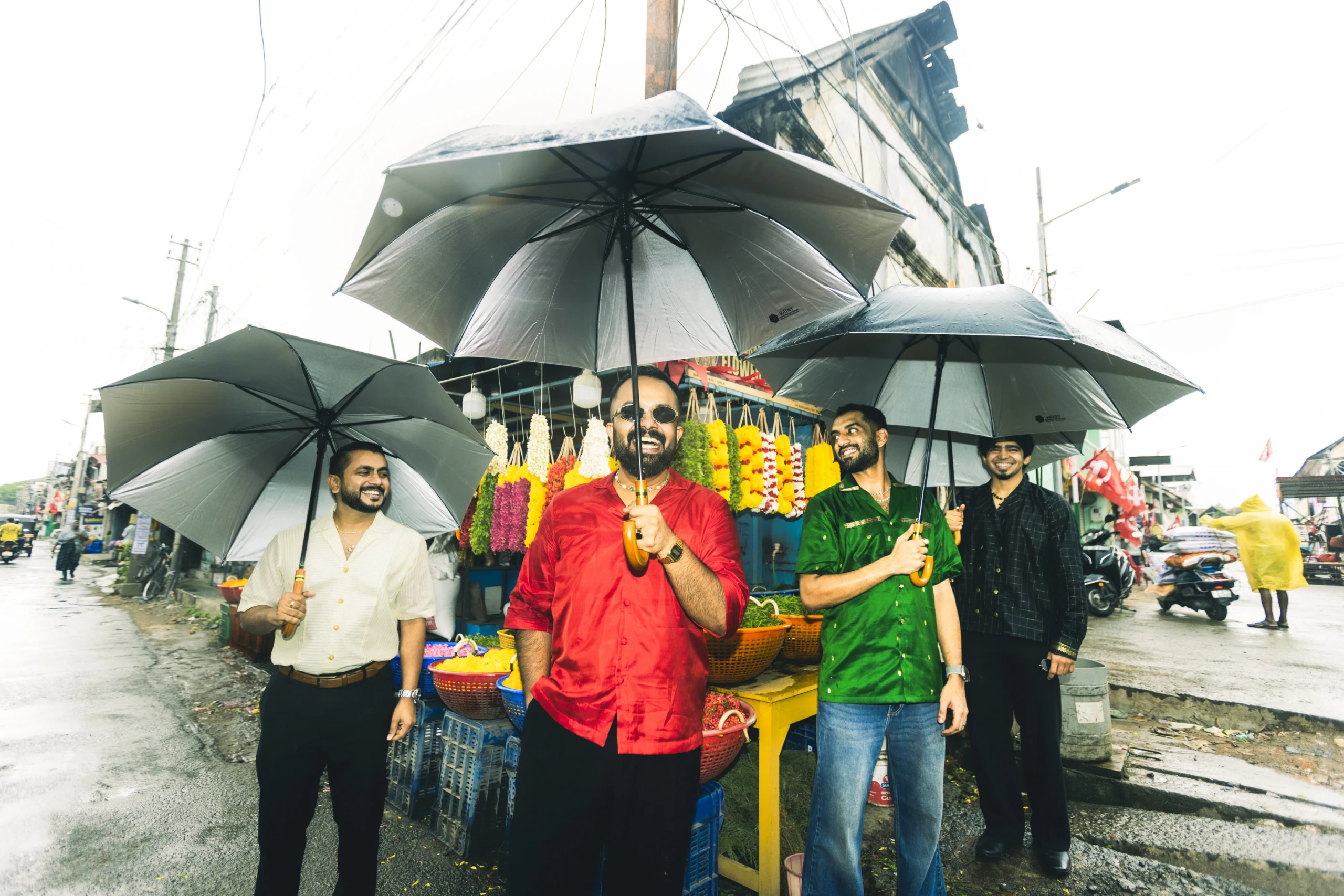
Image: Arjun Raj via Unsplash, photographed in Kerala, India and used under the Unsplash License
After the show
Photographs, performance clips, fan edits and merchandise extend the event into the following week. A strong content team captures the entrance, chorus, crowd reaction and goodbye. People who missed the show encounter those moments online and imagine the next tour.
Who creates the experience beyond the artist?
Show directors, production managers, audio engineers, lighting and video designers, stylists, photographers, fabricators and safety teams turn an artist's set into a functioning live world. Large concerts make this collaboration visible: EY estimated that the Dil-Luminati India Tour supported more than 118,000 person-days of employment across event production, security, logistics and allied sectors.
Each role changes the experience. Lighting controls focus; video gives the back row a close-up; styling helps the artist read against the stage; and production management turns ambition into a safe schedule and budget.
Anuv Jain's Guldasta tour offered a useful independent-pop example. Before the tour, Jain told The New Indian Express that the production would have more music, new visuals and a new live experience compared with his earlier Dastakein tour. His catalogue remained intimate and guitar-led. The production did not need to turn that music into arena pop. Its job was to expand the emotional world already present in the songs.
This distinction matters for emerging artists. Experience design is not a synonym for maximum technology. It is the process of making every visible and audible choice support the same artistic idea.
Building a live show takes more than a lineup. Find creative collaborators and production professionals on kredl →
How does experience design change concert economics?
Experience design creates more revenue surfaces, costs and ways to disappoint. Tickets still dominate: EY attributed about 80% of the Dil-Luminati tour's direct revenue to ticket sales. Sponsorships, food, merchandise and premium access expand rather than replace the gate.
Ticket tiers turn space into a product. General admission, seated sections, fan pits and hospitality offer different relationships to the same performance. The model breaks when a premium ticket still delivers a blocked view, long queue or weak sound. A higher price raises the standard for the whole evening.
Merchandise deepens revenue and belonging. Lollapalooza India's official store listed festival apparel between ₹1,500 and ₹2,200 when checked on 11 October 2026, positioning it as fashion rather than a token add-on. It still carries inventory risk and requires design, manufacturing and fulfilment.
Sponsorship works when fans receive something useful. Shade, hydration, charging or playful installations can improve a festival day if they earn participation without interrupting the music.
Cities also benefit. EY estimated that Coldplay's Ahmedabad concerts attracted more than 222,000 fans and created roughly ₹641 crore in economic impact. Ahmedabad Airport handled 138,000 travellers during the period, while hotels, restaurants, taxis and vendors joined the event's delivery system.
How artists can pitch Indian college festivals, price their set and prepare their booking material
When does spectacle weaken the music?
Spectacle fails when it asks audiences to admire production instead of feel the performance. Screens and lights can amplify a song, but cannot repair poor sound, unsafe crowd movement or an artist who never connects with the room.
Misplaced spending is the first risk: an independent act may buy an LED package while underfunding rehearsal or audio. Visual sameness follows when fire, confetti and giant typography make unrelated artists look interchangeable. Premium zones may improve margins while fragmenting the crowd, and ambition must not erase wheelchair routes, water, signage or safe exits.
Sustainability claims also need proof. EY reported that Coldplay's Ahmedabad events diverted more than 34,000 kilograms of waste from landfill. Decorative language about being "green" is not enough; growing productions must account for materials, power and waste after the photographs are taken.
What can independent artists borrow without an arena budget?
Independent artists need a clear emotional idea, reliable basics and two or three repeatable details—not stadium technology. The aim is to make the room feel unmistakably theirs.
Start with the question: what should the audience feel before the first song, during the emotional peak and after the final note? Then design around those three moments.
- Protect sound first. Do not trade monitoring, soundcheck or rehearsal for decoration.
- Choose one visual rule. A colour family, projection style or recurring object can connect posters, stage and recap content without requiring expensive hardware.
- Invite participation with a reason. Teach a harmony, share the story behind a lyric or let the crowd choose between two songs. The moment should deepen the music rather than exist only to produce a phone video.
- Design the exit. Plan the final words and final image so the night ends deliberately.
- Document emotional beats. Give photographers and editors a short list—the entrance, the first collective chorus, the quietest room and the goodbye—then leave room for what nobody predicted.
Gini's living-room-style Cozy Tour used small rooms, floor seating, warm lights and direct conversation to make intimacy the production concept. Anuv Jain's path from bedroom songs to headline touring works on the same principle: decide what cannot be lost before deciding what can be added.
How artists can build a loyal audience before the breakthrough single arrives
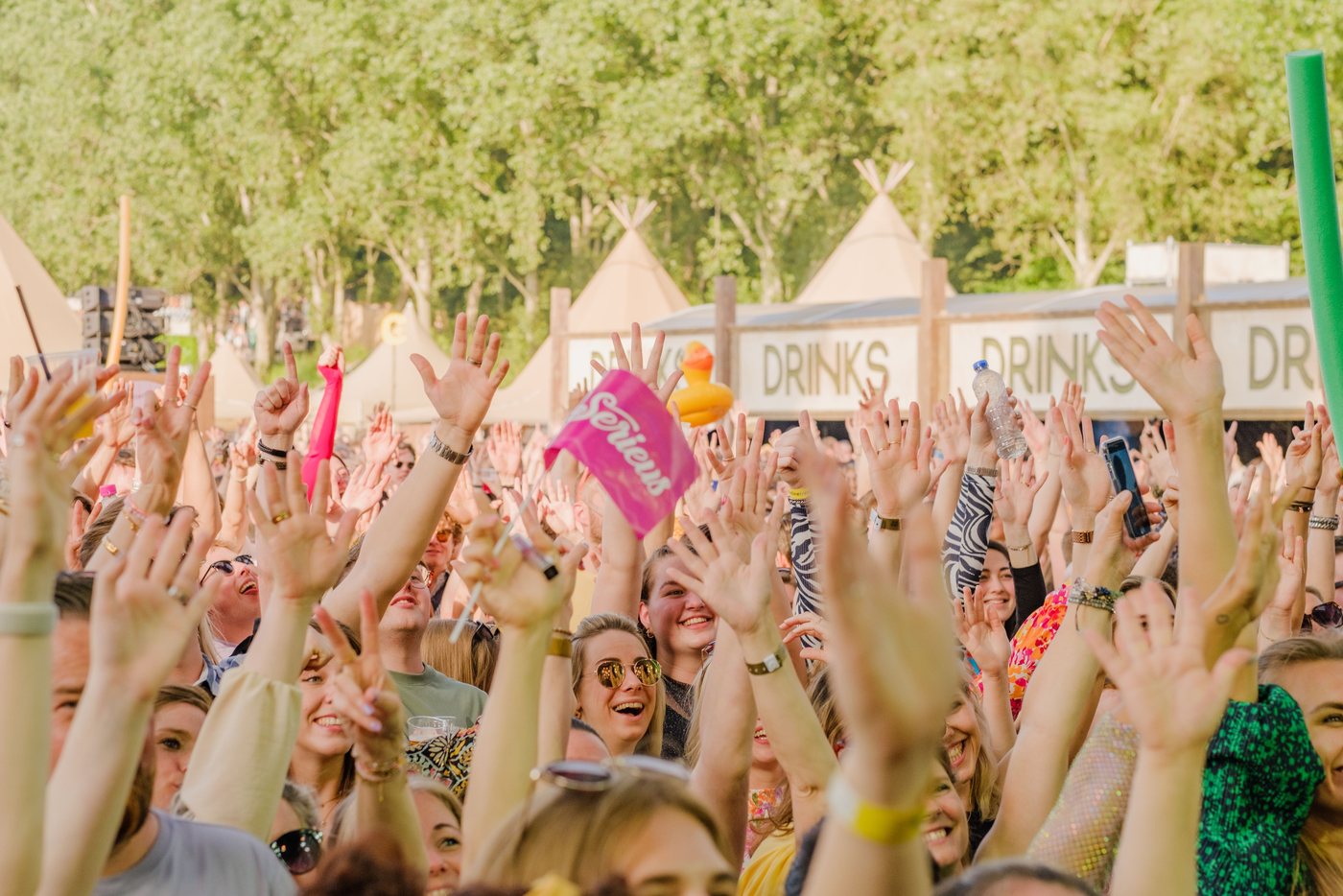
Image: Milo Deckert via Pexels, used under the Pexels License
What will Indian concerts look like through 2027?
Kredl's forecast: the next phase is likely to spread beyond a few metro stadiums. EY found that Tier II and Tier III cities contributed 49% of attendance across the Dil-Luminati India Tour. Demand already travels across city categories; production, transport, venue and talent infrastructure may now begin catching up.
More tours may become cultural products rather than strings of dates, with visual identity extending into apparel, films and city-specific collaborations. Regional-language artists are well placed to carry larger productions beyond home markets, while festivals have reason to invest in comfort and discovery because audiences judge the whole day.
Creative work may become more specialised. Artists who once hired one person to shoot a recap could build small teams covering direction, lighting, social content and merchandise. That would create opportunity and make clear credits and reliable professional relationships more important.
A correction is also plausible. As expectations rise, fans may become less forgiving of weak sightlines, misleading ticket tiers, poor access and copied spectacle. The strongest events will not necessarily have the most components; each component will reinforce the reason people came.
Frequently Asked Questions
What makes a concert an immersive experience?
An immersive concert aligns sound, lighting, visuals, space, participation and service around one emotional idea. It does not require virtual reality or a giant stage. India's broader organised live-events segment—which also includes weddings, government functions and religious events—grew 44% in 2025. For concert makers, the useful lesson is qualitative: immersion comes from coherence, not expenditure.
What does an Indian concert ticket pay for?
A ticket contributes to artist fees, venues, production, permissions, security, staffing, transport and ticketing systems. Larger shows may also use premium tiers to support more infrastructure. EY reported that tickets produced about 80% of direct revenue on Diljit's 2024 India tour, showing how central ticket income remains even when sponsorship and merchandise grow.
Which professionals create a modern concert experience?
The team can include show directors, production managers, stage managers, lighting and video designers, audio engineers, photographers, editors, stylists, merch designers, fabricators, security and accessibility staff. EY estimated more than 118,000 person-days of employment from the 14-show Dil-Luminati India Tour across direct and allied work.
Can an independent artist create a strong experience without a large budget?
Yes. A small show needs reliable sound, a clear visual rule and one participatory moment more than expensive hardware. The Ministry of Information and Broadcasting estimates that nearly 500,000 fans travelled between Indian cities for live music during the period studied, but memorable experience design also works in a 100-person room.
How do live experiences help an artist's career?
A distinctive show creates stronger word of mouth, better visual content, merchandise demand and reasons to return. It also helps promoters understand the artist's audience. EY counted 70 to 80 Indian concert days above 10,000 attendance in 2024, but artists reach that scale by proving their live proposition in smaller rooms first.
Conclusion
Indian concerts are becoming experiences because a live show carries cultural and economic weight beyond its setlist. Fans travel, gather, record and remember. Artists build worlds around their music; creative and technical professionals make them real.
The strongest shows will still begin with the music. Everything else should make that music easier to feel, easier to share and harder to forget.
The 2027 India concert calendar, major festivals and opportunities for independent artists
Reporting and analysis by the Kredl editorial team. Figures were checked against the linked primary or established-industry sources on 11 October 2026.
Sources
References (11)
- Stories, Scale and Impact: India's Media and Entertainment Economy — FICCI-EY, 25 March 2026; retrieved 11 October 2026.
- India's Rising Concert Economy — EY and BookMyShow, 7 April 2025; retrieved 11 October 2026.
- Dil-Luminati India Tour 2024 Economic Impact — EY, 26 March 2026; retrieved 11 October 2026.
- India's Live Events Economy: A Strategic Growth Imperative — Ministry of Information and Broadcasting, 2025; retrieved 11 October 2026.
- Brand Experience at Lollapalooza India 2026 — Live Nation for Brands, 26 January 2026; retrieved 11 October 2026.
- How Fan Merchandise Is Powering India's Fandom Economy — The Hollywood Reporter India, 2026; retrieved 11 October 2026.
- What India's Music Festivals Get Right and Wrong — Rolling Stone India, 2026; retrieved 11 October 2026.
- Anuv Jain on the Guldasta Tour — The New Indian Express, 2 December 2023; retrieved 11 October 2026.
- Ed Sheeran and Diljit Dosanjh Perform Together in Mumbai — TIME, 19 March 2024; retrieved 11 October 2026.
- Official Lollapalooza India Merchandise Store, current catalogue; retrieved 11 October 2026.
- Gini Is the Quietest Revolution in Indian Pop — Rolling Stone India, April 2025; retrieved 11 October 2026.