How Lifafa Built a Cult Audience Around Indian Electronic Music
How Suryakant Sawhney turned old Hindi melodies, Delhi unease, electronic experimentation and patient world-building into one of Indian indie music's most devoted audiences.
Lifafa did not build an audience by making Indian electronic music easier to categorise. Suryakant Sawhney built one by making a world listeners could recognise within seconds: a weathered baritone, Hindi lyrics, harmonium, disco pulses, damaged synths, political unease and a sense of humour that keeps solemnity from becoming self-importance.
That combination made Jaago a breakout in 2019. This article argues that its specificity also explains the "cult" label used by independent music press. Listeners could trace the record back to Delhi, old film songs, devotional sounds, Peter Cat Recording Co. and Sawhney's earlier electronic experiments. Lifafa felt less like a playlist entry and more like a place.
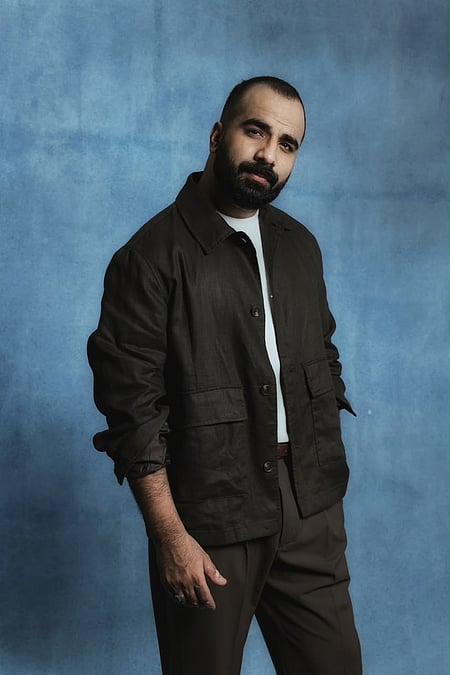
Cover photo by Tenzing Dakpa, via Indulge.
Key takeaways
- Lifafa became distinctive by connecting electronic production with Hindi songwriting, old-film textures and contemporary Indian life.
- Peter Cat Recording Co. gave Sawhney years of practice in self-production and independence before Jaago expanded his solo audience.
- The eight-song Jaago was written, performed, composed and produced by Sawhney, making its identity unusually coherent.
- Superpower 2020 challenged the listeners won by Jaago instead of simply repeating its most accessible ideas.
- The transferable lesson is not to copy Lifafa's sound. It is to build an artist world specific enough to reward curiosity.
How to build a cult following before you have a hit song
Who is Lifafa, and where did the project begin?
Lifafa is the solo project of Suryakant Sawhney, also the frontman and a founding member of Peter Cat Recording Co. The band began in Delhi in 2009. Sawhney's solo electronic work followed with a self-titled release in 2013 and the In Hi Ko EP in 2014, years before Jaago became the project most listeners now use as their entry point.
Sawhney was born in Gurugram, but his earliest years were unusually mobile. His father worked in the merchant navy, and Sawhney spent part of his childhood aboard a commercial ship in the Mediterranean. After his father died when he was 13, he returned to Gurugram with his mother. Business Standard reported how those two parental sound worlds stayed with him: his mother sang bhajans, while his father introduced him to Western music.
He briefly studied business before moving to San Francisco to study film and animation. GQ India reported that music was the medium in which he could carry an idea through to completion. The visual education did not disappear. It later resurfaced in the way Lifafa treated photographs, videos and live presentation as parts of the work rather than promotional extras.
The early influences did not fit inside one genre. Sawhney grew up hearing his mother's bhajans alongside Mohammed Rafi and Mukesh. He was drawn to Guru Dutt, Hemant Kumar and the softened acoustics of old recordings. He also studied animation in San Francisco, then found inspiration in the deliberately rough electronic worlds of Burial and James Blake.
That history matters because Lifafa was never a producer adding an Indian sample to an imported club template. The old and new elements were already living beside each other in Sawhney's listening life.
In a 2025 interview with Indulge, Sawhney traced his Hindi songwriting to a living-room studio he set up in 2015. He said the language connected new parts of his brain. The electronic project had existed before then, but Hindi changed what it could speak about and whom it might reach.
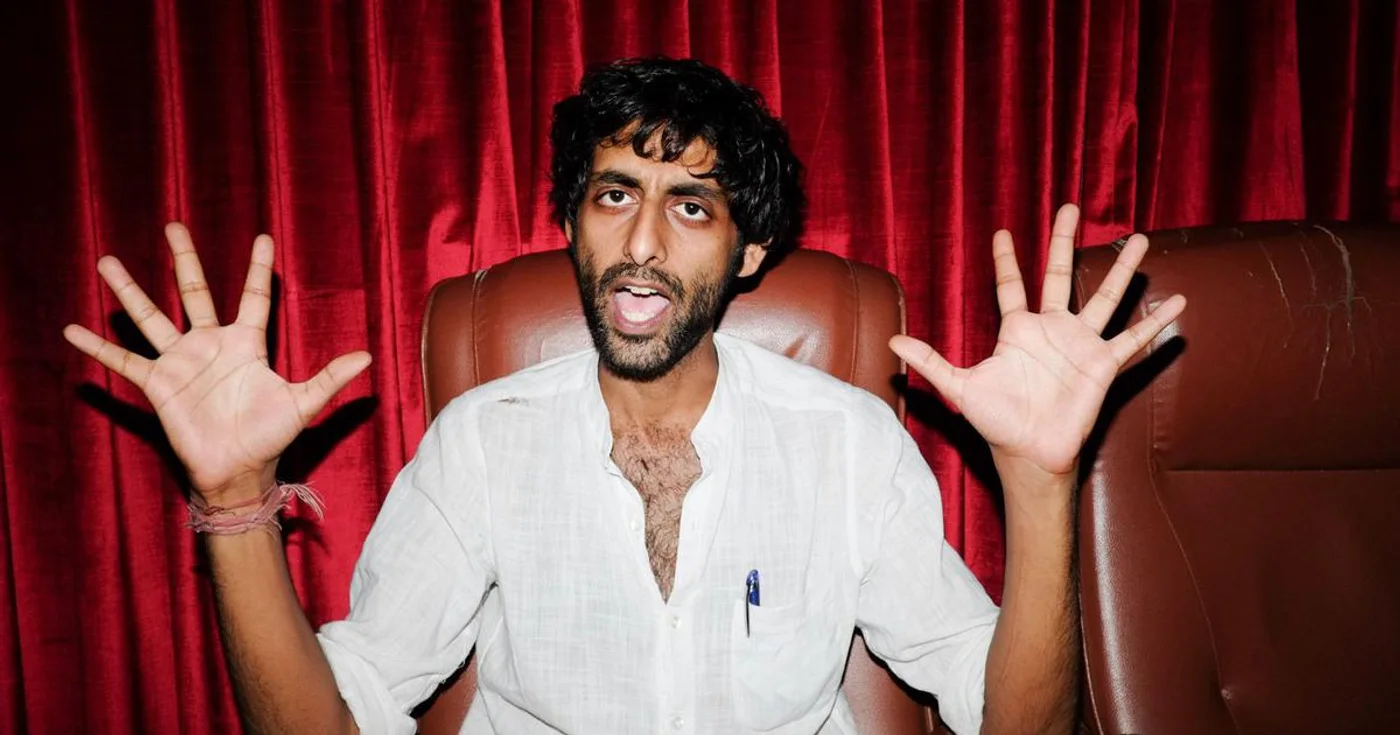
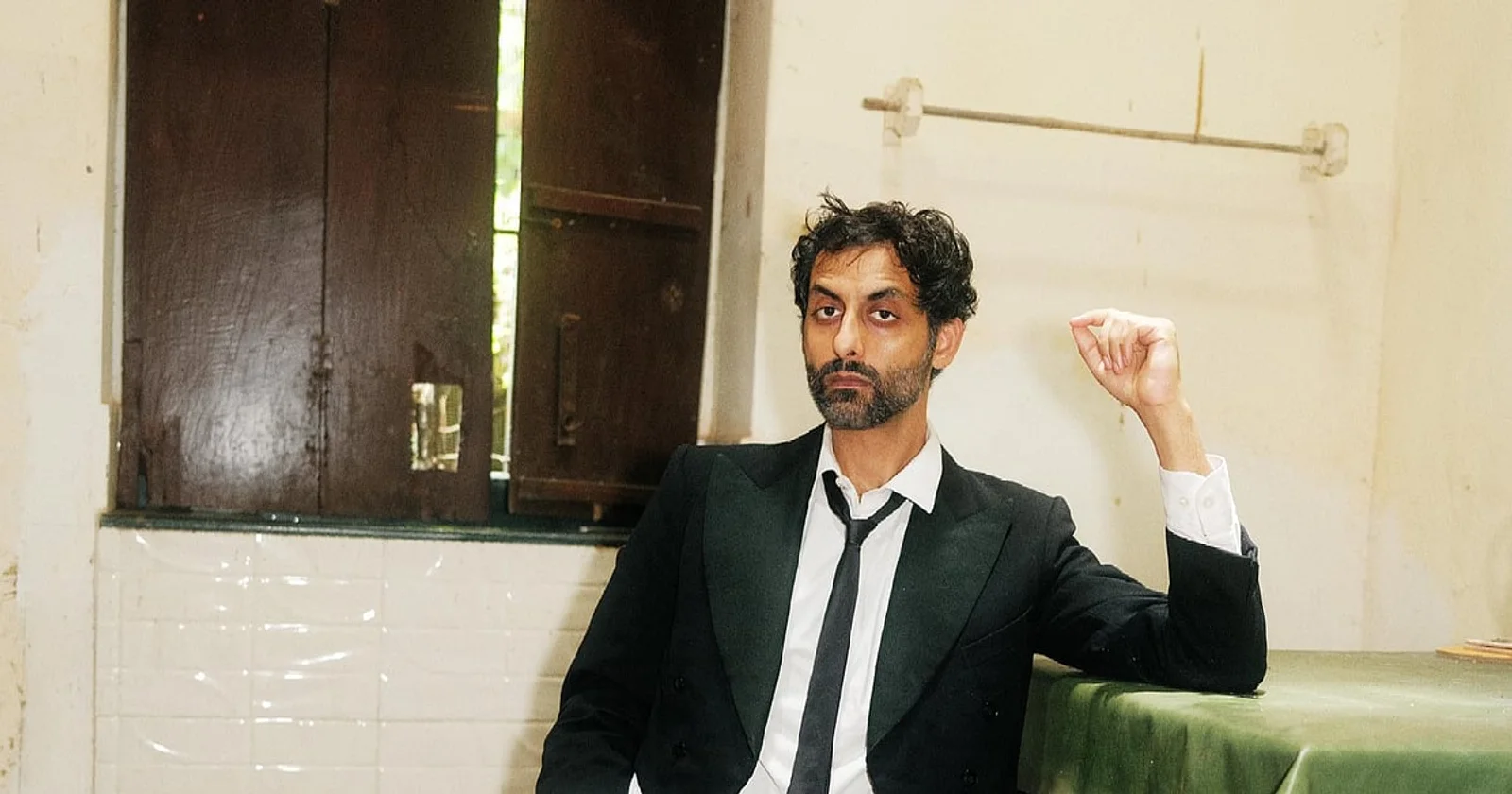
Photo courtesy of Lifafa/Facebook, via Scroll.in.
What did Peter Cat Recording Co. teach Lifafa about independence?
Peter Cat Recording Co. gave Sawhney a practical education in making unusual work without waiting for an institution to approve it. The band recorded at home, produced its own music and developed an identity far from the dominant metal and electronic scenes around it in Delhi.
Sawhney told Scroll that self-production meant the band was not bound by outside funding. His conclusion was simple: "People eventually saw our sincerity."
Independence did not automatically create attention. It gave both projects room to develop without bending every decision around outside funding or a producer's expectations.
Lifafa also gave Sawhney a useful separation from the band. In 2025, he described the two projects as different people with different dreams and ideas. That boundary made each identity stronger. Peter Cat could hold its jazz, cabaret, psychedelic rock and English-language universe. Lifafa could become more solitary, synthetic and rooted in Hindi.
For artists building several projects, the lesson is not to make every identity serve the same audience. Give each one a clear emotional job. A side project becomes memorable when it reveals something the main project cannot.
The complete guide to building an independent music career in India
Why did Jaago turn Lifafa into a cult artist?
Released on January 1, 2019, Jaago compressed Lifafa's ideas into eight songs and just over half an hour. Sawhney sang, wrote, composed and produced the entire record. Its sound joined harmonium, Hindi crooning and old-film romance with synth-pop, chillwave, techno loops and electronic percussion.
That made the album accessible without making it ordinary. A listener could enter through the title track's harmonium, the slow-dance pull of “Mere Saath” or the synth-pop of “Nikamma.” Repeated listens exposed stranger details beneath those surfaces.
Bandcamp Daily placed Jaago in its Hidden Gems series in May 2019 and wrote that Lifafa and Peter Cat Recording Co. had developed cult followings in India and overseas. Wild City later credited algorithms and enthusiastic word of mouth with bringing a larger audience to its mix of psychedelic electronica, folk feeling and nostalgic Hindi lyrics.
The deeper reason was specificity. “Hindi electronic music” describes the components, not the experience. Jaago sounded devotional and disreputable, romantic and politically alert, old and futuristic. Even small phrases became fan language. Wild City noted that the request for water in “Nikamma” became a recurring joke among listeners.
It is a small but useful sign of audience depth. A song had produced a reference that listeners carried beyond the recording itself.
How Attakkari connects Carnatic music with club culture
How did Lifafa turn songs into a complete artist world?
The records carry the centre of the project, but the surrounding choices strengthen them. The name Lifafa works across languages while still sounding rooted in the subcontinent. Its meaning, envelope, also nods toward the rise and decay of sound in electronic synthesis.
The visual language is equally recognisable. Jaago paired faded nostalgia with surreal colour. Superpower 2020 used Aditiya Singh's violent, crowded album art to signal that the next chapter would be less comforting. The videos and performances often feel theatrical, intimate and slightly absurd rather than clinically polished.
Sawhney understood that the live version needed its own logic. Ahead of a digital NH7 Weekender set in 2020, he told Indulge that a normal Lifafa show would not translate directly to a screen. He approached the online performance as a filmmaker and promised something "weird, funny, intimate and slightly absurd."
That description could apply to the whole project. Every touchpoint feels related without becoming a rigid brand manual. The records, photographs, words and shows share a temperature.
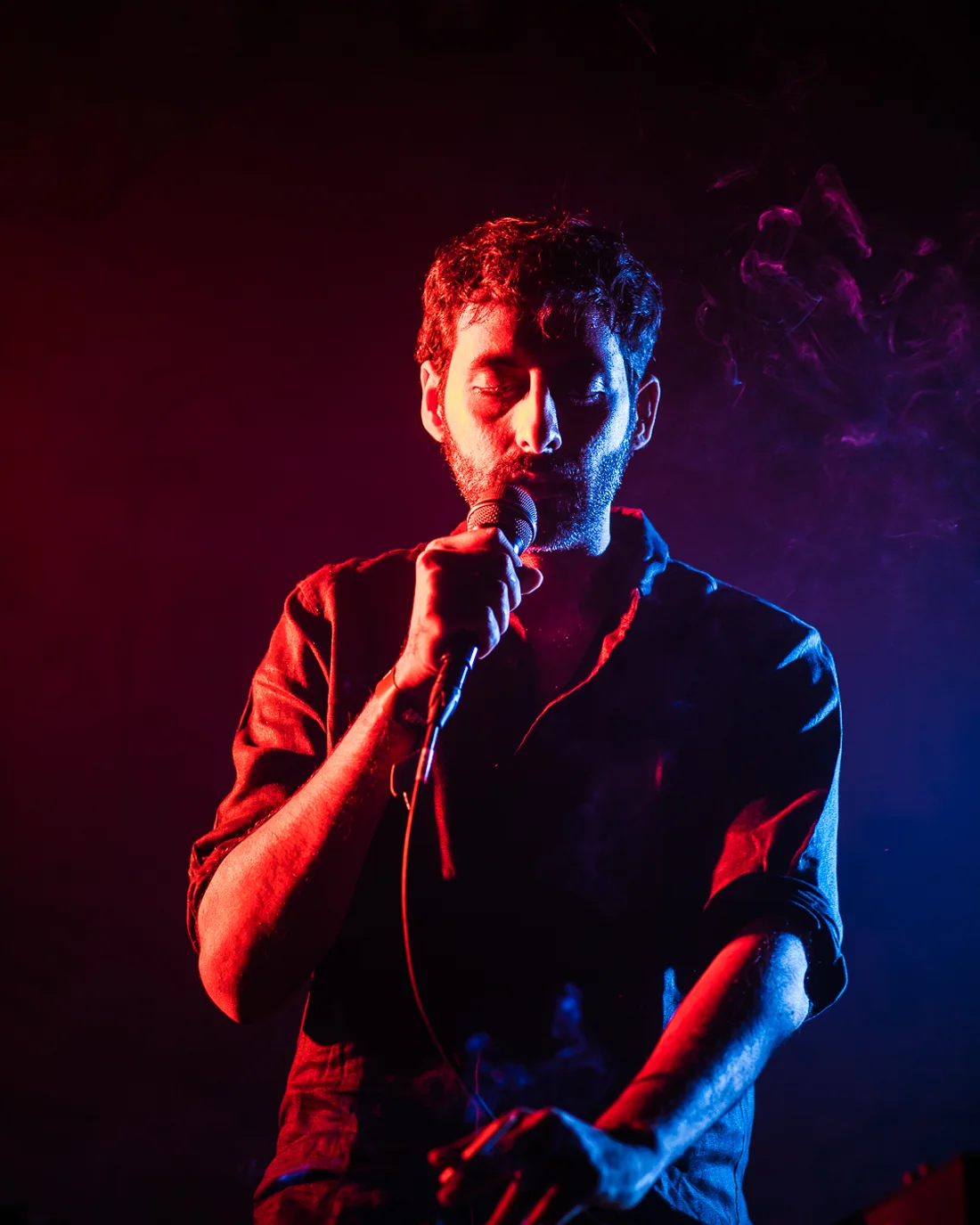
Photo by RC Photography for Magnetic Fields Nomads 2021, via Wild City.
Why did he make a harder album after the breakthrough?
The easiest response to Jaago would have been another polished set of compact Hindi electronic songs. Lifafa used the trust earned by that album to become less predictable instead.
Released first through Bandcamp on May 21, 2021, Superpower 2020 pushed towards dissonance, industrial noise, longer structures and direct political irony. Sawhney described it as an album about the experiment called India. For its first three weeks, he pledged 50% of direct sales to organisations supporting COVID relief.
GQ India argued that the album tested the limits of the audience Jaago had created. Rolling Stone India called it a protest rave. Wild City was more critical, praising its ability to remain political and romantic but finding parts of the songwriting and production less resolved than Jaago.
The divided response matters because critical attention continued after the breakthrough. Lifafa did not need universal approval for the follow-up to remain worth discussing.
The official Lifafa Bandcamp still centres a compact catalogue rather than a constant stream of releases. It is reasonable to infer that the long gaps make each return feel more eventful, but Sawhney has not presented scarcity as a marketing strategy.
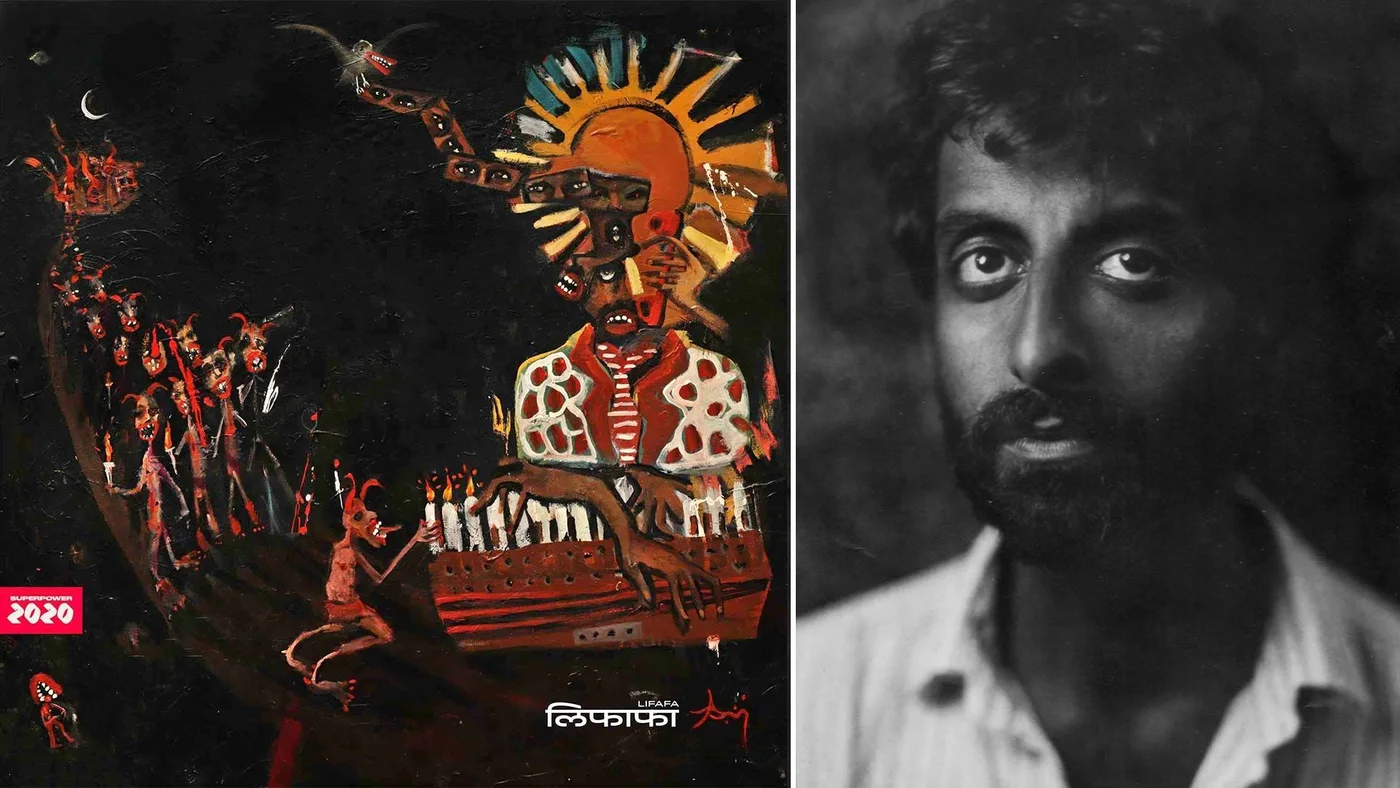
Album art by Aditiya Singh; portrait by Django Knoth, via GQ India.
Is Lifafa still active in 2026?
Yes. The studio catalogue has remained compact, but organisers announced Lifafa shows through 2026. He was scheduled to return to Kolkata's Roots on September 11 after a reported gap of nearly three years, according to Indulge's city events guide. The listing confirms the announcement, not that the performance occurred.
As of this article's October 10 publication date, the LA Phil lists Lifafa with Arushi Jain at The Ford in Los Angeles on October 24. The organiser describes it as his North American debut and only scheduled US appearance. The date is also listed on Lifafa's official Bandcamp profile.
Rolling Stone India's gig calendar also lists Lifafa for Royal Enfield Motoverse in Goa from November 27 to 29. Both the Los Angeles and Goa appearances were upcoming when this article was published, so they should not be read as completed performances.
The distinction matters. There is verified evidence of announced live activity in 2026, but no confirmed studio album after Superpower 2020. The recorded catalogue remains small even as the project continues to appear on event lineups.
What can independent artists learn from Lifafa?
Lifafa's career cannot be reduced to a release checklist. Its most useful lessons are about artistic decisions that compound over time.
1. Build from your real listening history
Sawhney's sound works because bhajans, Rafi, Mukesh, Burial, old cinema and Delhi are not decorative references. They are part of his life. Start with the combinations you already carry rather than choosing influences because they fit a trend report.
2. Let language change the thinking, not only the market
Hindi did more than widen the possible audience. Sawhney said it connected a different part of his brain. The right language can alter rhythm, imagery, humour and emotional distance. That produces deeper localisation than translating an English song after it is finished.
3. Make releases that reward a second listen
Immediate hooks brought people into Jaago, but layered samples, lyrical ambiguity and tonal contradiction gave them reasons to return. Discovery creates an opening. Detail creates loyalty.
4. Keep side projects genuinely separate
Lifafa did not become a solo version of Peter Cat Recording Co. It developed its own language, production palette and visual logic. If two artist identities are interchangeable, one probably does not need to exist.
5. Spend trust instead of hoarding it
Superpower 2020 used the goodwill from Jaago to take greater risks. The next release did not merely reassure new fans. It asked more of them. That is one way an audience becomes a community around an artist's curiosity rather than a single sound.
How to release a concept EP and turn five songs into a world
Frequently Asked Questions
What kind of music does Lifafa make?
Lifafa makes Hindi-language electronic music shaped by harmonium, synth-pop, disco, techno, devotional music, old Hindi film songs and experimental production. The project is difficult to fit into one genre because its identity comes from the friction between these elements rather than a fixed electronic subgenre.
Is Lifafa the same person as Peter Cat Recording Co.'s singer?
Yes. Lifafa is the solo project of Suryakant Sawhney, the frontman and a founding member of Peter Cat Recording Co. Sawhney treats them as separate creative identities: Peter Cat is a band with its own collaborative world, while Lifafa is his more solitary Hindi electronic project.
Which Lifafa album should a new listener start with?
Start with Jaago from 2019. Its eight songs offer the clearest entry into Lifafa's mix of Hindi songwriting, harmonium, vintage crooning and electronic production. Then hear Superpower 2020 to understand how he made that language darker, noisier and more political.
Why is Lifafa described as having a cult audience?
Bandcamp Daily used the description in 2019, and later coverage documented new listeners, fan references and sustained critical attention. “Cult audience” is an editorial label here, not a quantified claim about ticket buyers, streams or fan-club membership.
What is the biggest lesson from Lifafa's career?
Distinctiveness compounds when every creative decision comes from the same point of view. Lifafa's music, language, visuals, release pace and live atmosphere reinforce one another. Artists should copy that coherence, not his harmonium, production techniques or vintage aesthetic.
Specificity built more than a breakout moment
Lifafa's cult reputation did not emerge from mystery alone. The evidence points to years of self-production, a sharp separation between projects, a language shift that changed the writing, and records dense enough to invite repeated interpretation.
The result is an Indian electronic project that can be romantic, funny, political and unsettling without asking permission to choose only one. That range gives listeners more than songs to follow. It gives them a world whose next turn remains difficult to predict.
Build a professional home for the releases, credits, collaborators and live work behind your own artist world. kredl →
Sources and image credits
- Indulge: Lifafa speaks about his musical evolution and having one foot in the past and another in the future
- GQ India: A musician's life can be as entertaining as it is depressing
- Business Standard: Suryakant Sawhney makes essential music for today's woke youngster
- Scroll: In his album ‘Jaago’, Lifafa mixes a black-and-white world with technicolour electronic soundscapes
- Bandcamp Daily: Hidden Gems - Lifafa, “Jaago”
- GQ India: Lifafa's Superpower 2020 is infused with disco synths and romantic ideas about India
- Rolling Stone India: Lifafa Takes to Protest Rave on Eccentric New Album Superpower 2020
- Wild City: Review - Lifafa Shines Albeit Dimly in the Shadow of His Previous Work on Superpower 2020
- Lifafa on Bandcamp: Superpower 2020
- Indulge: Kolkata events between September 11 and September 17, 2026
- LA Phil: Music Beyond Borders with Lifafa and Arushi Jain
- Rolling Stone India: Gig Calendar
- Cover photo: Tenzing Dakpa, via Indulge.
- Jaago-era portrait: courtesy of Lifafa/Facebook, via Scroll.
- Live photograph: RC Photography for Magnetic Fields Nomads 2021, via Wild City.
- Superpower 2020 visual: album art by Aditiya Singh and portrait by Django Knoth, via GQ India.