
How Faheem Abdullah Turned ‘Ishq’ Into a Headline Touring Career
Faheem Abdullah’s path from Srinagar and Jhelum to Ishq, Saiyaara and headline rooms shows how one breakout can pull an entire artistic world into view.
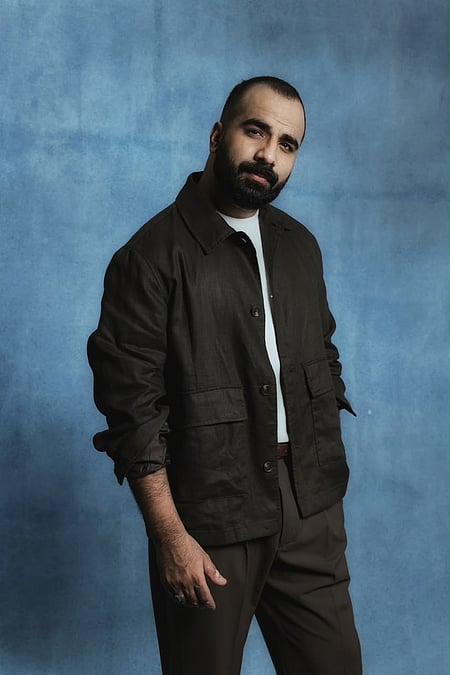
Cover photo: Faheem Abdullah, via Esquire India.
“Ishq” made Faheem Abdullah visible at national scale. It did not make him an artist overnight.
By the time the song arrived in March 2024, the Srinagar-raised singer-songwriter had already spent years writing, learning production and finding an audience through songs such as “Jhelum.” “Ishq” itself had been waiting for years after the short film it was intended for never materialised. Its eventual success opened a door, but Abdullah walked through it with a catalogue, collaborators and a clear relationship to Kashmir already behind him.
Spotify ranked “Ishq” as India’s 14th most-streamed song of 2024. By October 9, 2026, its official YouTube upload had passed 183 million views. Abdullah had also completed a full-band Bengaluru concert and headlined indigo at The O2 in London. His first six-city India run, The Unbecoming Tour, was scheduled to begin in November 2026. Rolling Stone India, official YouTube upload, The O2
That distinction matters. “Ishq” created mass discovery. “Saiyaara” widened it. The live shows began converting that attention into a career people could physically gather around.
Key takeaways
- Faheem Abdullah began releasing music years before “Ishq”; “Jhelum” established local belief in Kashmir in 2020.
- “Ishq” was not manufactured for a viral campaign. It survived a cancelled short-film plan and years of delay before its 2024 release.
- The 14-track Lost;Found turned a breakout single into a wider artistic statement built with Kashmiri collaborators.
- Bengaluru and London proved the headline format; The Unbecoming Tour is the planned six-city scale-up, not a completed tour as of October 9, 2026.
How Anuv Jain turned intimate songs into a live-music phenomenon
The story began in Srinagar, not on a streaming chart
Faheem Abdullah was born and raised in Srinagar, where poetry and storytelling came before a professional music plan. He has described himself as largely self-taught. Sufi traditions, folk melodies sung by his grandparents and the varied music he heard on Radio Kashmir all fed into the way he understood language and melody. Esquire India, Mid-day
He later studied English literature in Bengaluru and considered work as a writer or editor. That detail explains more than a generic list of musical influences would. Abdullah’s songs often behave like poems carried by arrangements: the image, emotional turn and sound of a phrase matter as much as the hook.
Kashmir is not simply scenery in this story. Abdullah has spoken about wanting the region to be understood beyond the familiar frames of romance and conflict. Its languages, musicians and memory appear inside the work. That point becomes especially important when Lost;Found expands from one singer into a broad collaborator network.
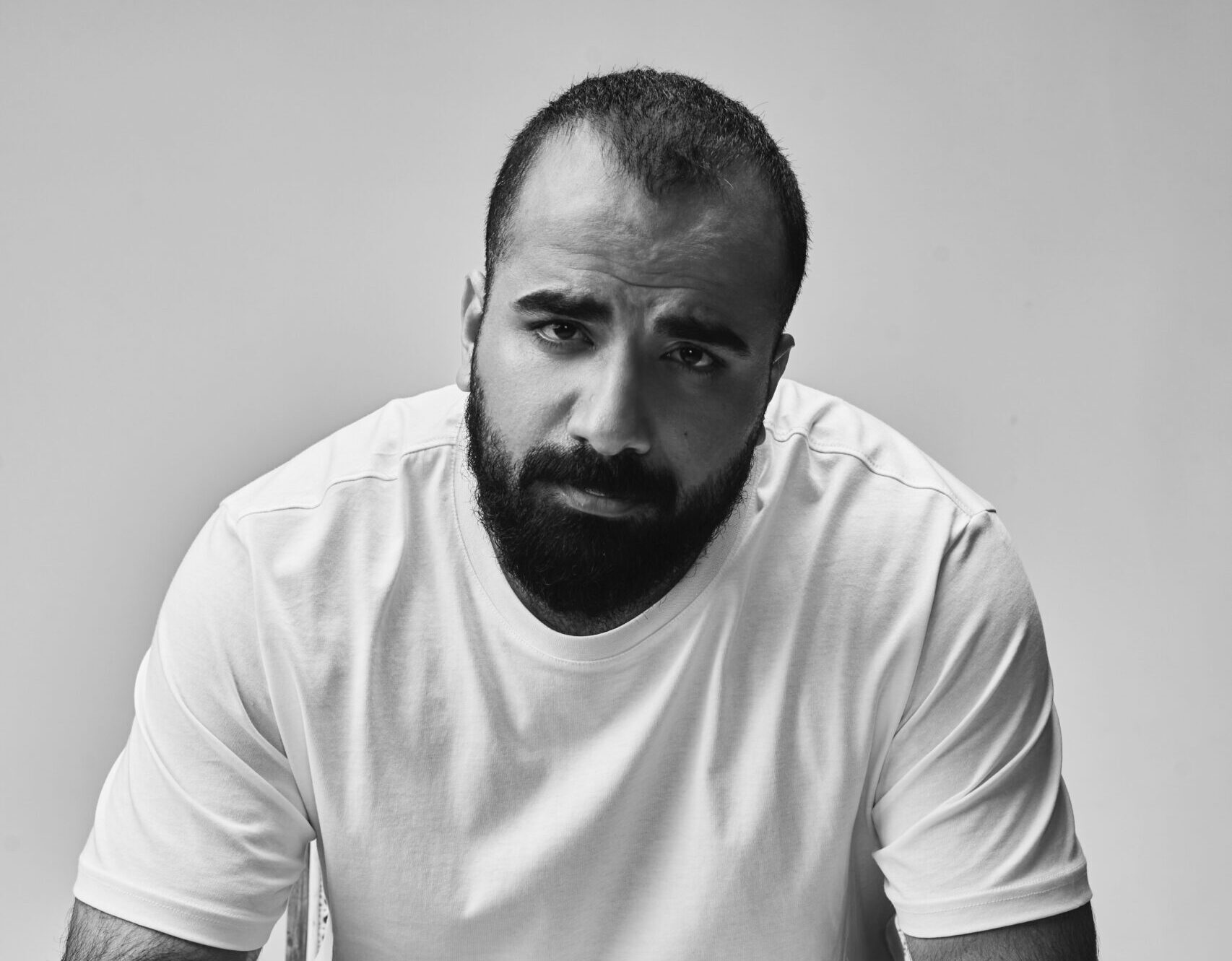
Photo: courtesy of the artist, via Rolling Stone India.
The useful career lesson is that regional identity travels further when it shapes the work rather than decorating it. Abdullah did not flatten Kashmir into a marketable aesthetic. He built from the language, poetry and people he already knew, giving listeners outside the Valley a doorway into something specific.
“Jhelum” created local belief before “Ishq” created scale
Abdullah began making music formally in 2019 and released “Jhelum” in 2020. He has said the song emerged after the music arrangement for a short-film project fell through. Instead of waiting for someone else to rescue the idea, he made the song himself. The response in Kashmir was much larger than he expected. Mid-day, The Hollywood Reporter India
That early response performed two jobs. It gave Abdullah evidence that his writing could connect beyond a private circle. It also placed him inside a regional independent scene before national platforms knew where to put him.
This is the part of the story that “overnight success” edits out. A breakthrough song works differently when new listeners find a real catalogue behind it. “Ishq” did not lead to an empty profile. It led backward to “Jhelum” and forward to an album already rich with context.
For independent artists, local belief is not a consolation prize before national attention. It is proof of emotional fit. A concentrated audience that knows why a song matters can create stronger career foundations than a much larger audience that remembers only one clip.
How to build a cult following before the hit song arrives
“Ishq” survived the project it was originally written for
The origin of “Ishq” runs against the usual viral-hit mythology. Abdullah told The Times of India that he encountered a poem online roughly four and a half years before the release, composed a melody around it and brought his friend Rauhan Malik into the project. The song was intended for a short film that never came together, so it remained unfinished or unreleased for years. The Times of India
The final single arrived on March 9, 2024. Official credits name Faheem Abdullah and Rauhan Malik as composers, Rauhan Malik as producer and Amir Ameer as lyricist. Those roles matter because the record’s appeal is collaborative: the vocal ache, the patient production and the poetry all carry part of the emotional weight. Official YouTube release, Spotify
Its scale is best described with numbers that can be verified. Spotify’s 2024 year-end data placed “Ishq” at No. 14 among India’s most-streamed songs. The official audio had 183,151,964 YouTube views when checked on October 9, 2026. Exact lifetime Spotify totals are less dependable because third-party trackers disagree and count the single and album versions differently.
The strategic lesson is not to leave every unfinished song on a hard drive forever. It is to separate a song from the project that first justified it. When a film, collaboration or campaign collapses, the underlying work may still have a life. “Ishq” became bigger than the short film it never entered.
Lost;Found made the breakout point toward a whole world
Seventy-seven minutes is an unusually expansive answer to a viral single. Released on May 25, 2024, Lost;Found contains 14 tracks and collaborators including Huzaif Nazar, Yawar Abdal, Rauhan Malik, Arslan Nizami, Mohammad Muneem, Khalid Ahamed, pho and Zeeshaan Nabi. Spotify
Abdullah told Rolling Stone India that the album was assembled over five months from songs written across roughly 12 years. The semicolon in the title represents the pause between feeling lost and finding oneself. That framing gives the project an internal logic: it is not a playlist built around the hit but a long-form record about transition.
The collaborator list is equally important. Abdullah described the album as an effort to bring Kashmiri musicians together and represent a community whose music has often struggled to travel outside the Valley. Rolling Stone India
| Release | What it added to the career |
|---|---|
| “Jhelum” (2020) | Local recognition and proof that Abdullah’s writing could connect |
| “Ishq” (2024) | National-scale streaming discovery |
| Lost;Found (2024) | A 14-track artistic world and wider collaborator network |
| “Saiyaara” (2025) | Hindi-film reach without erasing his composer identity |
| 2026 headline shows | Evidence that listeners would gather around the catalogue |
| The Unbecoming Tour | A planned six-city test of repeatable national demand |
The album changed the meaning of the hit. A listener arriving through “Ishq” could discover different voices, textures and writing periods without leaving Abdullah’s world. That is how one song begins to behave like a front door rather than a temporary peak.
A practical guide to collaborating with musicians in India
The collaborator network became career infrastructure
Rauhan Malik’s role did not end with one successful production. The evidence supports an ongoing friendship and creative partnership, though not a formally named duo. Abdullah also worked with a broad group across Lost;Found, then entered film music alongside collaborators such as Arslan Nizami and Tanishk Bagchi.
That pattern matters. A collaborator can provide more than a feature credit. They can preserve continuity while an artist moves between independent albums, film work and larger stages. Shared history lets a new opportunity sound like a progression instead of a brand reset.
It also reduces the pressure on one person to be the complete institution. Writers, producers, instrumentalists, engineers and visual collaborators help turn a song into a catalogue and a catalogue into a show. Credits are not administrative leftovers; they reveal the system that made the work possible.
Abdullah’s community-first approach gives this principle a regional dimension. Lost;Found did not use collaboration only to borrow audience reach. It used a national moment to direct attention toward artists connected to Kashmir’s scene.
“Saiyaara” widened the audience without replacing the artist
In June 2025, “Saiyaara” brought Abdullah into Hindi film music as a singer and co-composer. Yash Raj Films credits him alongside Tanishk Bagchi and Arslan Nizami on the title song. The transition mattered because it placed his voice inside a much larger distribution system without reducing him to a playback singer for hire. Yash Raj Films
The film song reached listeners who may never have opened an independent Kashmiri album. Yet those listeners could move from “Saiyaara” to “Ishq,” “Jhelum” and Lost;Found. That catalogue depth made the film placement additive. It expanded discovery instead of rewriting his origin story.
Subsequent releases widened the surface further: “Aawaara Angaara” from Tere Ishk Mein, “Hoor” for Coke Studio Bharat, the “Chand Mera Dil” title track, “Aitbaar” and “Madhosh” from Toxic. His official Spotify and Apple Music discographies document that movement across independent and film-led releases. Spotify, Apple Music
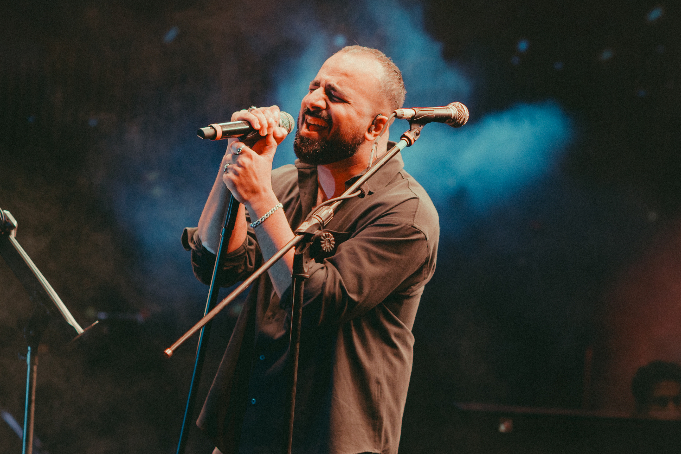
Photo: courtesy of Faheem Abdullah, via Variety India.
Film music becomes most valuable to an independent artist when it creates a two-way road. The film introduces the voice to a mass audience; the artist’s catalogue gives that audience somewhere deeper to go. Without the second half, a placement can create recognition without durable fandom.
The headline career arrived in stages
Abdullah marked February 14, 2026 as the beginning of his “journey of live music” with a full-band Bengaluru concert. Seven months later, on September 13, he headlined indigo at The O2 in London. The venue lists the event as completed. It was the 2,750-capacity indigo venue, not the larger O2 Arena—a distinction worth preserving because the real milestone is strong enough without inflation. Official concert announcement, The O2
Those shows changed the evidence available around his career. Streaming can demonstrate reach, but a headline room tests commitment. Fans must choose a date, buy a ticket, travel and stay for a set rather than replay one track.
The catalogue also has to support an arc. “Ishq” may be the largest communal moment, but a headline show cannot depend on one chorus. Lost;Found, the early songs and the newer film work provide different tempos and emotional chapters around the obvious peak.
This is where Abdullah’s long development becomes an advantage. The songs written before national discovery are not old inventory. They are the material that allows a new audience to spend an entire evening inside his work.
How artists can turn live proof into stronger festival pitches
The Unbecoming Tour is the next test, not a finished victory lap
As of October 9, 2026, The Unbecoming Tour was scheduled for six Indian cities: New Delhi on November 20, Kolkata on November 22, Pune on December 4, Ahmedabad on December 6, Hyderabad on December 18 and Mumbai on December 27. Variety India, Team Innovation
That wording is deliberate. The tour had been announced but had not begun. Calling it a completed success would confuse demand with delivery.
The name suggests more than a routing schedule. Lost;Found framed identity as movement between states; The Unbecoming Tour extends that idea into a live chapter. A named concept can connect poster design, stage transitions, merchandise, spoken interludes and the emotional order of the set.
The commercial test is whether attention repeats across cities. Delhi and Mumbai are obvious anchors. Kolkata, Pune, Ahmedabad and Hyderabad ask whether the audience can travel beyond a few concentrated listening markets. The creative test is whether the show can make one viral song feel like part of a larger narrative.
What independent artists can learn from Faheem Abdullah
Abdullah’s sound cannot be copied into a checklist. The structure around the music can.
- Keep unfinished work available for a different future. A cancelled project does not automatically invalidate the song written for it.
- Build local meaning before chasing broad reach. “Jhelum” mattered in Kashmir before “Ishq” travelled nationally.
- Let the hit open into a catalogue. New listeners need a second, third and fourth reason to stay.
- Make collaborators visible. Rauhan Malik, Amir Ameer and the Lost;Found contributors are part of the work’s meaning, not footnotes to a solo mythology.
- Use mainstream opportunities as bridges. A film song should lead back to the artist’s own records and identity.
- Prove the show one room at a time. A full-band concert and a credible London headline date say more than an inflated venue claim.
- Name the touring chapter. A concept gives separate cities one story and helps fans understand what they are buying into.
A breakthrough becomes a career when the catalogue, collaborators, credits and live history remain visible after the spike. Build that professional record on kredl →
Frequently Asked Questions
Who is Faheem Abdullah?
Faheem Abdullah is a Srinagar-raised singer, songwriter and composer. He began making music formally in 2019, released “Jhelum” in 2020 and reached national audiences with “Ishq” in 2024. His work draws from poetry, Kashmiri musical memory, independent collaboration and later Hindi-film projects.
Who created “Ishq” with Faheem Abdullah?
Official credits list Faheem Abdullah and Rauhan Malik as composers, Rauhan Malik as producer and Amir Ameer as lyricist. Abdullah has said the song developed from a poem he encountered online and was first intended for a short film that never materialised. It was released on March 9, 2024.
How successful was “Ishq” in India?
Spotify ranked “Ishq” as India’s 14th most-streamed song of 2024. Its official YouTube upload had more than 183 million views when checked on October 9, 2026. Exact Spotify lifetime totals should be treated cautiously because unofficial trackers disagree across different song versions.
Did Faheem Abdullah headline The O2 Arena?
No. He headlined indigo at The O2 in London on September 13, 2026. Indigo is The O2 complex’s 2,750-capacity venue, not the main O2 Arena. It remains an important completed headline show and should be described accurately. The O2
When is Faheem Abdullah’s India tour?
The six-city Unbecoming Tour was scheduled to run from November 20 to December 27, 2026, covering New Delhi, Kolkata, Pune, Ahmedabad, Hyderabad and Mumbai. As of this article’s October 9 publication date, those dates were upcoming rather than completed. Check the official artist or promoter channels before booking travel.
One song opened the door; the catalogue built the room
Faheem Abdullah’s touring career is still being built in public. That is what makes it useful to study now. “Ishq” delivered mass discovery, but the path toward headline stages depends on everything the viral shorthand leaves out: Srinagar, “Jhelum,” years of unfinished writing, Rauhan Malik’s production, Amir Ameer’s lyrics, the Lost;Found collaborators and the bridge into film music.
The durable lesson is simple. A hit can introduce an artist to millions, but it cannot perform an entire set, explain an identity or build trust across cities. The work around the hit must do that. Abdullah had already begun building it before the algorithm arrived.
The independent music career guide for Indian artists
Sources and image credits
- Official YouTube: “Ishq” by Faheem Abdullah and Rauhan Malik, released March 9, 2024; retrieved October 9, 2026.
- Spotify: Lost;Found, released May 25, 2024; retrieved October 9, 2026.
- Spotify: Faheem Abdullah artist profile, retrieved October 9, 2026.
- Rolling Stone India: “Faheem Abdullah Brings Kashmiri Artists Together on Expansive Debut Album ‘Lost;Found’”, May 2024; retrieved October 9, 2026.
- Rolling Stone India: Spotify Wrapped 2024 India rankings, December 2024; retrieved October 9, 2026.
- The Times of India: “Every song has its fate and Ishq’s journey has been wholesome”, May 13, 2024; retrieved October 9, 2026.
- Mid-day: “There’s a lot more to Kashmir than romance and conflict”, 2025; retrieved October 9, 2026.
- The Indian Express: Faheem Abdullah and Arslan Nizami on “Saiyaara”, June 2025; retrieved October 9, 2026.
- Yash Raj Films: Faheem Abdullah artist profile, retrieved October 9, 2026.
- The O2: Faheem Abdullah at indigo, September 13, 2026; retrieved October 9, 2026.
- Variety India: The Unbecoming Tour announcement, September 2026; retrieved October 9, 2026.
- Team Innovation: Upcoming events, retrieved October 9, 2026.
- Esquire India: Faheem Abdullah interview, June 2026; retrieved October 9, 2026.
- The Hollywood Reporter India: Faheem Abdullah after “Saiyaara”, retrieved October 9, 2026.


