The Sound System Is the Venue: What Delhi's BFR Reveals About Listening-Led Live Music
Delhi's BFR Sound System turns a wall of speakers, vinyl and an open dance floor into a different kind of live-music space. Its ten-year story offers a useful lesson for artists and event teams.
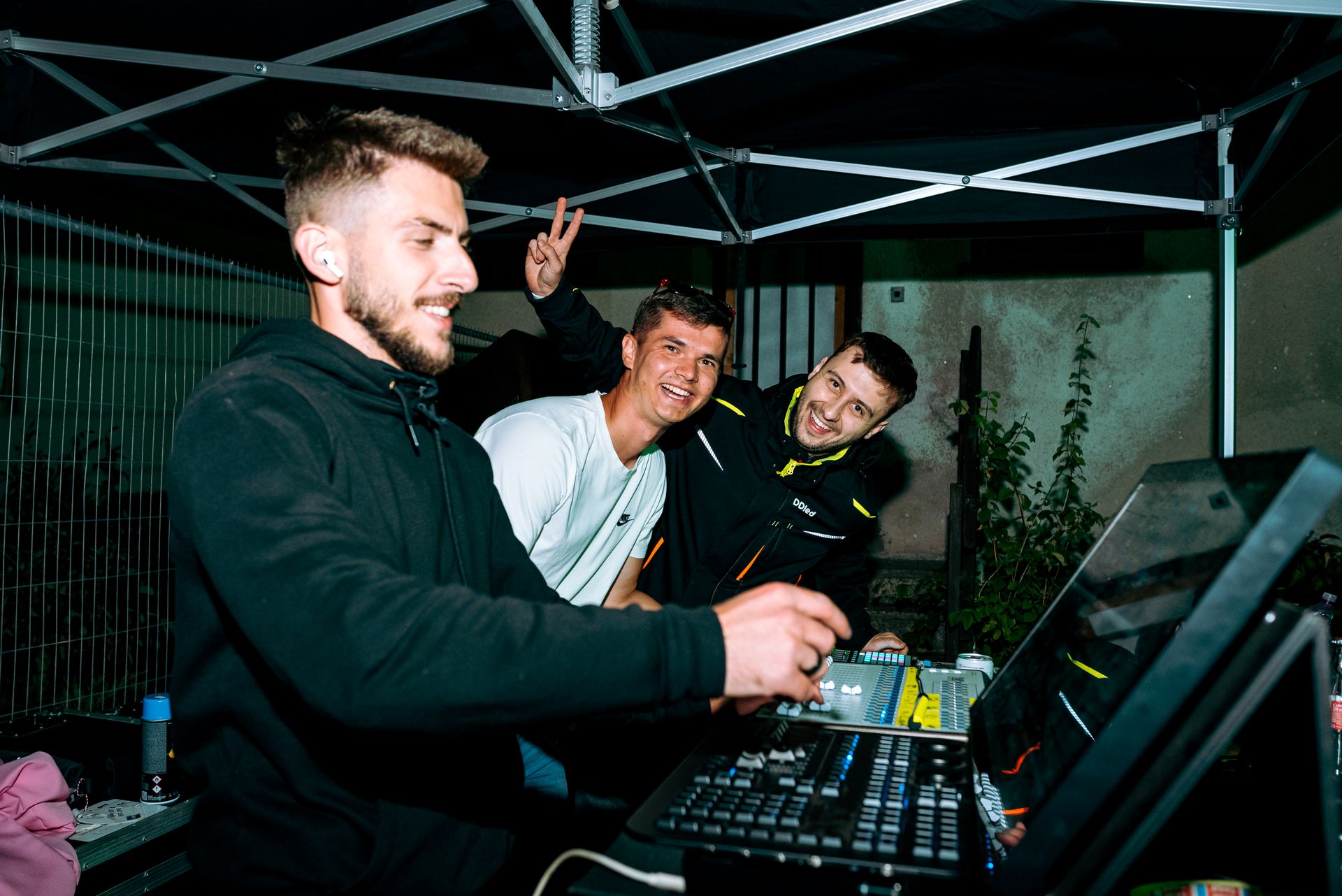
Cover photo: Filip Sestrenek via Pexels, used under the Pexels License. This is an illustrative outdoor-DJ photograph, not a BFR Sound System event photograph.
Guwahati Is Not a Detour: Assam's Place on India's Touring Map
Key takeaways
- Delhi's Bass Foundation Roots (BFR) Sound System has spent a decade building sessions around vinyl, a hand-built speaker rig and an open dance floor rather than a conventional club format.
- The story is not that every artist needs a giant sound system. It is that a clearly designed listening context can be as important as a lineup.
- BFR's example shows how musicians, selectors, technicians, visual artists, book sellers and local hosts can contribute to one live-music world without being reduced to background decoration.
- A scene becomes more durable when its credits, roles, access rules and practical responsibilities are visible to the people inside it.
The direct answer: why does sound system culture matter in India?
Because it treats the way music is heard as part of the performance. In a sound-system session, the speakers, selector, records, room or outdoor site, and the people on the dance floor form one experience. The artist is still important; the sound is not merely a delivery mechanism.
That idea has a living example in Delhi's Bass Foundation Roots (BFR) Sound System. In November 2026, Time Out Delhi reported that BFR had marked ten years since Delhi crowdfunded a custom Jamaican-style system. The publication describes a hand-built rig, vinyl selections and outdoor dances that have travelled to festivals, streets, block parties and jungle gigs around India. Its report on BFR's tenth anniversary is a story about one crew, not evidence that a single national sound-system market exists. It is still a useful window into a type of live-music culture that can make place, sound and community intentional.
An earlier New Indian Express profile described Delhi Sultanate's work taking BFR to remote parts of India and his interest in the physical effect of bass. That account is useful corroboration, not a substitute for the crew's own description of its current plans. BFR's activity, location and access conditions change event by event; anyone looking for a session should check directly with the organisers rather than treating a past article as a calendar.
The tenth-anniversary report offers a vivid example of format doing cultural work. It describes an 18 October session at Shaheedi Park beneath a pilkhan tree, with Chinese lanterns, flyers, hanging zines and a typewriter station. The account names Japanese trombonist Chie Nishikori, melodica player Ras Man Man and Kalyan rapper Mahi G among the contributors. It also notes that the gathering was alcohol-free. These details are not a recipe for another city to reproduce. They show that a live gathering can join sound, setting, local history, reading material and guest voices without pretending that the ticket alone is the whole product.
A system is more than a stack of speakers
The phrase “sound system” can mean a PA at any show. In the Jamaican tradition BFR draws from, it also describes a musical practice: selectors, records, amplifiers, speaker boxes, exclusive cuts and a social space organised around listening and dancing. Time Out identifies BFR's co-founders as Begum X and Taru Dalmia, who performs as Delhi Sultanate, and describes the system as a wall of speakers with turntables, analogue valve equalisers, amplifiers and vinyl.
That history deserves care. BFR is not a generic “reggae aesthetic” that can be copied by adding red-green-gold graphics to a festival poster. Its reference point is a Jamaican community tradition with a specific history. The practical lesson for Indian event teams is more grounded: know the culture you are presenting, name its contributors and create a setting that lets the music be heard on its own terms.
The BFR story also shows why gear cannot be separated from the people who operate and maintain it. A big rig needs transport, setup, tuning, safety, load-out and someone accountable for every decision. The equipment may be visible; the labour rarely is.
What an early live-sound career can look like in India
What changes when the dance floor is the point?
At a conventional concert, the stage often faces an audience arranged to watch. BFR's sessions, according to Time Out, are held outdoors and designed around an open dance floor; the publication says they commonly run for five hours with vinyl, plus intermittent live trumpet, trombone, melodica, rap and other voices. That is a particular event format, not a universal rule for reggae or outdoor music.
The distinction matters because it changes the work of the entire team.
- The curator or selector is shaping a sequence, not filling time between headline acts.
- The engineer and crew are responsible for how the system feels across the space, not only whether it is loud enough.
- Guest musicians and MCs can enter a session as part of a dialogue rather than as a separate opening slot.
- The host and venue team decide whether entry, movement, seating, water, accessibility and safety support the stated community values.
- The visual designer, photographer, filmmaker and writer can document the event without pretending that they created the culture alone.
For an emerging artist, this offers a more useful question than “How do I get on a bigger lineup?”: what kind of room makes my music make sense? A producer making bass music might need a system that reveals low frequencies; a folk or jazz set might need a different listening distance, time of day and audience arrangement. The answer is not always a club, a festival or a branded stage.
A short vocabulary for a more intentional night
Some of the words around a session point to distinct jobs and decisions. A selector chooses and sequences records. A dubplate is an exclusive recording or version. An MC uses voice and timing to guide the room. A valve equaliser and an amplifier affect the signal before it reaches the speaker boxes. A load-in is the physical arrival of equipment; a load-out is the reverse. None of these terms makes a flyer more authentic by itself. They do make responsibilities more legible.
That distinction protects contributors. A promoter can state who is curating, who is operating the rig, which guest voices are confirmed and what the audience should expect. A technician can describe setup, calibration, cable routing, electrical distribution or monitoring without overstating their title. A visual collaborator can credit the crew and performers who made the photograph possible. Specific language is not bureaucracy; it is a way to keep authorship, consent and accountability from disappearing into a vague label such as “vibes.”
The brief before the bass
For a first listening-led gathering, the unglamorous questions are often the creative ones. State the site address, access window, rain plan, curfew, capacity, entry method and emergency contact. Confirm who supplies power, where cables cross public paths, which equipment is insured, who controls the volume, and who has authority to pause the programme. Include arrival times for performers, selectors, crew, photographer, security and host; note vegetarian food, water, toilets, accessible routes, transport after dark and any age restriction.
Then describe the feeling without hiding behind adjectives. Is the room for seated concentration, movement, conversation or dancing? Are phones welcome? Is there a guest vocal, spoken introduction, record fair, zine table or merch stall? What is the cancellation rule? A compact brief answers these questions before a poster promises “community.” It gives every contributor a practical boundary and gives an audience a more honest invitation.
The names that prevent last-minute confusion
One page can carry remarkably useful detail: map pin, gate number, loading bay, wristband colour, guest-list deadline, dressing-room key, credential count, barrier supplier, medic contact, ambulance route, extinguisher location, generator fuel, earthing check, breaker panel, distribution board, cable ramp, rain cover, curfew alert, evacuation point, accessibility route, drinking-water station, toilet location, parking marshal and return-transport contact.
For the music side, name the console, turntables, cartridges, record crates, patchbay, DI boxes, monitors, subwoofers, microphone stands, power conditioner, backup playback device, spare needles, tool case and person responsible for each handover. For the people side, specify arrival, soundcheck, hospitality, settlement, documentation, consent, photo release, post-show delivery and debrief. These are not claims about how BFR runs its events; they are examples of the ordinary vocabulary that lets a small independent team work with fewer assumptions.
A field notebook for the people behind the night
Useful labels can be surprisingly specific. For audio: acoustics, resonance, reflection, reverberation, diffusion, absorption, placement, phase, polarity, crossover, limiter, headroom, clipping, gain, impedance, latency, redundancy, isolation, vibration, weatherproofing. For build and movement: rigger, fabricator, carpenter, electrician, runner, steward, marshal, dispatcher, driver, loader, caretaker, cleaner, caterer, translator, liaison, booker, settlement coordinator.
For records and follow-up: quotation, purchase order, invoice, receipt, reimbursement, deposit, cancellation, indemnity, insurance, inventory, checklist, packing list, incident log, lost-property register, archive, metadata, filename, timestamp, caption, credit, approval, embargo, transcript, consent form, feedback note. The terms do not make a group professional on their own. They help a group describe who did what, when something changed and where a future collaborator can find the evidence.
For care and access: wheelchair turning space, tactile signage, quiet corner, earplugs, first-aid kit, hydration, sanitation, menstrual supplies, cloakroom, child policy, harassment contact, safeguarding, conflict mediation, curfew taxi, buddy system, recharge point, low-light path, neighbour notice, waste segregation, reusable cups, recycling pickup, compost bin, rain poncho, shade canopy, mosquito repellent, multilingual welcome, pronoun check, dietary label, prayer break, sensory threshold, exit queue, lost-child protocol. These prompts are not a substitute for local law, venue policy or qualified safety advice; they are a reminder that participation has practical conditions.
Good coordination leaves room for surprise. It lets a dancer linger, a newcomer ask questions, a vinyl collector browse quietly, a visiting instrumentalist arrive prepared and a neighbourhood host welcome people without scrambling through preventable confusion. In that margin, curiosity, trust, hospitality, patience, reciprocity, care, attention and memory can become part of the evening.
BFR's ten years are a case for context, not imitation
The recent BFR anniversary is tempting to turn into a simple success story. It should not be. A 2019 report by Wild City records that the project grew from a crowdfunding campaign and described a three-year anniversary session built around five hours of vinyl reggae, dub, ska and dancehall. An interview with Delhi Sultanate and Begum X says the team built the system after a successful 2015 crowdfunding campaign and wanted a context beyond clubs and festivals.
Those details explain why BFR cannot be reduced to an “event concept.” It has a long-running musical practice, operators with a point of view and a relationship with communities and places. A promoter cannot reproduce that by renting a speaker wall for one night. An artist cannot claim a scene merely by playing its visual codes.
What can travel is the discipline behind it:
- Build around a real musical reason. Start with the sound, repertoire and audience relationship—not a photo opportunity.
- Credit the whole setup. Name the selectors, performers, engineer, crew, venue, designers and hosts where they have agreed to be credited.
- Treat the technical plan as creative work. The right system, soundcheck time, power plan and safety process shape whether the audience can actually hear the idea.
- Let the event have a point of view. A community space needs clear conduct, access and care practices as much as a flyer.
- Do not promise a scene you have not built. A first event can be small and honest. It does not need to borrow another community's history to feel significant.
Why this matters beyond reggae
India's independent music does not need one model for live events. A metal show, listening room, qawwali mehfil, hip-hop cypher, campus showcase and open-air DJ session each ask different things of an audience and a production team. The valuable part of sound system culture is the insistence that format has meaning. It is a different subject from our Baalti artist story: that profile follows one act's musical choices, while this piece concerns the physical and social setting that lets a listening community gather.
For people who work behind the artist, that opens practical creative roles. A sound engineer can be part of the event's identity. A lighting designer can protect a listening mood rather than simply add spectacle. A videographer can make work that respects performers and attendees. A producer can bring together people whose contributions are otherwise invisible.
That is also why the credit trail matters. If a sound assistant helped tune a system, a photographer documented a night or a designer shaped the visual language, an accurate credit gives a future collaborator something concrete to assess. Kredl is built around that kind of confirmed work: show the work behind your name, then let the right team see what you actually contributed.
The documents that help an artist and a production team speak clearly
The smaller question worth asking before the next event
Instead of asking whether an event will look “big enough,” ask whether it has a reason to exist. Who is the music for? What will the audience be able to hear, feel and take part in? Who needs to be credited and paid? What does the team need to deliver safely?
BFR's ten-year story does not provide a shortcut to a stronger scene. It does show that live music becomes more memorable when the format is built with the same care as the lineup. That is the useful takeaway from sound system culture in India: the system is not just behind the music. In the right context, it is part of the venue, the instrument and the invitation.
Done thoughtfully, that invitation can leave room for curiosity, discovery, mutuality, delight, friendship, autonomy, generosity, refuge, solidarity, renewal, playfulness, attentiveness, remembrance, wonder, kinship, ease, trust, ritual and serendipity.
Frequently asked questions
Is BFR Sound System a festival?
No. BFR is a sound-system project based in New Delhi. Its sessions and travels have appeared in different contexts, including outdoor parties and festivals; it is not itself a single annual festival.
Does sound system culture only mean reggae?
Jamaican sound-system culture is closely connected to reggae, dub, ska and dancehall. The broader lesson for other music communities is about intentional listening spaces, not claiming the tradition without understanding it.
Does every live-music event need expensive gear?
No. The aim is fit, not scale. A small, safely run event with sound appropriate to the music and a clear production plan can be more meaningful than a larger event with no listening context.
How should collaborators be credited after a music event?
Agree the role and credit language with each contributor, then keep it accurate in posts, portfolios and project records. Do not claim work that someone else performed or imply that a collaborator confirmed a credit when they have not.
Sources and image credit
- Time Out Delhi, “Meet Delhi's 10-year-old BFR Sound System, bringing reggae across India,” 2 November 2026. Source for BFR's tenth-anniversary context, co-founders, equipment description, event format and reported travel.
- The New Indian Express, “No movement without rhythm,” 7 October 2024. Independent profile used to corroborate Delhi Sultanate's account of BFR's travelling practice and bass-led approach.
- BFR Sound System on Mixcloud. First-party profile used for BFR's self-description as a New Delhi sound system and its vinyl focus; current event availability must be checked directly with the crew.
- Wild City, “BFR Sound System To Celebrate 3-Year Anniversary With Show In New Delhi,” 27 March 2019. Historical corroboration of the crowdfunding origin and early session format.
- Universal Works, “BFR Soundsystem | Dub & Reggae Set and Interview”. Interview with Delhi Sultanate and Begum X used for their account of the 2015 crowdfunding effort and motivation.
- Cover photograph: Filip Sestrenek on Pexels, stored locally and used under the Pexels License. It is an illustrative outdoor-DJ photograph, not a photograph of BFR Sound System.