
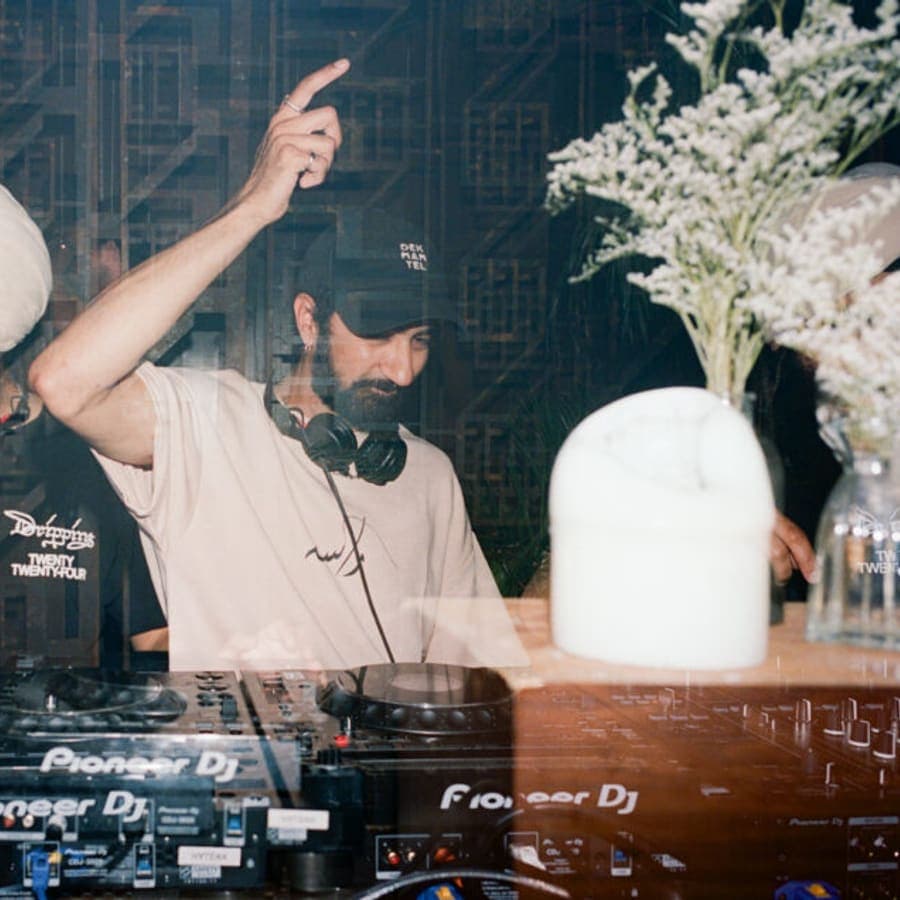
Photo: Rolling Stone India
Jaiveer Singh and Mihir Chauhan named their project after the Hindi word for "bucket" — Singh picked it off a list Chauhan had scribbled down of potential band names, mostly because it sounded like nothing else in the scene they were entering. That instinct for finding the unclaimed space turned out to define everything that came after. As Baalti, the two have spent the years since digging through Bengali disco records, Hindustani classical recordings, and Gujarati folk source material that most Indian electronic producers were skipping past entirely, and turning it into bass-heavy club music built for a UK-style dancefloor.
"There was no Baalti before San Francisco," Chauhan has said — and the specific city mattered. It's where two college friends who used to make jammy psychedelic rock together reinvented themselves as producers, found a sample-clearance process that took six months for a single Rupa Biswas record, and built a sound distinctive enough to land a Rolling Stone India Future 25 placement, a Glastonbury slot, and a support run with Disclosure. This is how a duo named after a bucket became one of the most specific voices in South Asian electronic music.
Key takeaways
- Baalti is a duo — Jaiveer Singh and Mihir Chauhan — who met in college making jam-band psychedelic rock before relocating to San Francisco and reinventing themselves as electronic producers around 2020
- Their sound blends UK bass and house structures with sampled Bengali disco, Hindustani classical, and Gujarati folk source material — clearing a single Rupa Biswas sample for their debut EP reportedly took about six months
- Their 2025 EP "Mela" drew directly on West Bengal's underground sound-system "box competition" culture, marking a shift from their earlier lo-fi house sound toward harder, more percussive material
- They released "Threads," a full-length collaborative album with Chicago producer Lapgan, in April 2026, following two prior EPs ("Stunt Doubles," 2025) made with UK producer Anish Kumar
- They were named to Rolling Stone India's Future 25 in 2025, with a tagline describing them as flipping "South Asia's hidden sounds into hard-hitting dance floor bangers"
Discover producers and DJs building distinct sounds in India's electronic scene. kredl →
The Starting Point: A Jam Band, Not a DJ Booth
Baalti didn't start as an electronic project. Singh and Chauhan met in college, where they played together in a band doing jammy, psychedelic post-punk — guitars, drums, the standard rock-band toolkit, nothing that pointed toward the sample-heavy club music they'd eventually become known for. Chauhan has been candid about not even liking electronic music at first: "I hated electronic music because I thought it didn't require any skill," he's said — a position he abandoned quickly once he actually started making it. "I got hooked pretty quickly."
Both grew up in India before relocating to the Bay Area separately — Chauhan roughly five years before the project started, Singh around three — and it was in San Francisco, not before it, that the two reconnected and began actually building Baalti. "There's really sick DJ communities out here," Singh has said of the city's scene. "There was no Baalti before San Francisco."
Finding the Sound: Six Months to Clear One Sample
The turning point from "two friends making beats" to "a project with a real identity" came through crate-digging — specifically, a casual competition between the two of them to see who could sample a given record better, using Bengali disco and Hindustani classical recordings as raw material. "We were discovering a lot of records that inspired us, and we wanted to recontextualize them in a way we hadn't heard before," Chauhan has said of that period. Singh has described the underlying philosophy in similar terms: "We like looking beyond the first obvious layers."
That deliberateness showed immediately on their self-titled 2021 debut EP, which flipped recordings tied to Ustad Zakir Hussain and Ustad Allah Rakha, plus a Rupa Biswas disco track, into lo-fi house — a process Chauhan has described bluntly: "The process is definitely long and tedious. Clearing the Rupa sample took about six months."
Find collaborators who take sampling and clearance seriously. kredl →
Building on Stage, Not Just in the Studio
Baalti's early process leaned heavily on live performance as a writing tool rather than treating the studio and the stage as separate stages of the work. "All the songs really came together on stage," Singh has said. "We'd take kind of raw, unfinished versions of these songs and chop them up and play them... during our live sets." Their creative division of labor is one they describe with the same directness that runs through most of their interviews: "Mihir makes the music, I make the jokes," Singh has said, "whoever's ideas are working better are the ones that make it into the tracks... It's very free flowing for sure."
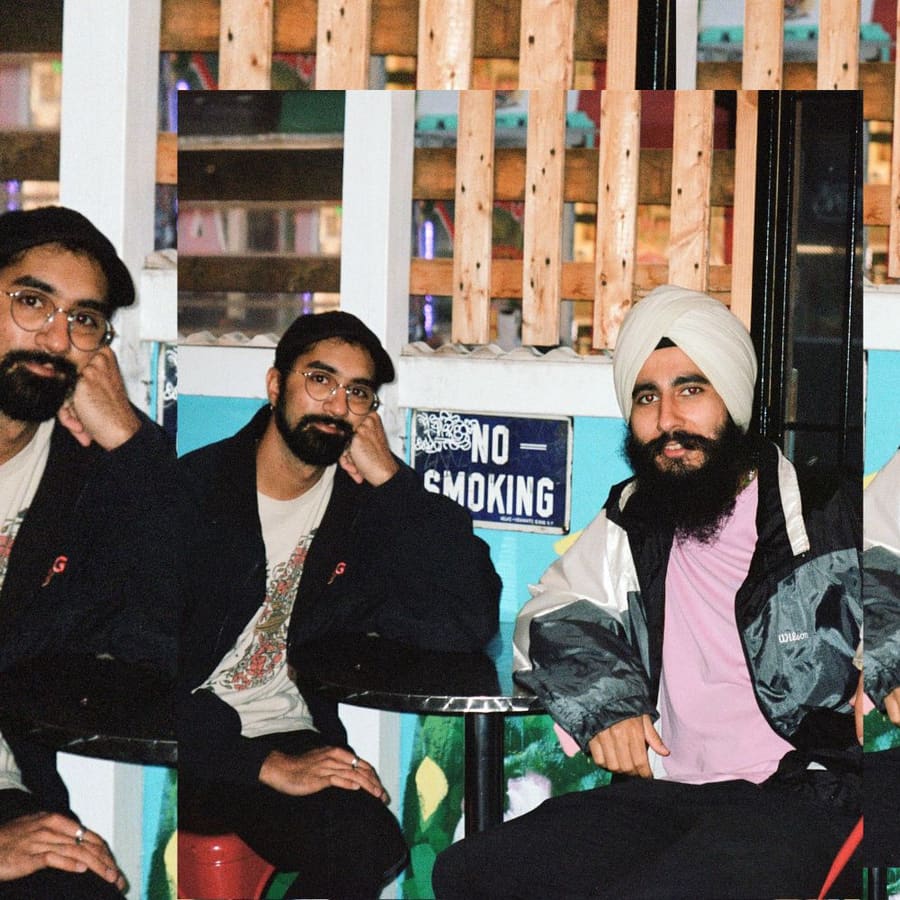
Photo: KQED
How to Collaborate With Musicians in India
Mela: Going Harder, Straight From West Bengal's Sound Systems
By 2025's "Mela" EP, released via Steel City Dance Discs, Baalti's sound had shifted noticeably — from the lo-fi house textures of their earlier work toward harder, more percussive "peak-time" material. The project drew directly from West Bengal's underground sound-system "box competition" culture, using field recordings rather than sampled records for the first time in their catalogue. "We grew up witnessing processions like these in Bombay and Delhi, but only later drew parallels to UK bass and sound system culture as we began producing music," the duo has said of the connection. "We saw these two worlds that were both thriving in isolation from each other, and the idea of bridging those worlds really excited us."
Jaiveer Singh, on the intensity of Baalti's live sound: "It's literally like auditory warfare. It's taking the idea of what a dance party can be to an extreme level." (Rolling Stone India, Future of Music 2025)
Connect with artists building sounds rooted in specific cultural traditions. kredl →
Collaborators: Anish Kumar, Lapgan, and a Widening Circle
Baalti's recent catalogue has leaned increasingly collaborative. In 2025, they teamed up with UK producer Anish Kumar — a connection made at Glastonbury's Azaadi stage, a platform dedicated to South Asian artists — for a two-part project called "Stunt Doubles," reportedly built over a weekend of what the duo has called "manic 30-minute beat battle power sessions": each producer setting a timer and trying to out-do the other, a formalized version of the same sample-flipping competitions that built their earliest material. "We set a 30-minute timer and try to outdo each other to make the craziest idea," Singh has said of the method.
That same collaborative instinct produced "Threads," a full-length album made with Chicago-based producer Lapgan and released in April 2026 — Baalti's first true LP after several years of EPs. The album continues the duo's pattern of using deadline-driven, competitive co-writing sessions to force material into existence quickly, rather than over-refining tracks in isolation.
What Other Independent Producers Can Take From Baalti's Approach
A shared name can carry your whole identity if you commit to it. "Baalti" — Hindi for "bucket" — is a deliberately unglamorous name for a project this musically ambitious. The duo never tried to make it sound more serious than it is, and it hasn't slowed them down.
Sample clearance is part of the craft, not an afterthought. Spending six months clearing a single sample for a debut EP is a real cost most emerging producers skip by avoiding sampling altogether. Baalti built their entire identity on doing it properly instead.
Competitive, deadline-driven co-writing can outperform open-ended studio time. Both the "Stunt Doubles" sessions with Anish Kumar and the duo's own internal process rely on short timers and head-to-head challenges — a structure that forces finished ideas rather than endless revision.
A sound doesn't have to stay static to stay identifiable. Baalti moved from lo-fi house on their debut to harder, field-recording-driven material on "Mela" without losing the thread that connects both eras: South Asian source material, reframed for a Western club context.
Build a profile that shows the full range of your creative work. kredl →
Meet India's Next Generation of Music Talent: 25 Artists to Watch in 2026
Frequently Asked Questions
Who is Baalti?
Baalti is a South Asian bass and house music duo made up of Jaiveer Singh and Mihir Chauhan, who met in college playing jam-band rock before relocating to San Francisco and reinventing themselves as electronic producers around 2020. They were named to Rolling Stone India's Future 25 in 2025.
What does the name "Baalti" mean?
"Baalti" is Hindi for "bucket." Jaiveer Singh picked the name from a list of potential band names that Mihir Chauhan had written down — a deliberately plain name for a project built on much more ambitious sample-based production.
What is Baalti's "Mela" EP about?
"Mela," released in 2025 via Steel City Dance Discs, draws on West Bengal's underground sound-system "box competition" culture. It marked a shift from Baalti's earlier lo-fi house sound toward harder, more percussive material, and was the first Baalti project built using original field recordings rather than sampled records.
Who has Baalti collaborated with?
Baalti's recent collaborations include a two-part project called "Stunt Doubles" with UK producer Anish Kumar (2025) and a full-length album, "Threads," with Chicago-based producer Lapgan (released April 2026) — their first LP after several years of EP releases.
Where is Baalti based?
Baalti formed in San Francisco's Bay Area, where the duo has said the project's whole identity took shape. More recent coverage places them based out of New York, though neither city has fully replaced the other in how the duo describes themselves.
Baalti's catalogue reads like a running argument against skipping the obvious question of where a sound actually comes from. A Rupa Biswas disco record, a West Bengal sound-system tradition, a Hindustani classical recording most club audiences would never otherwise hear — none of it arrived pre-packaged for a dancefloor. Six years and a Rolling Stone India Future 25 placement later, that's still the whole method: dig deeper than the first obvious layer, and see what's actually down there.
Find your next collaborator, manager, or creative partner in India's music industry. kredl →