How to Prepare for a Battle of Bands Competition in India
A practical guide for Indian college bands: read the rulebook, build a short competition set, prepare a fast changeover and turn one contest into useful live-work proof.
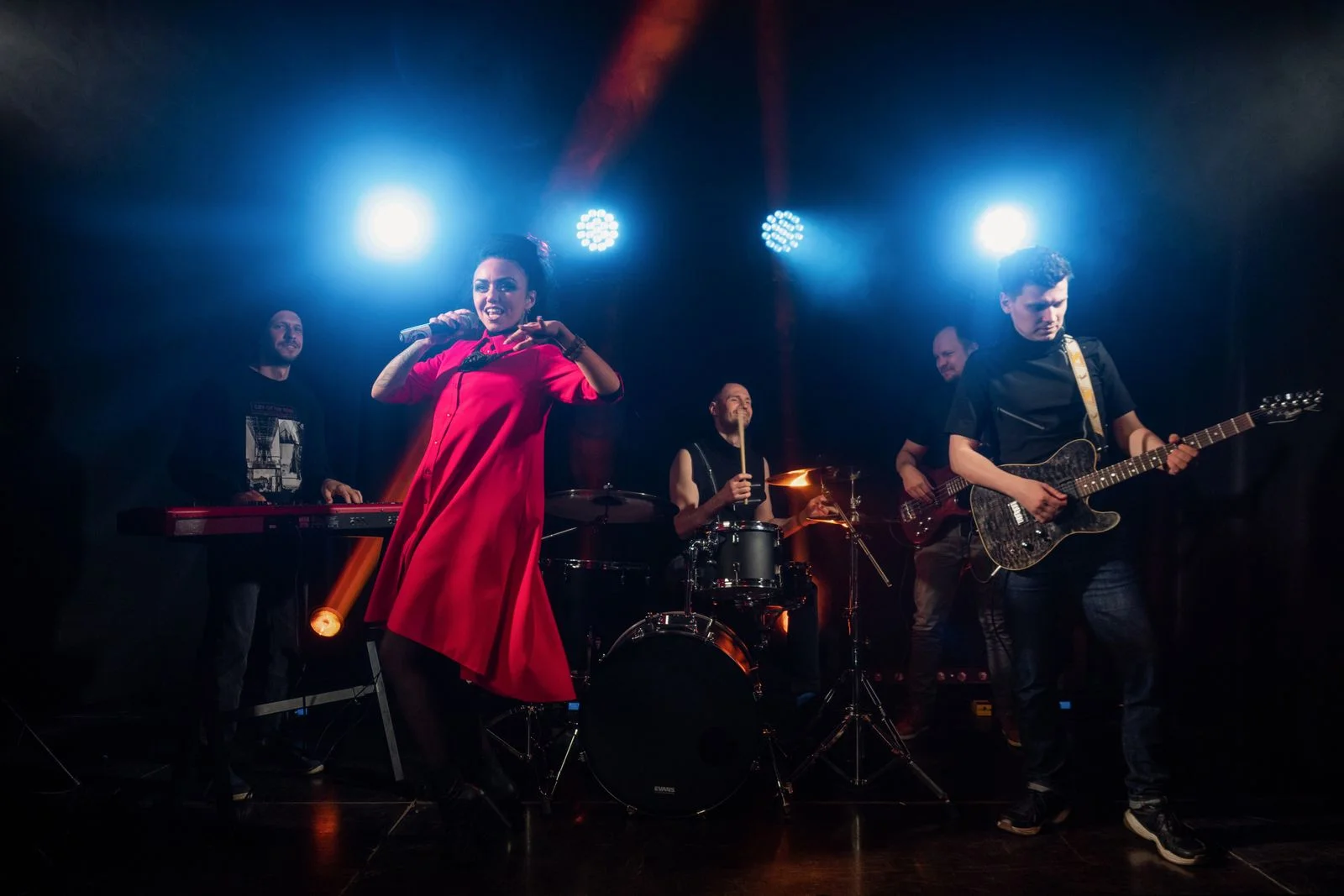
Cover photo: “Musicians Performing on Stage” by Alena Darmel via Pexels, used under the Pexels License.
A Battle of Bands is not a normal gig with a trophy added at the end. It is a short, rule-bound performance: the event team may set the roster size, ask for a submission video, limit backing tracks, provide only part of the backline and score the set against stated criteria. The best preparation is not “rehearse harder.” It is to turn the exact entry rules into a compact show plan that every band member understands.
This guide is for college bands in India entering competitions. It is not a guide to running a festival or booking a paid set. Your first job is to read the specific host’s rules; this article shows how to translate them into a reliable audition, stage set and follow-up record.
Key takeaways
- Treat the host’s published rules as part of the arrangement: they can decide your team size, soundcheck window, gear and whether originals or backing tracks are allowed.
- Build a competition set around the clock. Recent college examples give bands roughly 10–15 minutes, sometimes including setup or soundcheck; the host’s published rules control your slot. DIT University
- Prepare one shared stage document: roster, song order, input list, gear ownership and an emergency contact.
- A contest result is useful career proof only when you save accurate credits, approved photos and the feedback you received.
How musicians can get booked at college festivals in India
Read the entry rules before choosing the songs
The 2026 Unstop event listing for Christ University Delhi NCR limits bands to three to eight members, requires at least one original composition and states a 15-minute total including soundcheck. The lesson is simple: an entry starts with constraints, not with a dream set. Save the official event page or rule PDF, then assign one band member to turn it into a checklist. Christ University Delhi NCR listing on Unstop
Do this before you pay an entry fee or promise a lineup. Confirm who may compete, whether cross-college members are permitted, maximum and minimum roster size, language limits, original-song requirements, expected arrival time, video-submission format, registration deadline, equipment supplied and the exact definition of “stage time.” A ten-minute performance limit means something very different if it includes three minutes of setup.
Published conditions vary. A 2026 Battle of Bands listing on Unstop for Christ University Delhi NCR describes teams of three to eight members, at least one original composition and a 15-minute total that includes soundcheck. DIT University’s 2025 Youthopia rules allowed ten to fifteen performance minutes plus five minutes for setup and soundcheck. These are examples, not a national standard; the host’s latest page always wins. Christ University Delhi NCR listing on Unstop DIT University, Youthopia 2025
Turn each condition into a rehearsal decision
| What the host publishes | What the band decides before rehearsal |
|---|---|
| Eligibility and ID requirement | Verify every performer’s enrolment, spelling and contact number; avoid a day-of-event roster surprise. |
| Minimum original-song requirement | Choose the composition, agree its writers and prepare a clean lyric sheet or demo if requested. |
| Total stage allocation | Mark a stopwatch cue for walk-on, first note, transition, final chord and full stage clearance. |
| Pre-selection video | Film one honest take with audible vocals and instruments; label the file exactly as the application asks. |
| Supplied drum kit or amplifiers | Ask for model, configuration, microphones and working condition; carry personal consumables, sticks and patches. |
| No playback policy | Re-arrange samples, pads or vocal doubles for live players, or remove them without weakening the song. |
| Limited backstage access | Nominate one calm spokesperson; the rest of the group stays nearby, tuned, hydrated and ready. |
| Content restriction | Read lyrics aloud in the room, then replace lines that risk avoidable disqualification or discomfort. |
| Judging criteria | Decide what demonstrates texture, timing, originality, musical control and stage presence inside one brief performance. |
This matrix is not a substitute for a promoter’s instructions. It is a rehearsal tool: each published condition produces one observable decision, owner and test. When a requirement is vague, email the named coordinator rather than building your arrangement around a rumour.
The entry document is really a production brief in disguise. Once you copy its time, gear and eligibility conditions into your rehearsal plan, the band stops arguing about preferences and starts rehearsing the show that can actually be judged.
Build a Battle of Bands set that survives a short clock
The 2026 Christ University listing says bands can lose points when they exceed a 15-minute allocation, including soundcheck; DIT University’s rules applied a five-point penalty for each extra minute beyond 15. A good student-band set therefore needs a hard ending and a clear setup order, not only strong songs. Christ University Delhi NCR listing on Unstop DIT University, Youthopia 2025
Time the whole thing in rehearsal: walk-on, instrument handover, line check, count-in, song transitions, any spoken introduction and walk-off. Do it with a phone timer. Then create a shorter “cut version” of the final song. If the stage manager signals that you are running late, you can skip a repeated chorus or solo by agreement instead of panicking on stage.
Run one final timed drill under awkward conditions. Begin with instruments in cases, use only the cables you will travel with, and appoint somebody to announce the final-minute warning. Simulate a missing adapter, an unexpectedly quiet monitor or a member who cannot hear the count-in. The purpose is not theatre; it is to discover whether the group can make a quick, polite decision without losing the musical pulse.
Start with the piece that establishes your sound quickly. A cover can show arrangement skill, while an original can show authorship; do not assume one is always better. If the rules require an original, rehearse its short explanation only if it adds value. The judge should hear the song, not a long origin story.
Think about contrast without cramming in every genre you play. Two focused songs with a strong transition are easier to execute than four unrelated ideas. Choose keys, tempos and instrumentation that do not create an impossible mid-set guitar swap, keyboard patch change or drum reconfiguration. Our live setlist guide for Indian gigs has a practical way to sequence energy without treating the crowd as an afterthought.
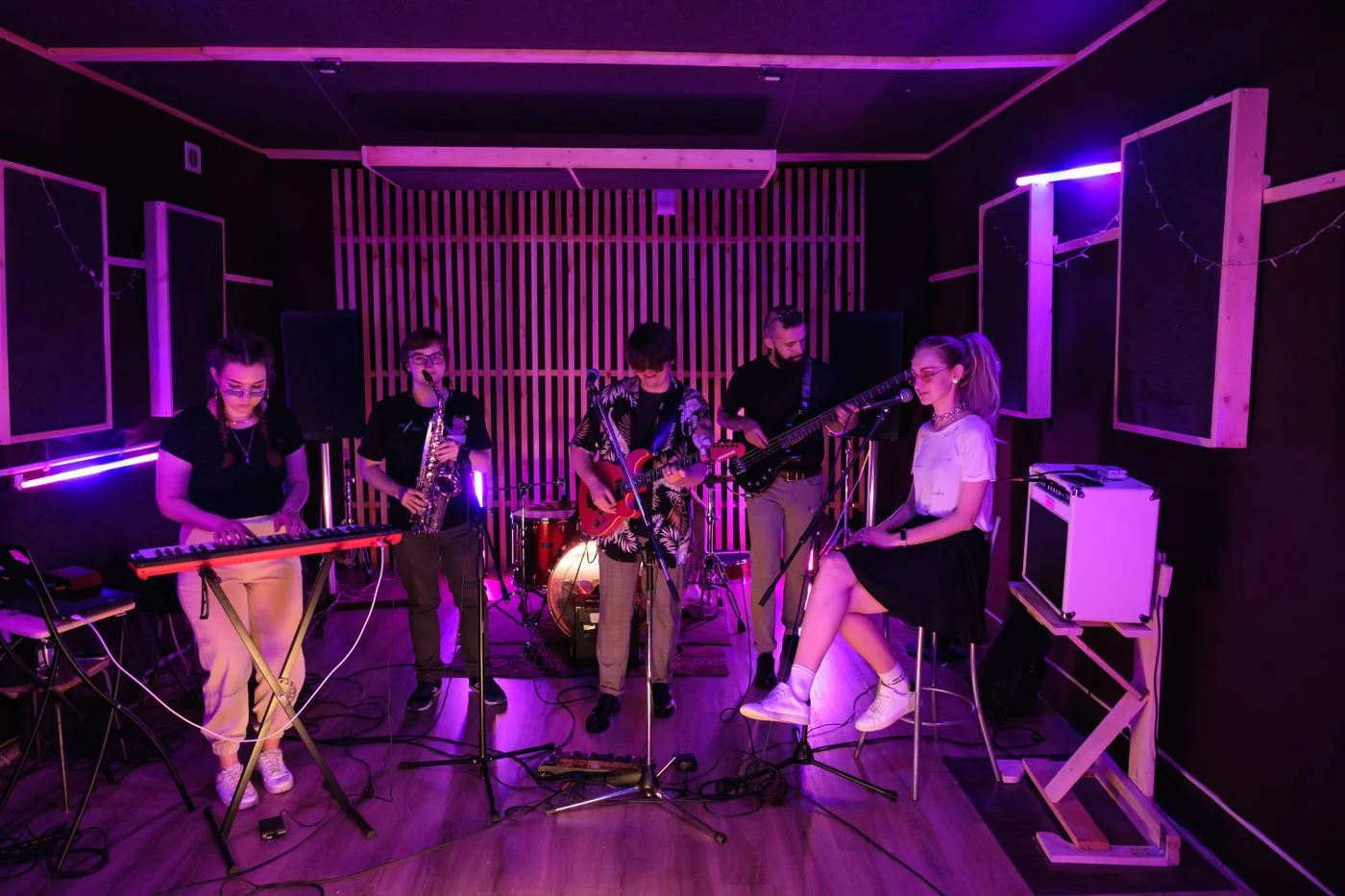
Photo: “A Band Doing a Rehearsal” by Big Bag Films via Pexels, used under the Pexels License.
Make the stage plan smaller than your ambition
The Ministry of Information and Broadcasting’s 2025 India’s Live Events Economy whitepaper describes live events as a labour-intensive sector spanning artists, sound engineers, designers, venue operations, security and other work. At a student competition, respect for that chain begins with a stage plan the sound crew can act on quickly. Ministry of Information and Broadcasting, India’s Live Events Economy
Make a single page, not a 20-page deck. Include band name, contact person, every member’s instrument, a song-by-song order, input count, microphone and DI needs, monitor preferences, supplied gear you will use, gear you will bring, power needs and the fastest route off stage. Put a version date on it. Send it when the organiser requests it, and bring a printed copy in case the backstage network fails.
Do not presume that “a drum kit is provided” means every component you need will be supplied. SAGE UTSAV 2026 stated that each band had three to eight playing members and referred entrants to its official rules; other current college events specify a basic kit while asking performers to bring their own instruments. Ask one precise question in writing: “What are the supplied make/model, mic count, DI count, monitor count and backline, and when can we test them?” SAGE UTSAV 2K26
If an essential item is unavailable, simplify. A lean arrangement that comes on and off cleanly can score better than a complicated show that consumes the next band’s setup window. Use our technical rider and stage-plot guide to create the one-page version your crew needs.
For a college competition, the stage plan is a test of collaboration as much as musicianship. A band that can state its needs, carry its own cables and clear the stage on time makes itself easier to invite back.
Protect the people, songs and equipment in the band
IPRS says a public-performance licence can be necessary for copyrighted music under its control, whether or not admission is charged, and describes responsibilities for organisers, premises owners and performers. That means a band should not make casual promises about using commercial tracks, livestreaming a show or clearing rights; ask the organiser what is covered and keep your own use factual. IPRS, “Choose your license”
For your own material, agree on three things before the contest: who wrote what, who may submit the song in the application video, and who can upload the final performance clip. This is not a legal contract by itself. It is a shared record that reduces the chance that one member posts someone else’s writing or performance without consent.
Also name what the band owns. A borrowed pedalboard, a rented keyboard, a friend’s bass amp and a college drum kit are different responsibilities. Photograph borrowed gear at handover, label your cases and decide who keeps the documents and travel receipts. If there is prize money, agree in writing whether you will cover expenses first or split the whole amount evenly. Our band agreement guide for India gives a starting point for the conversations that prevent friendships becoming disputes.
Avoid vague marketing. Do not advertise yourselves as “winners” if you were finalists, and do not list a person as a producer, sound engineer or manager unless that is the work they actually did. Accurate credits are more useful to future collaborators than louder claims.
Pack for the competition day, not an ideal studio session
Recent college events make the practical expectation clear: Christ University Delhi NCR’s 2026 listing names a three-to-eight-member band limit, while SAGE UTSAV set the same playing-roster range. Before leaving campus, run a named-person check for instruments, power supplies, leads, picks, sticks, spare strings, setlist, ID, stage document, water and a charged phone. Christ University Delhi NCR listing on Unstop SAGE UTSAV 2K26
Use this short competition-day checklist:
- Band lead: registration confirmation, roster and contact for the stage manager.
- Instrument lead: every cable, adapter, battery, pedal power supply and case marked with an owner.
- Set lead: printed running order, short ending cue and the file or link requested by the host.
- Credit lead: consent to record, contributor names and a folder for approved photos or clips.
One person can hold more than one role, but every role should be named before travel. That tiny bit of preparation leaves the band free to listen, react and perform once the lights come up.
Use the competition as a rehearsal for professional follow-through
The MIB whitepaper says India’s live-events ecosystem includes freelance roles such as artists, emcees, sound engineers, visual designers, videographers and hosts. A college contest can introduce you to those roles if you treat the day as real work: arrive on time, communicate calmly, listen to stage instructions and thank the crew before you leave. Ministry of Information and Broadcasting, India’s Live Events Economy
After the performance, write a short debrief within 24 hours. Record the stage allocation, actual set duration, equipment that worked, monitor issues, songs that landed, feedback from judges if offered and the names of contributors you have permission to credit. Save the official poster, registration confirmation and a clean photo or clip. Ask the photographer or organiser before reposting anything.
Then publish a truthful credit line: band members and roles, songwriter credits, visual artist, live-sound crew, photographer or videographer, college/festival and date. This is where a student contest becomes a portfolio reference rather than a disappearing story. Kredl can help you present collaborator-confirmed credits and work; it cannot turn an unverified claim into a credit or replace the organiser’s result.
Frequently Asked Questions
How long should a college Battle of Bands set be?
Plan for the event rules, not a generic answer. Recent examples range from the 15-minute total in Christ University Delhi NCR’s 2026 listing to 10–15 performance minutes plus setup at DIT University’s 2025 Youthopia. Time the entire changeover, not only the songs, and prepare a short ending. Christ University Delhi NCR listing on Unstop DIT University
Do Battle of Bands competitions in India require original songs?
Some do and some do not. The Christ University Delhi NCR listing on Unstop requires at least one original composition, while other hosts allow covers or state their own conditions. Treat an original-song rule as an application requirement, then preserve songwriter credits in your notes and performance metadata. Christ University Delhi NCR listing on Unstop
Can we use backing tracks in a college Battle of Bands?
Only if the current host explicitly allows them. Christ University Delhi NCR’s 2026 listing states that backing tracks are not allowed, and many other events set their own playback conditions. Never assume a polished rehearsal backing track will be permitted on stage. Ask before you arrange the song around it. Christ University Delhi NCR listing on Unstop
What should a band bring to soundcheck?
Bring the exact instruments, cables, adapters, drum accessories and playback hardware named in your stage plan, plus a printed input list. At SAGE UTSAV 2026, the published eligibility limited bands to three to eight playing members; requirements for supplied gear can vary, so confirm your own show’s backline in writing. SAGE UTSAV 2K26
Sources, methodology and image credits
This is a practical preparation guide, not legal advice. Rulebooks, deadlines, fees, music-rights requirements and equipment lists change between colleges and editions. Every band should treat the named organiser’s latest official rules as controlling.
- Unstop event listing for Christ University Delhi NCR, Battle of Bands (BOB), Sunergos ’26, 2026 entry requirements and time allocation, retrieved 2026-10-30.
- DIT University, Youthopia 2025, Battle of Bands rules and judging criteria, retrieved 2026-10-30.
- SIRT Bhopal, SAGE UTSAV 2K26 Battle of Bands, current eligibility and official-rulebook reference, retrieved 2026-10-30.
- Ministry of Information and Broadcasting, India’s Live Events Economy: A Strategic Growth Imperative, published 2025, retrieved 2026-10-30.
- IPRS, “Choose your license”, public-performance licensing guidance, retrieved 2026-10-30.
- Cover image: “Musicians Performing on Stage” by Alena Darmel via Pexels, Pexels License, downloaded and stored locally, retrieved 2026-10-30.
- Inline image: “A Band Doing a Rehearsal” by Big Bag Films via Pexels, Pexels License, downloaded and stored locally, retrieved 2026-10-30.