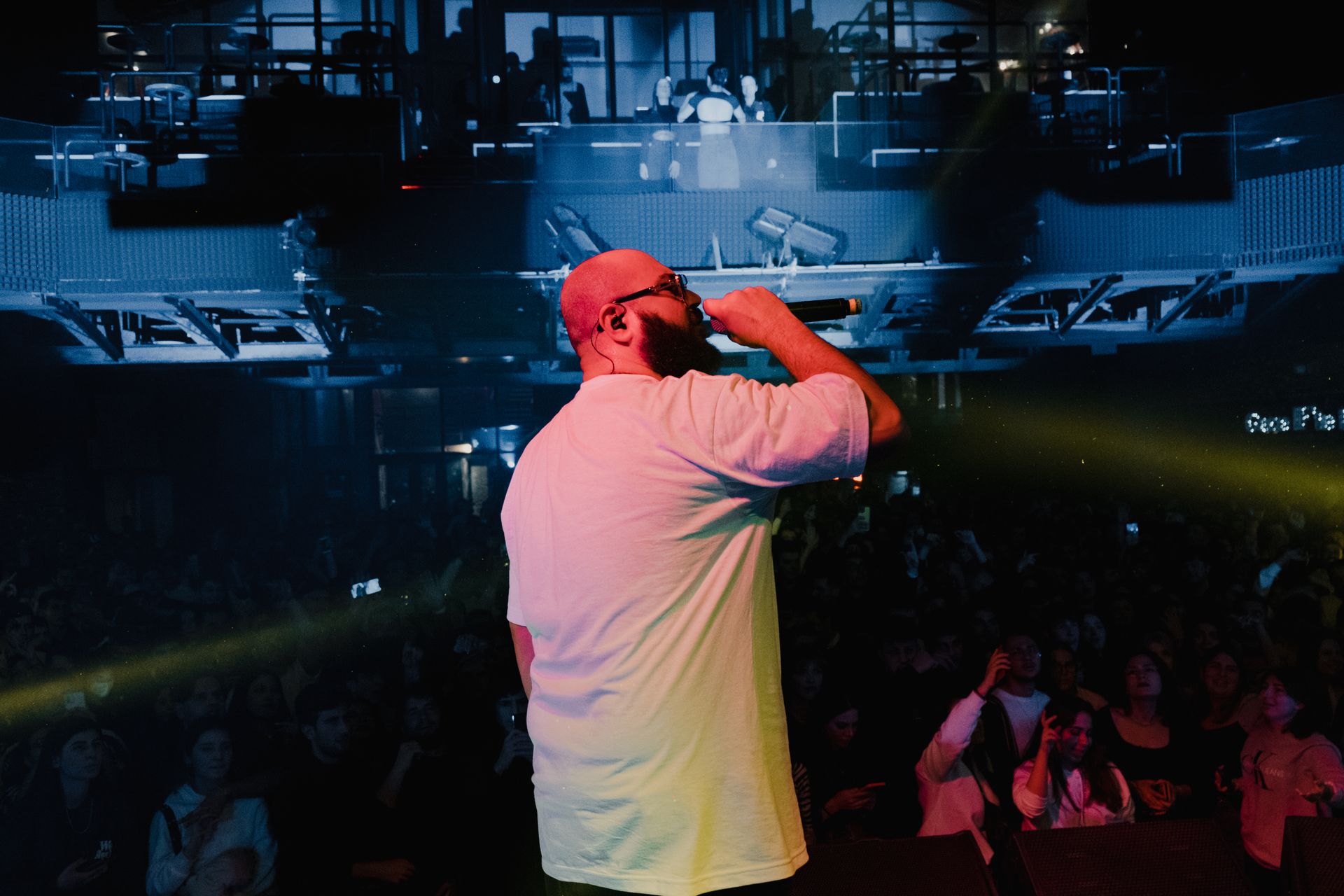
How Vishal Dadlani Built a Career Between Indian Rock and Film Music
Vishal Dadlani's career shows Indian musicians how a personal band, practical film work, a creative partnership and clear credit practices can coexist.
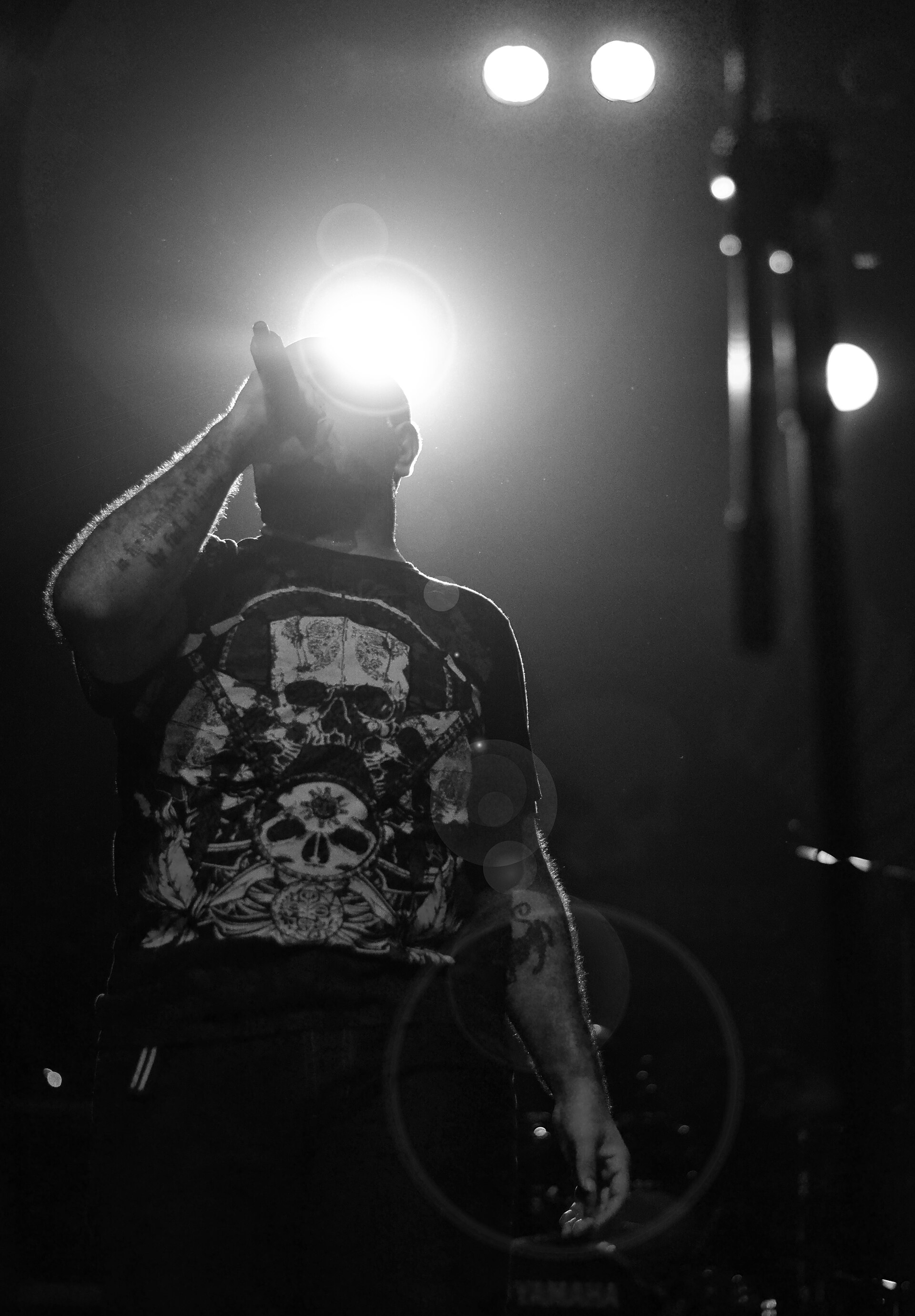
Cover photo: Vishal Dadlani performing with Pentagram at Rock Riders in Guwahati, Assam, 27 September 2012. Photo by rejaul arsad via Wikimedia Commons, used under CC BY 2.0. The locally stored web-resolution version is resized for delivery.
Vishal Dadlani built a lasting music career by refusing a false choice: he kept a personal band voice with Pentagram while learning to write for film scripts, directors and audiences as one half of Vishal-Shekhar. Mid-day India Today The useful lesson is not that every artist should become a film composer. It is that different creative contexts can strengthen each other when you know what each one asks of you.
For an Indian musician, Dadlani’s path offers a practical sequence. Learn in public, take a job that improves your tools, recognise a serious collaborator, build a runway between breakthroughs and protect credit when you reinterpret existing work. His career is less about genre-hopping than about keeping the purpose of each project clear.
Key takeaways
- Dadlani said he began learning guitar and writing basic songs at 19, before Pentagram gave him a band context for writing, recording and college-circuit touring. Mid-day
- An early film assignment helped him buy equipment; a shared project with Shekhar Ravjiani became the start of Vishal-Shekhar. India Today
- The duo used a four-year gap before Jhankaar Beats for ad-film work, rather than treating the interval as failure. India Today
- Dadlani has argued publicly for original composers to receive credit and for permission when reinterpreting a song. The Indian Express
How Swarathma built an Indian folk-rock band that lasts
How did Pentagram become Vishal Dadlani's first real music school?
In a 2018 Mid-day interview, Dadlani said he began learning a little guitar and writing basic songs at 19, even though no one in his family was a professional musician. He described Pentagram as the place where he learned through writing, recording and touring the college circuit. That is a more useful model than waiting for formal permission to call yourself an artist. Mid-day, “Vishal Dadlani shares some interesting things with us on World Music Day”
College shows mattered because they turned ideas into public work. A song can feel complete in rehearsal and still fail to reach a room. Touring a small circuit teaches an artist how to begin a set, recover from a bad monitor mix, build a band vocabulary and notice which choices an audience carries home.
Dadlani did not present Pentagram as a polished launchpad. He credited the band with teaching him by doing: make songs, put them on tape, play them live and repeat. For a younger group, that can be a campus society, a rehearsal collective, an open-mic circuit or a self-produced show. The format is less important than the repetition.
If you are building a band now, give the learning process a container. Set one date for a demo, one date for a public performance and one date to review the work afterwards. Our college music society guide can help turn that kind of informal energy into a show people can actually attend.
A first band is not only a way to be discovered. It is a place to become useful to other musicians: someone who arrives prepared, has an opinion, can finish a song and can stay constructive when a rehearsal goes wrong.
Why did he take an early film-music assignment?
Dadlani told Mid-day that he accepted an early opportunity to make music for a film because he needed money for equipment. He later found that his friend Shekhar Ravjiani was working separately on the same project, and they chose to work together. In this version of the story, the commercial task did not dilute the personal work; it funded tools and revealed a collaborator. Mid-day
The shared project was Pyaar Mein Kabhi Kabhi. In a 2013 India Today interview, Dadlani and Ravjiani described how the title-track collaboration became the basis for their partnership. A 2003 interview with Rediff records their later Jhankaar Beats work as script-specific rather than a collection of songs waiting for a film. India Today, “Vishal-Shekhar: ‘We don’t make music just for the sake of it’” Rediff, “We did not copy RD Burman”
For an independent musician, practical work can be a good decision when it buys more than cash. It might pay for reliable recording equipment, a music video, a rehearsal room, a session player or time to finish an EP. Ask what the job makes possible. If the answer is only exposure, you probably need stronger terms.
The deeper decision was collaboration. Two friends were brought near the same task, noticed that their strengths could work together and made a choice to build a shared identity. That is different from tagging someone on a release because their audience is larger.
What did Vishal-Shekhar do between the first film and the next breakthrough?
Vishal-Shekhar had a four-year gap before Jhankaar Beats in 2003, according to their 2013 India Today interview. During that period they worked on ad films instead of chasing every filmmaker. The gap is a useful career fact because it rejects the idea that a first credit must immediately produce a steady run of bigger credits. India Today
Ad-film work can teach speed, briefing, revision and the discipline of making a musical decision that fits a short narrative. It does not have to be a permanent destination. It can be runway—work that pays the bills while the next larger creative opportunity develops.
That framing can help emerging artists avoid panic between releases. A producer might take on a brand cue, a vocalist may sing guide tracks, a drummer may play sessions, and a songwriter could write for another artist. These are not signs that the original project has failed. They are ways to keep the skills, tools and relationships moving.
The period between public milestones is usually where a music career becomes real. What matters is whether the work in that period leaves you with better craft, better relationships or more room to choose—not whether it looks glamorous online.
Our session-musician work guide for India explains how to make those contributions visible and professionally documented when you are hired to serve another artist’s project.
How did he keep personal band work and film composition distinct?
In their India Today interview, Dadlani and Ravjiani contrasted two creative settings: Pentagram allowed Dadlani to explore a more personal, free-flowing direction, while film composition started with the director’s script, characters and narrative situation. The distinction is useful because an artist can value both freedom and a brief without pretending they are the same job. India Today
Film work asks the music to serve a scene. A personal band song can begin with an argument, a sound, a political idea, a riff or a feeling the writer cannot explain yet. Both demand skill, but they measure success differently. Confusion starts when an artist judges a commissioned track only by personal expression, or judges a personal track only by whether it sounds commercially safe.
Pentagram continued to operate as a live band alongside Dadlani’s film work. In 2013, Rolling Stone India documented the group’s day around a Manipal Institute of Technology cultural-festival performance, including its preparation and show routine. Keeping a live band active can preserve a different creative muscle: collective rehearsal, risk, arrangement and direct audience response. Rolling Stone India, “Pentagram: A Day in the Life”
For your own career, name the lanes. You might have an original project, paid session work, commissioned scores and a teaching practice. Give each a clear purpose, deadline and standard of quality. This reduces the guilt of not doing everything under one artist name.
Why does his approach to credit still matter?
In a 2019 interview with The Indian Express, Dadlani said he disliked remakes that did not credit original composers. He described naming R. D. Burman on an interpretation and seeking Biddu’s permission before reworking “Disco Deewane.” The practical lesson is not to treat source material as a free aesthetic resource: credit, permission and agreements belong inside the creative process. The Indian Express, “Hate remixes because original composers don’t get credit”
The same habit applies at a smaller scale. List the co-writers, performers, producers, engineers, artwork contributors and video team correctly. Discuss splits before a song becomes valuable. If a cover, interpolation, remix or sample is involved, do not assume that a social upload makes it clear. Get qualified advice for the specific release and permission route.
In 2015, Dadlani launched VLT, a label India Today reported was intended to promote independent musicians; its first announced artist was Delhi singer-songwriter Dhruv Viswanath. That move is another version of the same belief: build structures that give distinct artists a real platform, not only a borrowed spotlight. India Today, “Vishal Dadlani’s music label VLT to give platform to independent artists”
Kredl is built around visible work and collaborator-confirmed credits. Use it to show the people behind a record, set or score accurately. It cannot replace permission or prove a contribution nobody agreed to, so keep the record precise from the first draft onwards.
A practical Vishal Dadlani career checklist for musicians
Dadlani’s reported path includes a first band, a practical film task, a long creative partnership, ad-film runway, script-led work and an independent-music label. The exact route is his; the working principles are reusable.
Try making a one-page decision ledger after each project. Write the project’s purpose, who made the creative calls, which asset or skill it strengthened, every promised credit, the next follow-up date and the money still due. A campus-show payment, a demo arrangement, a brand jingle and a film cue may all move a career forward, but they need different expectations. This small record turns vague momentum into evidence you can discuss with a manager, collaborator or future client.
- Write and perform before you feel finished. A small public circuit can teach more than private polishing.
- Choose paid work with a creative return. Prioritise jobs that improve tools, skills, samples or relationships.
- Recognise serious collaborators. Build a shared project only when the work becomes stronger together.
- Keep each music lane honest. Let an original band, a score and a brand brief do their different jobs.
- Name every contributor. Treat credit and permission as part of making the work, not cleanup after release.
You do not need a film break to use this checklist. A student band, a local scoring job, a remote session and a well-credited independent single are already enough material to practise it.
Frequently Asked Questions
How did Vishal Dadlani begin making music?
Dadlani told Mid-day that he began learning guitar and writing basic songs at 19. He later described Pentagram as the place where he and the band wrote, recorded and toured the college circuit. That sequence shows how public practice can become a musician’s early training ground. Mid-day
How did Vishal-Shekhar form?
The duo formed after Dadlani and Shekhar Ravjiani discovered they were separately working on the same early film project, Pyaar Mein Kabhi Kabhi. Their title-track collaboration became the basis of the partnership, according to their 2013 India Today interview. India Today
Did Vishal Dadlani leave Pentagram for film music?
No. Dadlani has described Pentagram as a personal creative lane and film music as work shaped by a script and director. Rolling Stone India documented Pentagram’s 2013 festival activity while his film-composition work was already established. The two contexts served different purposes. India Today Rolling Stone India
What can musicians learn from Vishal Dadlani’s view on credits?
Give original composers and contributors accurate credit, and discuss permission before you reinterpret someone else’s song. Dadlani told The Indian Express that he named R. D. Burman when interpreting a composition and sought Biddu’s permission for “Disco Deewane.” That is a useful professional baseline for any musician. The Indian Express
Sources, methodology and image credits
This editorial profile is not an authorised biography. It uses contemporaneous interviews and music reporting. Practical recommendations are Kredl’s interpretation for working musicians, not a claim that the same career route will produce the same result.
- Mid-day, “Vishal Dadlani shares some interesting things with us on World Music Day”, published 2018, retrieved 2026-11-02.
- India Today, “Vishal-Shekhar: ‘We don’t make music just for the sake of it’”, published 2013, retrieved 2026-11-02.
- Rediff, “We did not copy RD Burman”, published 2003, retrieved 2026-11-02.
- Rolling Stone India, “Pentagram: A Day in the Life”, published 2013, retrieved 2026-11-02.
- The Indian Express, “Hate remixes because original composers don’t get credit”, published 2019, retrieved 2026-11-02.
- India Today, “Vishal Dadlani’s music label VLT to give platform to independent artists”, published 2015, retrieved 2026-11-02.
- Cover image: “Vishal Dadlani”, depicts Vishal Dadlani performing with Pentagram at Rock Riders, Guwahati, Assam, 27 September 2012; photo by rejaul arsad, CC BY 2.0, retrieved 2026-11-02. The locally stored web-resolution version is resized for delivery.