How to Start a College Music Society in India and Run Your First Showcase
A practical first-showcase guide for Indian college music societies: build a team, get campus approval, plan music permissions, brief performers and document the work.
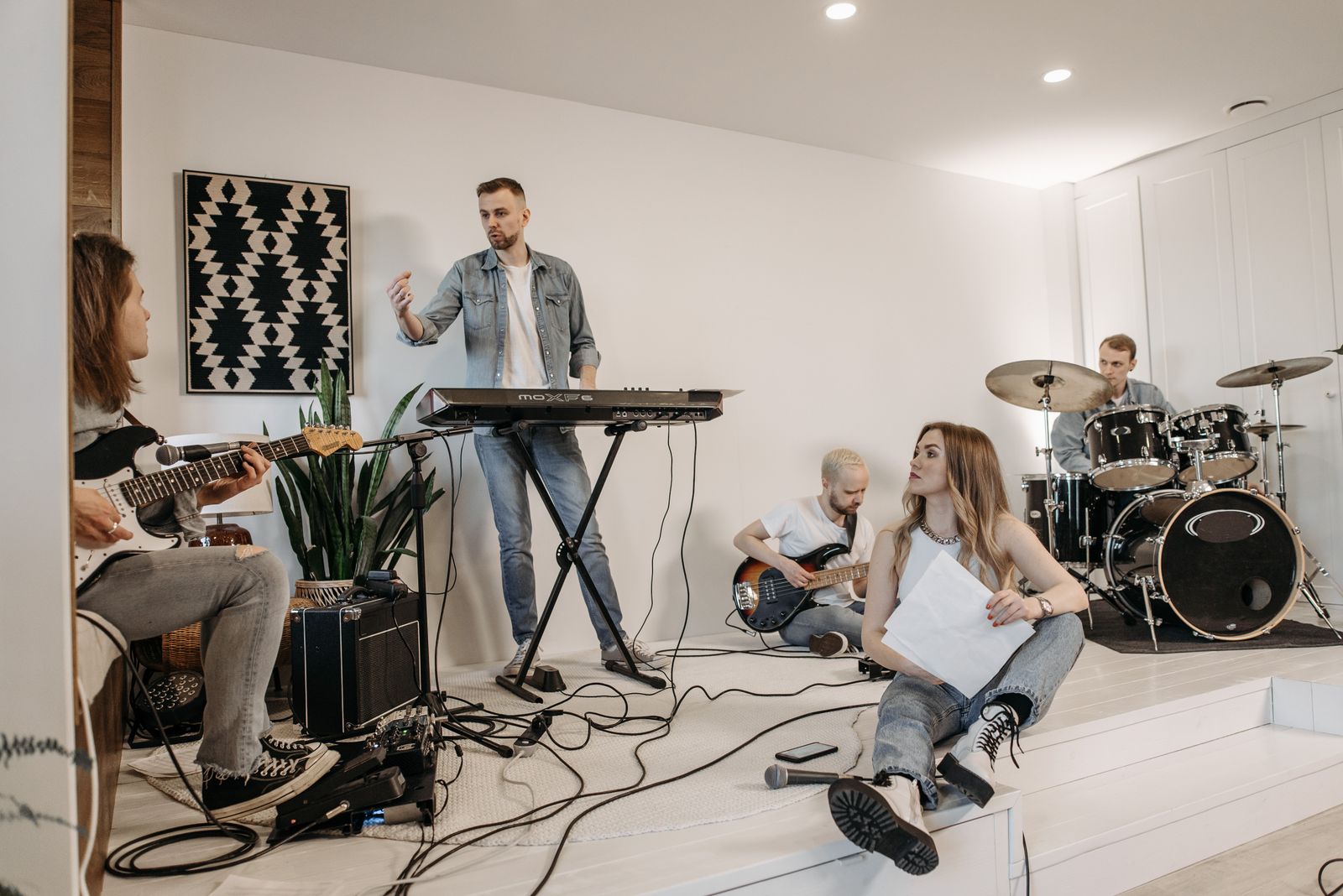
Cover photo: “A Band in a Rehearsal” by Pavel Danilyuk via Pexels, used under the Pexels License.
A college music society can become a student's first real music workplace: a place to rehearse, programme a show, meet sound crews, credit collaborators and learn how a live event actually runs. Start smaller than a festival. A well-run 90-minute campus showcase with clear roles is more valuable than a grand announcement with no venue confirmation or production plan.
This guide is for students in India who want to organise music activity on campus—not performers trying to get booked at a college festival. It focuses on building the student team behind the event, getting institutional clearance, taking care of artists and documenting the work honestly.
Key takeaways
- Build a society around clear roles: programming, production, artist care, partnerships, finance and documentation.
- Get written approval for the room, date, capacity, power and security before confirming performers or sponsors.
- IPRS and PPL India both explain that public music use can require event licensing; confirm the relevant rights and current tariffs before the show.
- A small showcase is a portfolio asset when every contributor is credited and the final footage is usable.
How musicians can get booked at college festivals in India
Build the society before you build an event
Before recruiting a long list of members, secure one practical base: a faculty or student-affairs contact, a repeatable rehearsal space and a purpose that people can understand in one sentence. The live-events sector is large, but a student society does not need to imitate a commercial festival to become useful. The Ministry of Information and Broadcasting valued India’s organised live-events sector at ₹20,861 crore in 2024; your first campus event is a chance to learn the professional habits inside that wider economy. Ministry of Information and Broadcasting, India’s Live Events Economy
Write a simple founding note. Name the kind of activity you will run: open rehearsals, listening sessions, artist talks, campus showcases, soundcheck workshops or collaborations with theatre and dance groups. Then name the first result: for example, “a 90-minute showcase of five student acts at the end of the term.” A concrete result gives prospective members a reason to join and gives the college a proposal it can evaluate.
Keep the first core team small. One person can lead programming, another production, another artist care and communications, and another finance or approvals. People can help across roles, but every task needs an owner. Who will tell a band its soundcheck time? Who will save the final setlist? Who will check that a videographer credits every performer? If nobody owns it, it will vanish into a group chat.
The first asset of a music society is not an Instagram page. It is a reliable shared record: approved date, room contact, running order, equipment list, artist contacts, budget and post-show credits in one place that the next committee can inherit.
Plan the first campus showcase around what you can support
In 2024, IIT Delhi’s annual report described Rendezvous hosting an Artist Arena for budding indie artists alongside its larger Pronites programme. That scale distinction is the right lesson for students: a first showcase should be easy to complete, with one room, realistic capacity, four to six acts and short changeovers—not an imitation of a headline festival. IIT Delhi, Annual Report 2024–25
Choose a format that matches what you can support. An acoustic afternoon needs different equipment and safety planning from a DJ night or a full-band concert. A good first event could be an original-song night, a regional-music listening room, a women-led ensemble showcase, a battle-of-bands with published rules, or a short set of student acts plus one invited local mentor.
Ask every act for the same short information sheet: artist or band name, number of people on stage, genre, set length, stage inputs, monitor needs, original versus cover songs, contact person and an emergency number. This is not bureaucracy. It prevents the classic show-day surprise: a five-person band arriving to a stage planned for a solo singer.
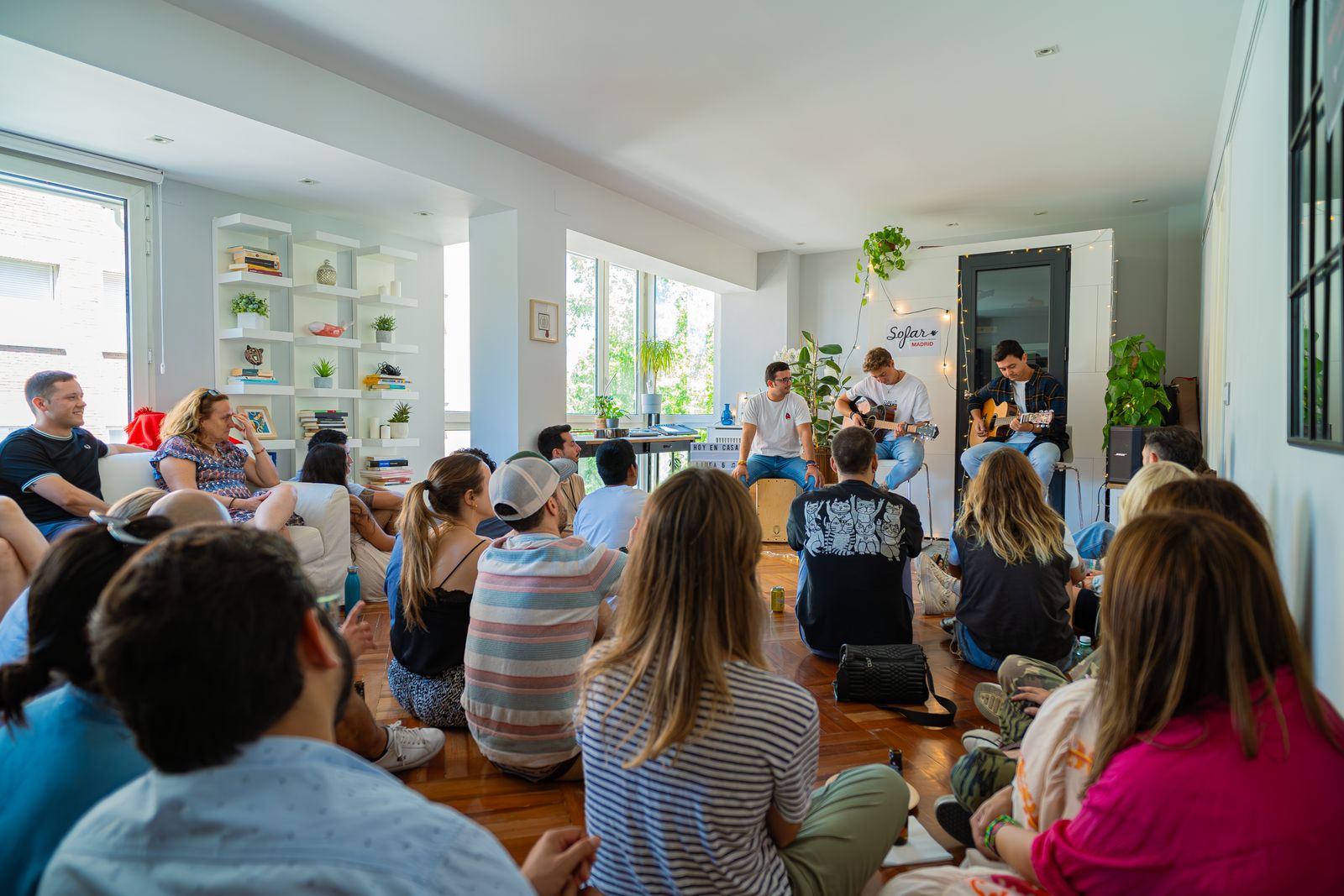
Photo: “Group of Young People Sitting on Floor…” by Nano Erdozain via Pexels, used under the Pexels License.
Build the running order around changeovers, not only musical taste. Put a low-input acoustic act before a high-input band if it gives the crew time to reset. Keep one backup act or an extended DJ playlist only if you have cleared the music rights and equipment plan. Our live setlist guide for Indian gigs can help acts and organisers think through the flow from doors to final song.
Approvals, music permissions and risk ownership
IPRS says a licence is generally necessary for public performance or communication to the public of copyright music under its control, whether or not admission is charged. Its guidance identifies the promoter or organiser, premises owner and performers as parties with responsibilities to copyright owners, so permission and music rights must be planned before promotion begins. IPRS, “Choose your license”
Get the college’s written permission before you promote a venue, sell tickets or promise a performance date. Campus rules vary, so confirm the room, capacity, power, timing, security, outside vendors, photography, sponsors and any required faculty presence with the authorised office. A verbal “yes” from a senior student is helpful, but it is not an institutional approval.
PPL India separately explains that an event licence can be required when sound recordings it represents are used at a show, including filler, minus-one or backing tracks. Its published College Festivals tariff document specifically covers college festivals, DJ parties, karaoke and minus-one tracks, and says it applies to events on college premises; that document states it took effect on 18 November 2022, so check the current tariff and scope directly before approving a budget. PPL India, Category 33(E): College Festivals PPL India, “FAQs”
This is practical guidance, not legal advice. Put a named college representative in charge of confirming which licences, local permissions and insurance requirements apply to your particular event. Do not assume that a classroom booking automatically clears music use, a sponsor video or a DJ playlist.
The most useful permission checklist asks a simple question for every activity: who owns the risk? If the answer is “the society, probably,” pause until the college and the written agreement say something clearer.
Give artists and production a proper brief
The Musicians’ Union recommends that a usable technical specification includes inputs, microphones, stands, DI or XLR needs, monitor mixes and electrical requirements. For a student event, that means artist care begins at invitation: the written confirmation must cover the set, call time, soundcheck, payment or reimbursement, travel, food, technical responsibility, photography and cancellation. Musicians’ Union, “Tech specs and stage plots”
For student acts, be honest about what you can offer. “Travel covered” is incomplete unless it says how, up to what amount, for how many people and when reimbursement happens. “Professional sound” is incomplete unless a qualified person has confirmed the PA, console, microphones, monitors, DI boxes and power. It is better to produce a good acoustic show than a full-band show with impossible promises.
Use a simple show-day sheet with the following:
- Venue access, load-in, soundcheck, doors, each set, changeovers and curfew.
- Names and phone numbers for the society lead, college representative, sound lead, venue/security lead and each act.
- A stage plot and input list for every band or DJ.
- A record of equipment borrowed from the college and who returns it.
- A clear photo and video plan, including who can approve a clip before it is posted.
Share it at least one day before the show, then print a short version for the stage manager. Our technical rider and stage-plot guide for India explains why an accurate input list saves time and reduces last-minute conflict.
Turn one showcase into a credible portfolio
In 2024, IIT Delhi documented Artist Arena as an emerging-artist component within its larger cultural programme. A student showcase becomes a credible portfolio when it produces similarly clear evidence: the final programme, budget, stage plot, approved photos and video, poster, sponsor acknowledgements and a list of what worked. IIT Delhi, Annual Report 2024–25
Then credit the people who made it: performers, songwriters, instrumentalists, sound engineers, lighting crew, photographers, videographers, designers, hosts and faculty support.
That record does two jobs. It lets the next committee improve rather than rebuild from zero, and it gives students proof of responsibility that applies beyond college. A sound engineer can show a stage plot they delivered. A designer can show a poster and event system. A musician can point to a live recording. A programmer can show how they built a varied lineup and kept it on schedule.
Ask contributors before tagging or publishing. Never present a rehearsal video as an official performance without permission, and do not call a friend “event manager” if they only helped at the door. Accurate credits are more useful than inflated titles because the next collaborator can trust what they mean.
Kredl can help music students present the collaborators and confirmed credits behind a showcase. It cannot replace the event plan or institutional approval. But a truthful record of the work makes it easier for a future venue, promoter or creative team to understand what you have actually done.
Frequently Asked Questions
Can a college music society charge for its first showcase?
It depends on the college’s approval process and your event plan. IPRS says licensing for public music under its control can apply whether or not admission is charged, so a free event is not automatically exempt from rights clearances. Confirm institutional rules, applicable licences and capacity limits before announcing tickets. IPRS
Do we need a music licence for a campus DJ night or backing tracks?
Potentially. PPL India says an event licence may be required for sound recordings it represents when a live event uses filler, minus-one or backing tracks; IPRS describes separate responsibilities around public performance of literary and musical works. Ask the college’s authorised office to confirm current requirements directly with the relevant rights bodies. PPL India IPRS
How many acts should a first college showcase have?
Plan only as many acts as your room, soundcheck window and changeovers can support. Four to six short sets are often easier to run than an overlong line-up, but there is no universal number. Base the programme on the confirmed stage inputs, available crew and the college’s approved event duration.
What should we document after a college music event?
Save the final programme, running order, stage plots, approved photos and clips, budget summary and contributor credits. Those materials turn a one-night event into evidence of real work for performers, production crew, designers and organisers. Use a shared folder with access rules instead of leaving essential files in personal chats.
Sources, methodology and image credits
This is a practical editorial guide, not legal or tax advice. Institutional permissions and music-rights requirements vary; verify your event’s current obligations with the college and relevant rights holders before confirming the show.
- Ministry of Information and Broadcasting, India’s Live Events Economy, published 2025, retrieved 2026-10-29.
- IIT Delhi, Annual Report 2024–25, Artist Arena reference, retrieved 2026-10-29.
- IPRS, “Choose your license”, public-performance guidance, retrieved 2026-10-29.
- PPL India, Category 33(E): College Festivals, published tariff document effective 18 November 2022; check current applicability, retrieved 2026-10-29.
- PPL India, “FAQs”, event and backing-track licensing guidance, retrieved 2026-10-29.
- Musicians’ Union, “Tech specs and stage plots”, production checklist, retrieved 2026-10-29.
- Cover image: “A Band in a Rehearsal” by Pavel Danilyuk via Pexels, Pexels License, downloaded and stored locally, retrieved 2026-10-29.
- Inline image: “Group of Young People Sitting on Floor…” by Nano Erdozain via Pexels, Pexels License, downloaded and stored locally, retrieved 2026-10-29.