
How to Find Session Musician Work in India: A Practical Guide
A practical guide for Indian instrumentalists and vocalists who want session work: define your offer, build a booking-ready pack, run a professional session and document credits.
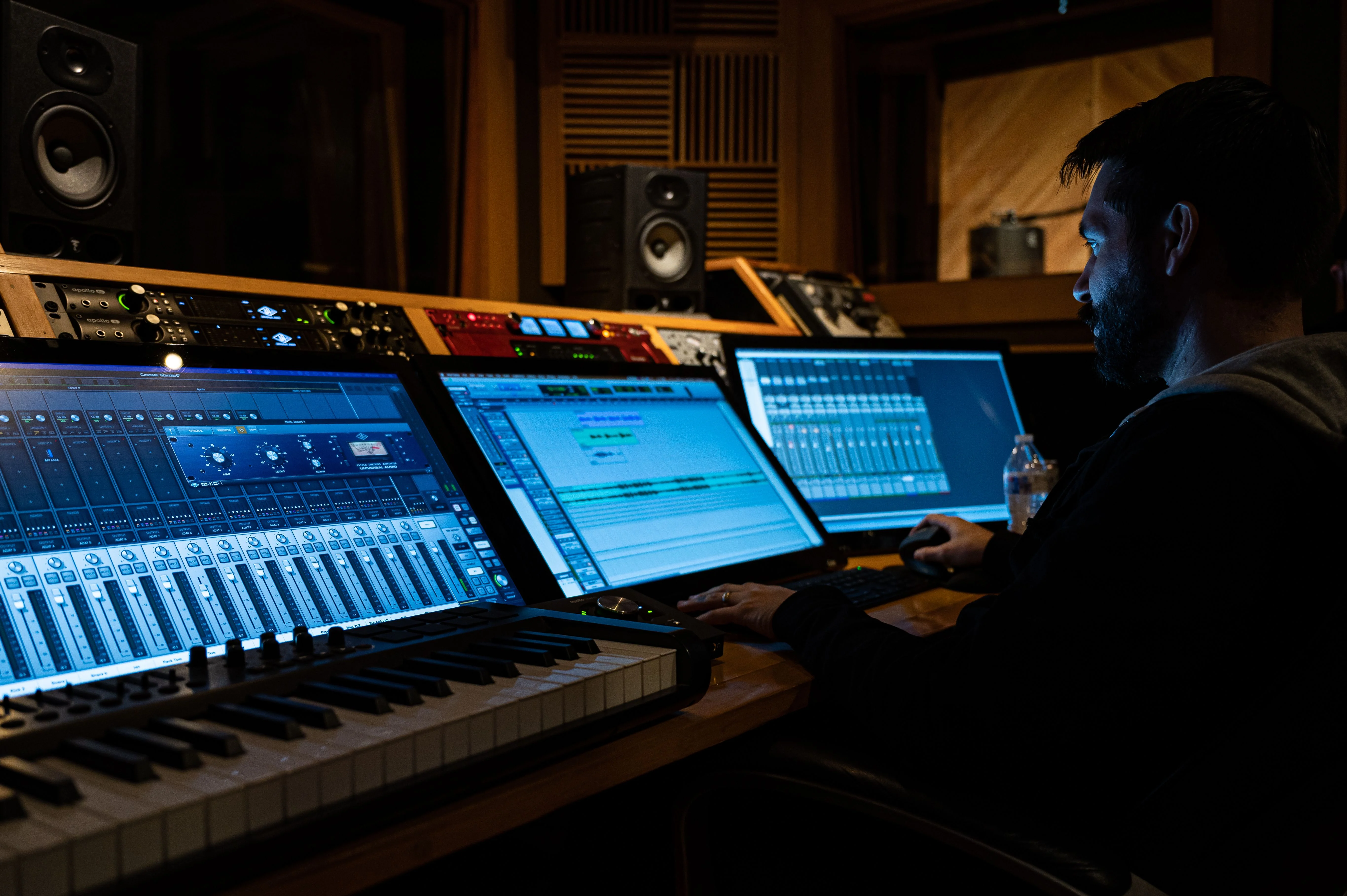
Cover photo: “Bearded Man Working in Modern Recording Studio” by Brett Sayles via Pexels, used under the Pexels License. The locally stored image is converted to WebP for delivery.
Session musician work in India comes from making a clear promise and keeping it: you can play a defined part, prepare quickly, communicate calmly, deliver usable files and leave the credit trail cleaner than you found it. The first booking rarely comes from calling yourself “versatile.” It comes from showing a producer or artist exactly where you fit their next recording, show or score.
That is good news for instrumentalists and vocalists who are still building an original-artist profile. Session work is a craft in its own right. It can sharpen your arranging, studio and live skills while introducing you to producers, directors, engineers and artists who make repeat work possible.
Key takeaways
- Define a narrow first offer: instrument or voice, genre range, city or remote setup, recording capability and turnaround.
- Use three strong clips and a concise credit list—not a long, unfocused link dump.
- Confirm the brief, pay, credit wording, deliverables and usage before you record.
- The Incorporated Society of Musicians says session players are expected to arrive prepared, learn material quickly and work efficiently; producers, conductors and film companies can book musicians directly. ISM, Top 10 Tips for Getting Session Work
How Hashbass turned years of session bass work into his own platform
What does a session musician actually offer?
A session musician is hired to serve a specific recording or performance, rather than joining every decision as a permanent band member. In India, the Copyright Office’s handbook lists lyricists, composers, singers, background musicians and sound-recording producers as different contributors to a musical recording. That distinction is useful: know whether you are being hired to perform a written part, arrange an idea, co-write music, record a demo or play a live show. Copyright Office, Hand Book of Copyright Law
Do not begin with “I can play anything.” Begin with a simple, bookable statement such as: “Mumbai-based bass player for indie pop and Hindi film demos; records clean DI and amp tracks remotely, reads chord charts and can attend local sessions.” A producer can decide where that fits. A vague biography makes them do the work of imagining it.
Write down your first-session offer:
- Instrument or vocal role: What will you be hired to play or sing?
- Musical range: Name two or three genres or reference artists you genuinely know.
- Format: Studio, remote recording, rehearsal, live substitute, tour support or score session.
- Practical setup: City, travel radius, home-recording gear, file-delivery ability and normal availability.
- Proof: Three links that demonstrate the exact work you are offering.
The narrow offer is a starting point, not a prison. A keyboard player may later add arrangement or programming; a vocalist may become a vocal producer. But your first message should make one task easy to award.
Session work is not “being available for music.” It is being legible for one decision a producer needs to make this week: who can play this part, in this style, under these constraints?
What should a booking-ready session portfolio include?
The best session portfolio makes it possible to assess you without a meeting. The ISM’s guidance asks session players to prepare, sight-read or learn material quickly and arrive early enough to work through difficult music. Your portfolio should signal the same reliability before the first call. ISM, Top 10 Tips for Getting Session Work
Build a single page or folder with the following:
| Item | What to include |
|---|---|
| Three targeted clips | A clean groove, an accompaniment part and one contrasting musical context; label instrument, role and date. |
| Short bio | Instrument, city, genre strengths and whether you work in-person, remotely or both. |
| Selected credits | Project, artist or client, your exact role, release or performance link, and only credits you can stand behind. |
| Technical note | Instrument, DI or mic approach, software or interface where relevant, file formats and remote-delivery method. |
| Contact route | One current email or professional message link, plus realistic response hours. |
For a remote player, show the actual chain. A guitarist could state that they can send dry DI, processed amp tone, a labelled tempo map and two alternate takes. A vocalist could state the microphone, room treatment, comping approach and whether they can deliver doubles or harmonies. This is not gear flexing. It reduces uncertainty for the person booking you.
Avoid hiding the context of a clip. If it is a cover, say so. If you played only the guitar but not the arrangement, say so. If a friend mixed it, credit them. Accurate attribution makes your portfolio more credible and respects the people whose work helped it sound good.
Our guide to a creative portfolio for freelance work in India can help you organise the page. If you need to communicate technical needs at a live or hybrid session, use a concise technical rider and stage-plot checklist rather than sending scattered messages.
Where can musicians find legitimate session opportunities in India?
Producers, studios, music directors, artist teams, film and advertising projects, and trusted referrals can all create session opportunities. The ISM notes that conductors, record producers and film companies may book musicians directly. Treat that as a map for research: find the people whose releases or shows already need the instrument you play. ISM, Top 10 Tips for Getting Session Work
Start local and specific. Make a list of ten active producers, recording rooms, independent labels, music directors, live bands and artist teams whose work genuinely suits you. Follow their released work, not just their social following. When you reach out, refer to a particular project and offer the exact kind of contribution you can make.
When checked on 2026-11-01, Muzico’s career page invited applicants to register as session artistes and described audio engineer/producer work across recording, mixing and final production. It is one India-based example of a studio creating a formal entry route; it is not a promise of a booking or an endorsement of any future listing. Muzico, Careers
When checked on 2026-11-01, STHAN Music’s career page described work across recording, composition, arrangement, artist coordination and publishing. Again, use the page as a clue to the range of work around a session, then verify the current route before sharing personal or financial documents. STHAN Music, Careers
Do not pay an intermediary to get “guaranteed studio access.” A legitimate organiser or studio can state the job, scope, meeting location, contact route and payment terms. If a person wants money before they can name the project or the authorised booker, stop and verify the opportunity independently.
How should a musician pitch for a first session?
The first pitch should be a small, useful message. It should say what you play, why you fit this person’s work, what proof you have and how you can be booked. Do not send an audio file without context or a fifteen-link playlist.
Subject: Session [instrument / vocal] support for [project or style]
Hi [Name], I’m a [city]-based [instrumentalist/vocalist] who works on [two relevant styles]. I enjoyed [specific released song, show or project]—especially [specific musical observation].
I can support [defined session task] in [city/remotely]. Here are three short examples of my playing: [link]. I can send [DI/stems/chart-reading/video call] details if useful.
If you have an upcoming project that needs this sound, I would be glad to share availability and a simple quote. Thanks, [name, phone, portfolio].
Send the pitch only after you have listened closely enough to make the reference true. A generic “love your work” message looks copied because it is. One thoughtful sentence about arrangement, groove, vocal phrasing or sound design demonstrates the listening skill a session needs.
Follow up once after five to seven working days if there is no response. Bring a reason: a new clip, an updated availability window or a relevant release. Then leave the door open. Persistent messaging does not create trust; reliable work does.
For the basic outreach mechanics, read our guide to cold messaging music producers and directors in India. The session version needs the same clarity, plus proof that you can finish a part without drama.
What should you confirm before the red light goes on?
Before a session begins, confirm the musical and commercial brief in writing. The Copyright Office’s sound-recording manual notes that music directors or directing companies may enter employment agreements with musicians including guitarists, violinists, drummers and bass artists. That is a useful reminder that the role and terms should not be left to memory. Copyright Office, Manual of Sound Recordings
Put the essentials in a clear message or agreement:
- The job: instrument or vocal role, number of songs, rehearsal or recording date, location and who can approve takes.
- The musical brief: key, BPM, reference tracks, arrangement notes, chart or demo delivery, and what you should prepare.
- The deliverables: stems, consolidated files, alternate takes, MIDI, notation, live appearance or remote tracks.
- The fee: amount, tax treatment where applicable, payment timing, cancellation policy and who covers travel or studio cost.
- The credits: exact role wording and whether the contribution is performance, arrangement, composition or co-writing.
- Usage and confidentiality: whether the files may be reused, edited, publicly shared, live-streamed or held until release.
This is not legal advice, and a message cannot solve every rights question. It does make a professional conversation possible before goodwill is tested. If you add original melody, lyrics or compositional material, pause and discuss authorship and split terms rather than assuming a performance fee covers everything.
The session agreement is not paperwork after the creative decision. It is part of the arrangement: it tells everyone what a finished contribution means, who can approve it and how it will be named later.
How can you become the player producers call again?
Repeat bookings come from lowering risk. Arrive with the material learned, bring the right instrument and cables, label your files, take direction without turning every note into a debate, and flag a problem early. The ISM recommends arriving early when you have not seen the music in advance so you can work through difficult sections. ISM, Top 10 Tips for Getting Session Work
After the session, send a compact follow-up: the promised files, any relevant notes, an invoice or payment details if agreed, and thanks to the booker and engineer. Keep a private session log with project, date, role, contact, files delivered, payment status and whether you have permission to show the work. That log is the raw material for a serious portfolio.
Indian copyright guidance identifies musicians as performers, but the rights and credit consequences of a specific project can differ by contract and contribution. Do not promise yourself a royalty or a public credit that was never agreed. Ask a qualified music lawyer or accountant about a particular deal, especially where authorship, a label, advertising use, a film or a buyout is involved. Copyright Office FAQ
Give collaborators accurate credit in the work you are allowed to share. Kredl can help you present visible work and collaborator-confirmed credits; it cannot turn a confidential file or an unagreed role into a public credential. Truthful documentation is what makes a modest first session useful when the next producer checks your name.
A 30-day first-session plan
You do not need to contact a hundred people this week. Spend 30 days becoming easy to evaluate.
- Week 1: Choose one offer and record three clips that demonstrate it.
- Week 2: Build a one-page portfolio with exact credits, technical note and availability.
- Week 3: Research ten relevant India-based producers, studios or artist teams; prepare five individual pitches.
- Week 4: Send the pitches, follow up once where appropriate, and improve the portfolio from what each reply teaches you.
The result may be a session, a referral, a better clip or a clearer understanding of the gaps in your offer. All four are progress. Session careers accumulate through dependable small contributions, not one dramatic audition.
Frequently Asked Questions
Do session musicians need to sight-read?
Not every session requires formal sight-reading, but fast preparation is a core expectation. The ISM advises players to sight-read or get to grips with music quickly, and to arrive early when they have not received material in advance. Say honestly whether you read notation, Nashville numbers, chord charts or work by ear. ISM
Can a session musician ask for a credit?
Yes—ask for the exact credit wording before recording. India’s Copyright Office identifies background musicians as contributors distinct from lyricists, composers, singers and sound-recording producers. Credit does not automatically decide ownership, so clarify whether your work is a performance, arrangement or composition and document the agreement. Copyright Office
Should I send full audio files in a first session pitch?
Usually, no. Kredl’s editorial guidance is to send a short, clearly labelled link that shows the task you want to be hired for. Keep original full-resolution files, stems or unreleased material for a confirmed project with a named booker and agreed usage. That protects your time and lets the producer assess you quickly.
Where can I look for session musician work in India?
Look at producers, studios, artist teams, music directors and referral networks whose work fits your instrument. Muzico’s current career page invites session-artist registration, while STHAN Music lists areas including recording, composition and arrangement; treat such pages as routes to verify, not as guaranteed openings. Muzico STHAN Music
Sources, methodology and image credits
This is a practical guide, not legal or tax advice. Session fees, credit practice, employment status, ownership and performer-rights treatment depend on the specific work and agreement. Verify active opportunity pages at the source, and take qualified advice before signing a rights or buyout agreement.
- Incorporated Society of Musicians, Top 10 Tips for Getting Session Work, practical preparation and booking guidance, retrieved 2026-11-01.
- Copyright Office, Hand Book of Copyright Law, contributor categories and performer definition, Government of India, retrieved 2026-11-01.
- Copyright Office, Manual of Sound Recordings, musician agreements in sound recording, Government of India, retrieved 2026-11-01.
- Copyright Office FAQ, copyright and performer guidance, Government of India, retrieved 2026-11-01.
- Muzico, Careers, session-artist registration and audio work example, retrieved 2026-11-01.
- STHAN Music, Careers, current music-work areas and application example, retrieved 2026-11-01.
- Cover image: “Bearded Man Working in Modern Recording Studio” by Brett Sayles via Pexels, Pexels License, downloaded and locally converted to WebP for delivery, retrieved 2026-11-01.