

Cover photo: Hanumankind performing live, via Wikimedia Commons.

When “Big Dawgs” took off in July 2024, Hanumankind did not become an artist overnight. He became visible overnight. The difference matters.
The rapper born Sooraj Cherukat had already built years of taste, performance instincts, collaborators and local audience trust before a global audience discovered the song’s Well of Death video. Virality did not invent the artist; it exposed a body of work that was already in motion. What followed is the harder part of the story: how to turn a single global moment into enough catalog, context and live credibility to outlast the algorithm.
For any independent artist, this is the real question after a hit. Not “how do I repeat it next week?” but “what career can this moment now fund, unlock and make possible?”
Key takeaways
- Before “Big Dawgs,” Cherukat spent years developing his craft through open mics, independent releases and Bengaluru’s early hip-hop circuit. XXL
- “Big Dawgs,” produced by Kalmi and released in July 2024, peaked at No. 23 on the Billboard Hot 100; Billboard reported 288.5 million global on-demand streams by September 2024. Billboard
- The long-term move after virality is to deepen the team, catalogue, live format and professional systems—not to let the one song become the only available story.
Build a public record of your songs, collaborators and live work before the attention arrives. kredl →
Before Hanumankind: a childhood lived across several worlds
Sooraj Cherukat was born in Kondotty, Malappuram, Kerala, and grew up moving with his family for his father’s oil-industry work. He has described himself as an “oil baby,” living across Nigeria, Saudi Arabia, Dubai, Egypt, Qatar and Italy before settling in Houston, Texas as a child. Indulge
That background is useful context for his music because it explains why the sound is neither a simple import of American rap nor a neat “Indian rap” label. Houston gave him the slowed, heavy, Southern-rap influence of DJ Screw, UGK and Three 6 Mafia. Kerala remained the cultural home he wanted to understand more deeply. In 2012, he moved back to India for college and chose to stay in order to experience the country beyond summer visits. Dazed
The early years were unglamorous—and that is why they matter
The viral narrative often begins at the moment everyone else noticed. Hanumankind’s actual groundwork began much earlier. After moving back to India, he studied business, worked at Goldman Sachs, then kept making time for rap through open mics and local showcases. XXL In 2019, he left the job and released the independent Kalari EP as Hanumankind; Surface Level followed in 2020, alongside releases such as “No Hook” and “Genghis.”
That slow period gave him three assets a viral hit cannot create by itself:
- A performance body: he could already hold rooms, not only make a compelling video.
- A scene relationship: Bengaluru gave English-language rap a home when the infrastructure was still scattered, he told Indulge in 2026. Indulge
- A creative circle: producer Kalmi and director Bijoy Shetty became long-term collaborators rather than one-off service providers.
The fact that these foundations existed before the spike made the opportunity easier to absorb. A viral artist without them often has attention but no reliable way to turn it into a second record, a coherent show or a working team.
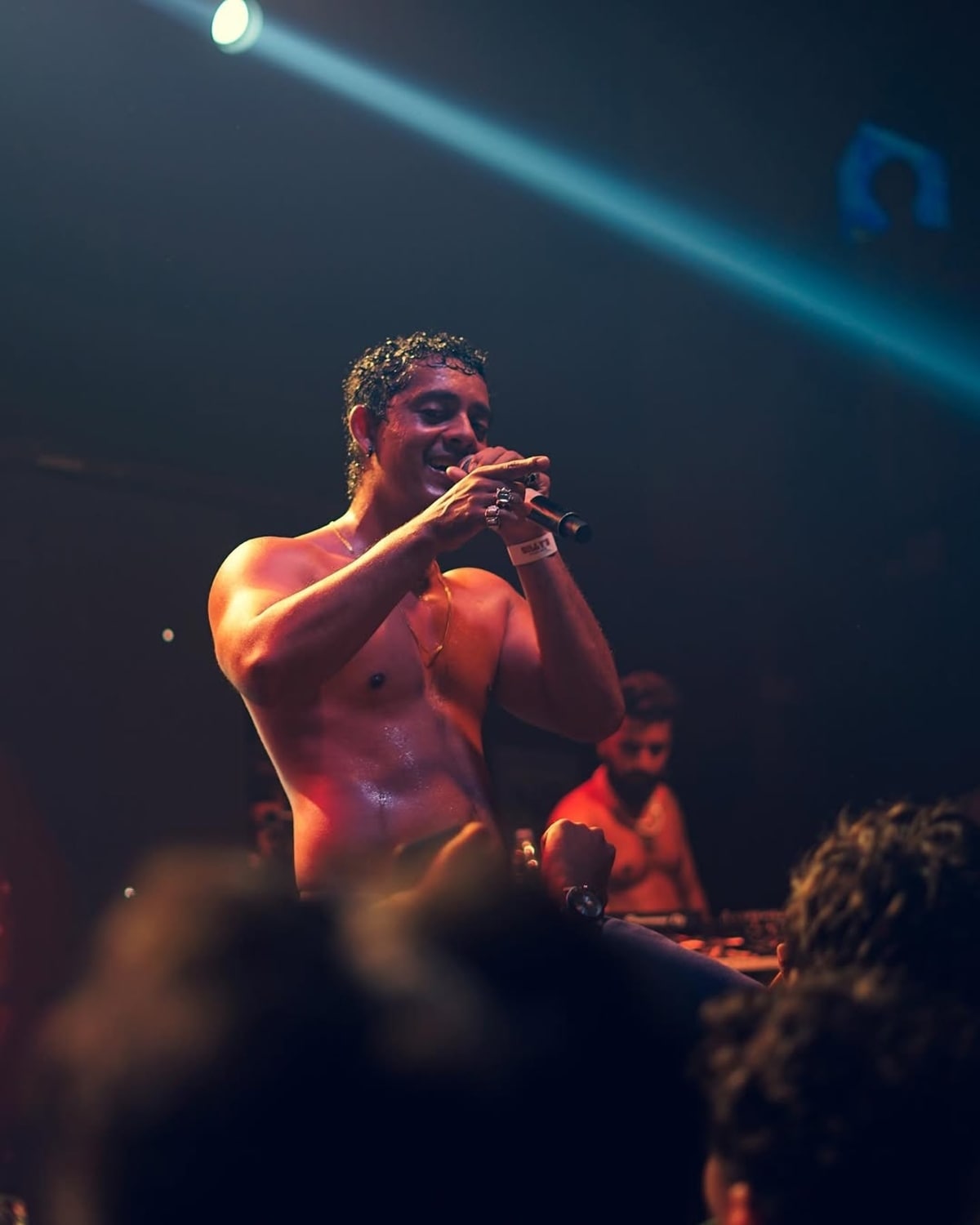
Photo: Hindustan Times.
Why “Big Dawgs” travelled
“Big Dawgs” was not successful because it tried to look internationally acceptable. Its global appeal came from a collision of things that were hard to confuse with anyone else: Kalmi’s production, Hanumankind’s Houston-informed flow, a hook with immediate force, and a video staged in a Kerala Well of Death—an Indian carnival spectacle of cars and motorcycles racing around the walls of a vertical wooden pit.
Billboard reported that the team spent much of its available budget on the video rather than a conventional marketing campaign. The record arrived on streaming platforms on July 9, 2024, and the visual followed the next day. By mid-August, it had debuted at No. 57 on the Billboard Hot 100 before peaking at No. 23. Billboard
The video’s success holds a useful warning for artists: high-production value is not the same as high-cost polish. The Well of Death worked because it was culturally specific, physically dangerous-looking and inseparable from the record’s energy. The visual did not decorate the song. It made the song more understandable in one glance.
Why raw, DIY music videos can win in India
What should happen after virality?
The least useful post-hit strategy is panic. A spike creates a false urgency to follow the exact template that worked: the same beat, the same reference, the same visual, released before the audience moves on. That can protect a short-term chart story while shrinking the artist’s long-term range.
Hanumankind’s moves after “Big Dawgs” suggest a different sequence.
1. Keep the core collaborators close
“Big Dawgs” was not a solo miracle. The official video credits Hanumankind as writer and music-maker, Kalmi as producer, Akash Shravan on mixing and mastering, and Bijoy Shetty as director, with a wide production, stunt and location crew. Official video credits That clarity is more than courtesy. It tells the audience and industry which relationships are producing the work.
After virality, protect the people who helped make the moment possible. Agree splits and roles early. Give the producer and creative director room to evolve with you. A coherent team helps the next release feel like a chapter, not a reaction.
2. Add catalogue, not only a sequel
The follow-up should show that the hit belongs to a larger catalogue. Hanumankind’s “Run It Up” moved into a different sonic and visual language, using Kerala chenda percussion and bringing chenda drummers to his Coachella debut in 2025. Dazed
That is the more durable play. The record is still recognisably his, but it opens another door into the artist’s world. New listeners get a reason to stay, while older listeners see development rather than repetition.
3. Make the live show prove the artist is real
Global streams can produce curiosity. Live performance turns curiosity into belief. Hanumankind’s first U.S. show was Coachella in 2025, and he brought a chenda ensemble into the set rather than presenting a stripped-down imitation of an American festival rapper. Dazed
The performance made the same argument as the records: he is globally conversant without becoming culturally neutral. That is the standard an artist needs after a hit. The live show should give a first-time listener a reason to become a fan even if they only knew one song at the door.
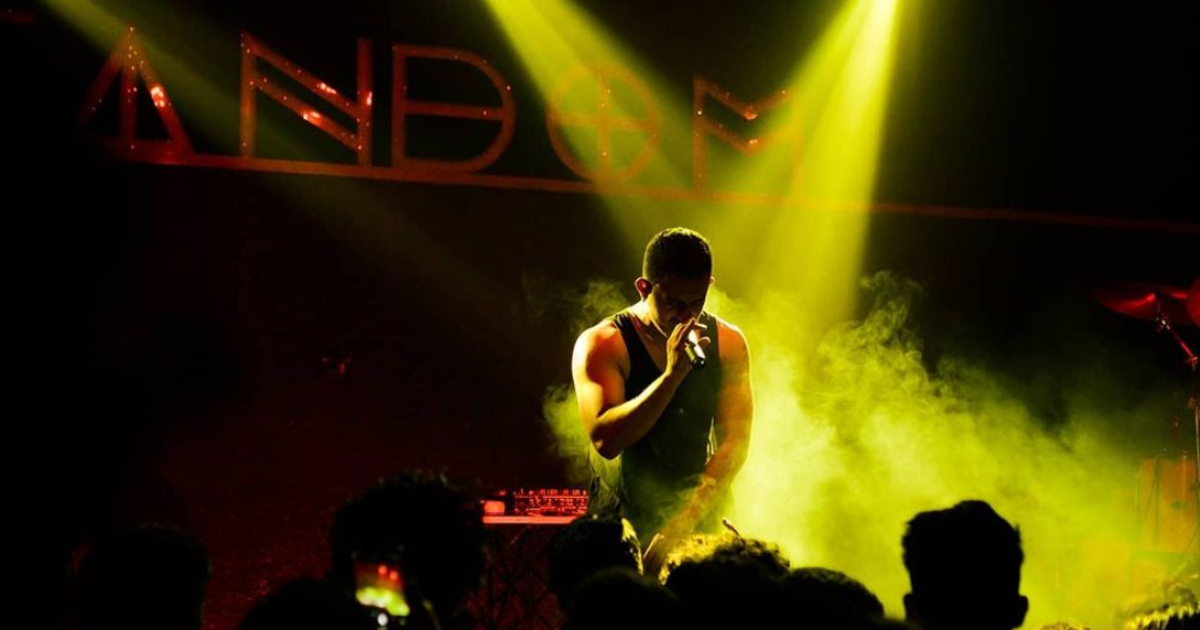
Photo: The Independent.
4. Let the opportunity finance depth, not only visibility
After a global moment, every offer can look urgent: brand work, appearances, remixes, festival slots and co-signs. Some are genuinely useful. The question is whether each move produces a lasting asset.
Choose the offers that improve one of these: your catalogue, live craft, global team, rights position, visual language or audience relationship. A random opportunity may create one more headline. A well-chosen collaboration or tour support slot can create a new market for the next five years.
5. Keep a route back to smaller rooms
In 2026, Hanumankind told Indulge that he misses the energy of smaller rooms, where people came to discover raw work through friends rather than hype. Indulge
That is not nostalgia. Smaller rooms are where artists can test unreleased work, hear a real reaction, build local community and remember what the hit was meant to serve. The larger the stage gets, the more useful it is to keep some connection to the audience that believed before the metrics did.
Your breakout should make it easier to document the collaborators and real work behind the next chapter. kredl →
The post-viral operating system
Here is a practical framework for artists who wake up to sudden attention.
| First 30 days | Days 31–90 | The next year |
|---|---|---|
| Confirm credits, splits, metadata and business contacts. Capture the story of the hit while it is accurate. | Release one piece of context: a live take, behind-the-scenes film, remix only if it makes creative sense, or a strong follow-up. | Build a project, repeatable live format, touring plan and team that make the hit one entry point into a larger career. |
| Update artist pages, press assets and show booking information. | Convert new listeners into newsletter, ticketing and community touchpoints. | Protect rights, keep a release cadence you can sustain and choose collaborations that add a real audience or skill. |
Ask this before accepting a post-viral opportunity: “Will this help someone understand my next body of work, my live show, my collaborators or my long-term point of view?”
If the answer is no, the opportunity may still pay—but it is not automatically career-building.
A note on resilience: virality does not remove the hard parts
The long-term story also includes limits. In 2025, an ACL injury during the final London stop of a European run disrupted Hanumankind’s physical performance routine and postponed touring plans while he recovered. XXL This is a reminder that a career cannot rely on one body, one format or a permanently escalating schedule.
Build systems that can take a pause: organised files, transparent partners, a back catalogue, a professional team and communication with fans. Recovery is not lost momentum if the artist has already made the work legible beyond the current tour cycle.
Karan Kanchan’s producer playbook: how beatmakers become artists, brands and scene builders
Music PR in India: how to get covered by blogs, playlists and culture publications
Frequently asked questions
Who is Hanumankind?
Hanumankind is the stage name of Kerala-born rapper Sooraj Cherukat. He grew up across several countries before formative years in Houston, then returned to India in 2012, where he developed his career through Bengaluru’s rap scene, independent releases and live performance. XXL
Why did “Big Dawgs” go viral globally?
The record combined a direct, heavy rap performance with producer Kalmi’s sound and a music video set in a Kerala Well of Death. The visual gave international listeners something culturally specific and instantly arresting, while the song’s hook worked across short-form video and streaming discovery.
What should an artist do immediately after a viral song?
First, secure the basics: credits, splits, metadata, rights, press assets and booking contacts. Then give new listeners more context—a strong live performance, a related release or a project direction—rather than rushing an imitation of the hit. The objective is to turn attention into a relationship with the full artist catalogue.
Did Hanumankind have a career before “Big Dawgs”?
Yes. He released the Kalari EP in 2019 and Surface Level in 2020, made songs including “No Hook” and “Genghis,” performed open mics and showcases, and built an audience through Bengaluru’s hip-hop circuit before signing with Def Jam India in 2023. XXL
A hit should become the first doorway, not the whole house
“Big Dawgs” gave Hanumankind access to a global conversation. His early life, the Houston influence, Bengaluru’s scene, Kalmi and Bijoy Shetty’s creative partnership, and the decision to put Kerala on the world stage give that moment substance.
For artists facing a viral spike, that is the real opportunity: turn the spotlight toward a deeper catalogue, a trusted team and a live world that can keep growing after the first global moment stops trending.
Make the work behind your breakthrough—and the people who built it with you—discoverable in one professional place. kredl →