
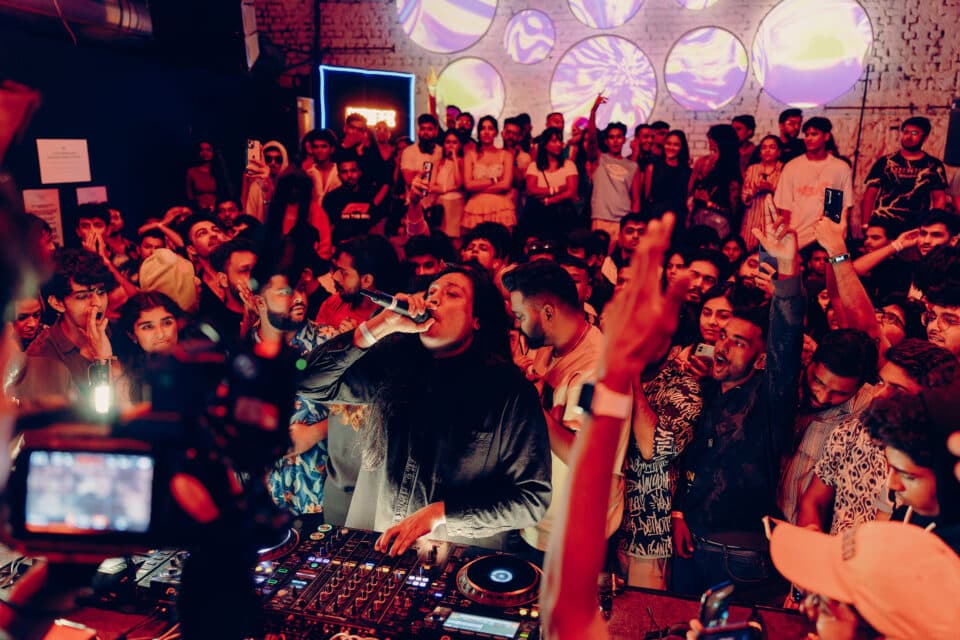
Cover photo: Karan Kanchan live, Rolling Stone India.
A producer can spend years making essential work and still be treated like a file sender: deliver the beat, collect the credit if one appears, then disappear from the story. Karan Kanchan’s career offers a sharper model. His work moves across hip-hop, bass music, pop, film and live performance—but the meaningful part is not simply the range. It is the way he has turned production into an artist identity, a live proposition and community infrastructure.
That is the real producer playbook. Learn the craft deeply enough to serve another artist’s vision. Develop a sound people can recognise without seeing your name. Put your own work in public. Create rooms where a scene can meet. And make the professional layer—credits, splits, relationships and repeatable systems—as deliberate as the drums.
Key takeaways
- Karan Kanchan began by learning production through online curiosity and trial-and-error, then spent a full year developing the Japanese-inspired trap-and-bass sound he calls J-Trap. FL Studio
- His career stretches from artist releases and DJ sets to production for rappers, pop artists, film music and Red Bull 64 Bars—proof that a producer can build several connected lanes without losing a centre. Rolling Stone India
- A producer becomes a scene builder when they make value for more people than themselves: artists, audiences, promoters, engineers and the next generation of creators.
Make your production credits, collaborators and finished work easy for the next artist to find. kredl →
The first shift: stop thinking of yourself as “only” a beatmaker
Karan Kanchan is useful to study because his story does not begin with a perfect studio, a famous mentor or a neat genre plan. He has said that a YouTube recommendation—the Tiësto and Diplo track “C’mon”—triggered the curiosity that led him to production. With no musical background around him, he learned by exploring software, watching videos and making bad early work until the tools began to make sense. FL Studio
That origin matters because it separates the tool from the job. A DAW can help you arrange sounds. A producer’s job is bigger: taste, emotional direction, arrangement, communication, decision-making and momentum. In a 2025 interview, Kanchan described the distinction clearly: his artist work is free-flowing experimentation; when producing for someone else, his responsibility is to bring their idea and vision to life efficiently. The New Indian Express
Build a signature before you chase a catalogue
Versatility is valuable, but it becomes forgettable when every track sounds like it was made by a different person. Kanchan’s career has a useful middle path. He began in big-room EDM, spent 2016 learning genres and mastering FL Studio, then built a Japanese-classical-meets-trap-and-bass identity he called J-Trap. That naming gave an otherwise broad practice a recognisable centre. FL Studio
The point is not that every producer needs a genre label. The point is that people should be able to describe your instinct in one sentence. Maybe it is enormous low-end with sparse vocals. Maybe it is warm acoustic sampling in rap records. Maybe it is folk melody translated into club percussion. A signature is not a prison; it is a reason someone remembers to call you.
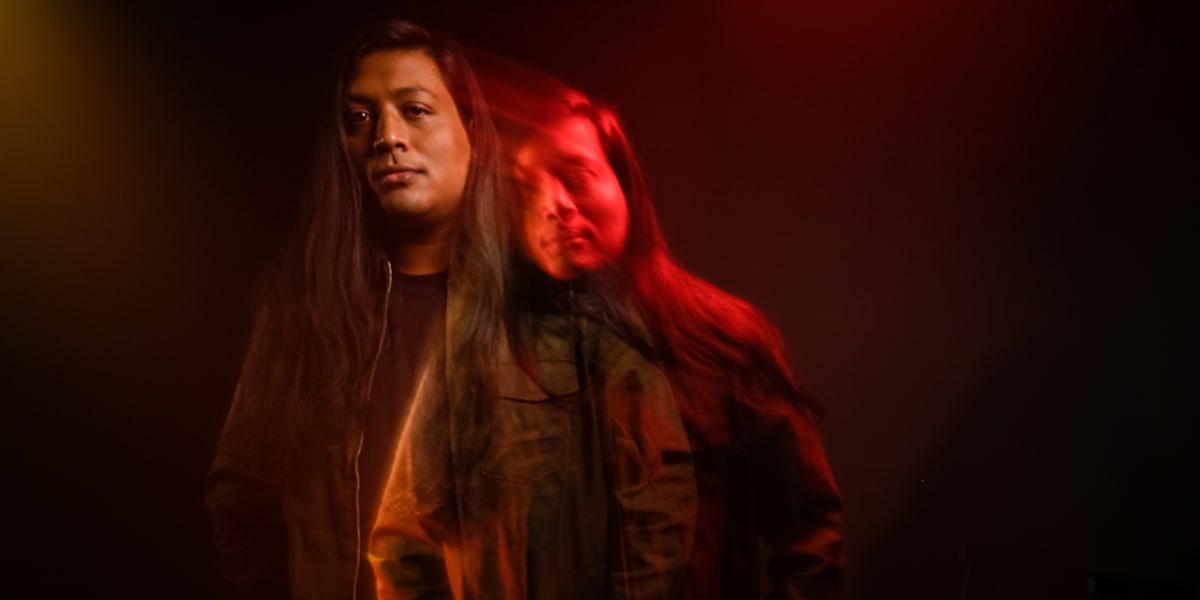
Photo: Red Bull India.
A practical signature-sound exercise
For the next five tracks, set three creative constraints that are actually yours. They could be a favourite drum texture, a melodic source, a tempo band, a way you leave silence for vocals, or a visual reference that shapes the arrangement. Review the five tracks together. The repeated choices are not accidents; they are the beginnings of your producer identity.
Write your one-line producer brief: “I make [emotional effect] records using [two or three recurring sonic instincts] for [the artists/scenes I serve].”
It should be specific enough to guide a session, but open enough that you can grow.
Serve the artist without becoming invisible
One of the hard producer skills is knowing when the record needs your personality and when it needs less of it. Kanchan has worked across a wide set of artists, including DIVINE, Shubh, Ritviz, Raftaar, Seedhe Maut, MC Altaf and international names such as Pusha T, Vince Staples, Russ and Armani White, according to his FL Studio profile. FL Studio
The connection is not simply access. Producers earn repeat work when artists feel understood. Kanchan’s explanation of leaving the right “pockets” in beats for rappers is a good example: arrangement is not a showcase of how many sounds you can add. It is a decision about where the voice can land, where a lyric needs space and where the energy should move. The New Indian Express
That makes a producer valuable in the room. Show up with options, but do not force the pre-made beat to win. Ask what the artist wants the listener to feel. Keep a session moving. Take clear notes. Export the right versions. Then make sure the business side of the collaboration is not an afterthought.
A good session becomes a lasting relationship when the work and the credit trail are equally clear. kredl →
Turn production work into a public artist project
There is a difference between being a producer who releases work and being an artist with a world. Kanchan performs as a DJ, releases music under his own name and creates events that put his taste in front of a live audience. That is a different career asset from a long spreadsheet of placements.
It gives the producer three things:
- Direct audience memory: people can remember a set, a visual world or a recurring party even if they cannot name every placement.
- Creative leverage: self-led releases let a producer test a sound before waiting for the right artist brief.
- A clearer negotiating position: visible artist identity makes your taste legible before a prospective collaborator enters the studio.
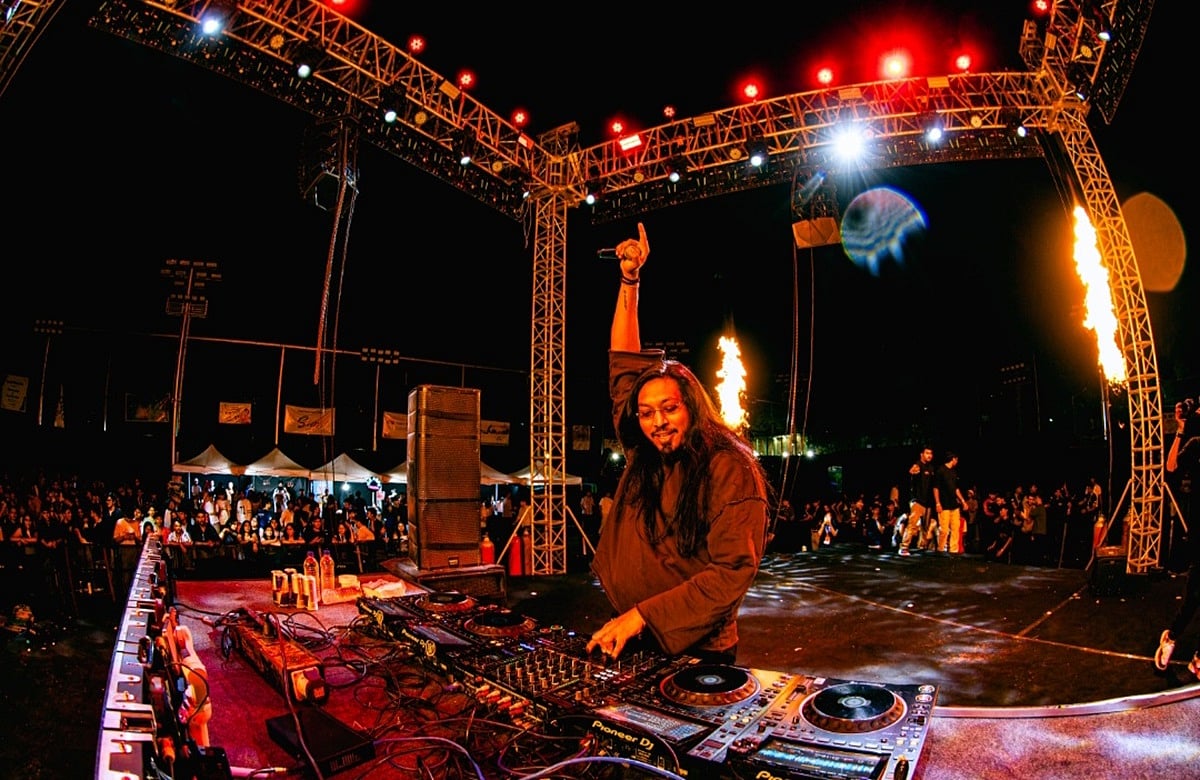
Photo: The New Indian Express.
Kanchan’s “Kitty Party” shows are a useful example of this principle: the producer is not hidden behind a playlist or a mixing credit; the name itself can sell a live experience. You do not need a national club residency to start. A listening party, a producer-and-rapper showcase, a small DJ set, a beat-cypher or a filmed studio session can all turn private craft into public proof.
Build platforms, not just personal clout
The most important scene-builder move in Kanchan’s story is not a single song. It is the decision to create infrastructure around a sound. He has described Neckwreck as an event company set up to unite and elevate India’s dubstep and bass-music scene. FL Studio
That changes the role of the producer. Instead of waiting for a festival or label to decide that bass music deserves a room, you make the room. The work becomes bigger than individual billing: curate artists, pay collaborators fairly, create reliable show standards, document the night, introduce new listeners, and give emerging acts a first meaningful stage.
Scene building is not charity and it is not a vague “community” caption. It is a creative business model. The event creates a taste signal. The taste signal attracts collaborators. Those collaborators make better work. The work gives the event more reason to exist. Done well, everyone leaves with something: audience, footage, relationships, experience or income.
Adapt without chasing every trend
Kanchan’s career crosses genres because he keeps learning, not because he abandons his centre every time a sound changes. In 2025, he described the music industry as a constant cycle of changing trends, genres and tools, and argued that artists need to stay on their feet and adapt. The New Indian Express
Adaptation is not trend-chasing. It is maintaining a living practice:
- Learn the new tool or format well enough to understand its limits.
- Keep the choices that still sound like you.
- Test the idea in a real release, set or collaboration.
- Keep what creates a stronger emotional response or a better working process.
- Drop what only makes the work look current for a week.
Kanchan’s own account of rejection is useful here. He has said he has pitched as many as 30 demos for a film without one being selected, and learned to start working on the 31st rather than treat the outcome as a verdict on his ability. The New Indian Express
The producer’s operating system: credits, splits and files
The creative myth says a producer’s job ends when the track feels finished. The working producer knows that the session is only one part of the job. Before a release moves, confirm the basics in writing:
- Who wrote the music, lyrics and topline?
- Who produced, arranged, engineered and performed?
- What are the master and publishing splits?
- Is the fee, royalty or recoupment structure agreed?
- Which names, spellings and roles must appear in distributor metadata?
- Who owns the project files, stems and final masters?
This is not glamorous administration. It is how a career survives success. Clean credits help a future collaborator find you. Clean splits help everyone get paid. Organised stems make a live version, remix or sync opportunity possible months later.
How to release a song in India in 2026
Music PR in India: how to get covered by blogs, playlists and culture publications
A 90-day producer playbook
You do not need to copy Karan Kanchan’s career to learn from its structure. Use the next 90 days to build evidence across all three layers: craft, identity and scene.
| Period | Craft | Artist/brand | Scene |
|---|---|---|---|
| Days 1–30 | Finish three beats that share a deliberate sonic thread. | Write your one-line producer brief and update your credits/portfolio. | Attend two local shows and identify five artists whose work genuinely fits yours. |
| Days 31–60 | Run two focused sessions with artists; document decisions and splits. | Publish one finished collaboration or performance clip with complete credits. | Host a small listening session, cypher or online beat showcase. |
| Days 61–90 | Review what worked: arrangement, workflow and artist feedback. | Build a 20-minute set or a concise producer reel. | Invite one emerging artist onto the next event or filmed session and pay/credit them properly. |
Build a portfolio that shows both the records you made and the people you make better work with. kredl →
Frequently asked questions
Can a beatmaker become an artist without singing or rapping?
Yes. A producer can be the central artist through instrumental releases, DJ sets, visual identity, guest features, curated projects and live formats. The key is to give audiences a recognisable point of view rather than presenting every track as anonymous background work.
How can producers find artists to work with in India?
Start with genuine fit: local shows, open mics, campus scenes, producer communities and artists whose existing releases already sit near your sound. Send a concise message with one or two relevant examples, not a folder of fifty beats. Be clear about the creative idea and the credit terms from the start.
Should a producer charge a fee, take royalties or both?
It depends on the artist’s budget, the producer’s contribution and who owns the master. The important thing is to agree in writing before release: fee, master share, publishing share, recoupment and credit. Do not assume a verbal understanding will survive a successful record.
What makes a producer a scene builder?
A scene builder creates repeat value beyond personal placements: events, collaborations, workshops, labels, playlists, studios or media that give more artists and audiences a way to meet. The test is whether the platform still helps other people when the founder is not on stage.
Build the room you want your music to enter
Karan Kanchan’s playbook is not “learn one software and wait for a big placement.” It is a more demanding proposition: become excellent at the craft, articulate about your taste, useful in sessions, visible as an artist and generous enough to build a room for other people.
That is how beatmakers become artists, brands and scene builders. Not by escaping the producer role, but by taking it seriously enough to expand what it can hold.