
Amit Trivedi’s Parallel Track: From Film Composer to Independent-Label Builder
Amit Trivedi’s career moved from local bands, theatre and advertising to Dev.D—then deliberately back toward independent music through AT Azaad.
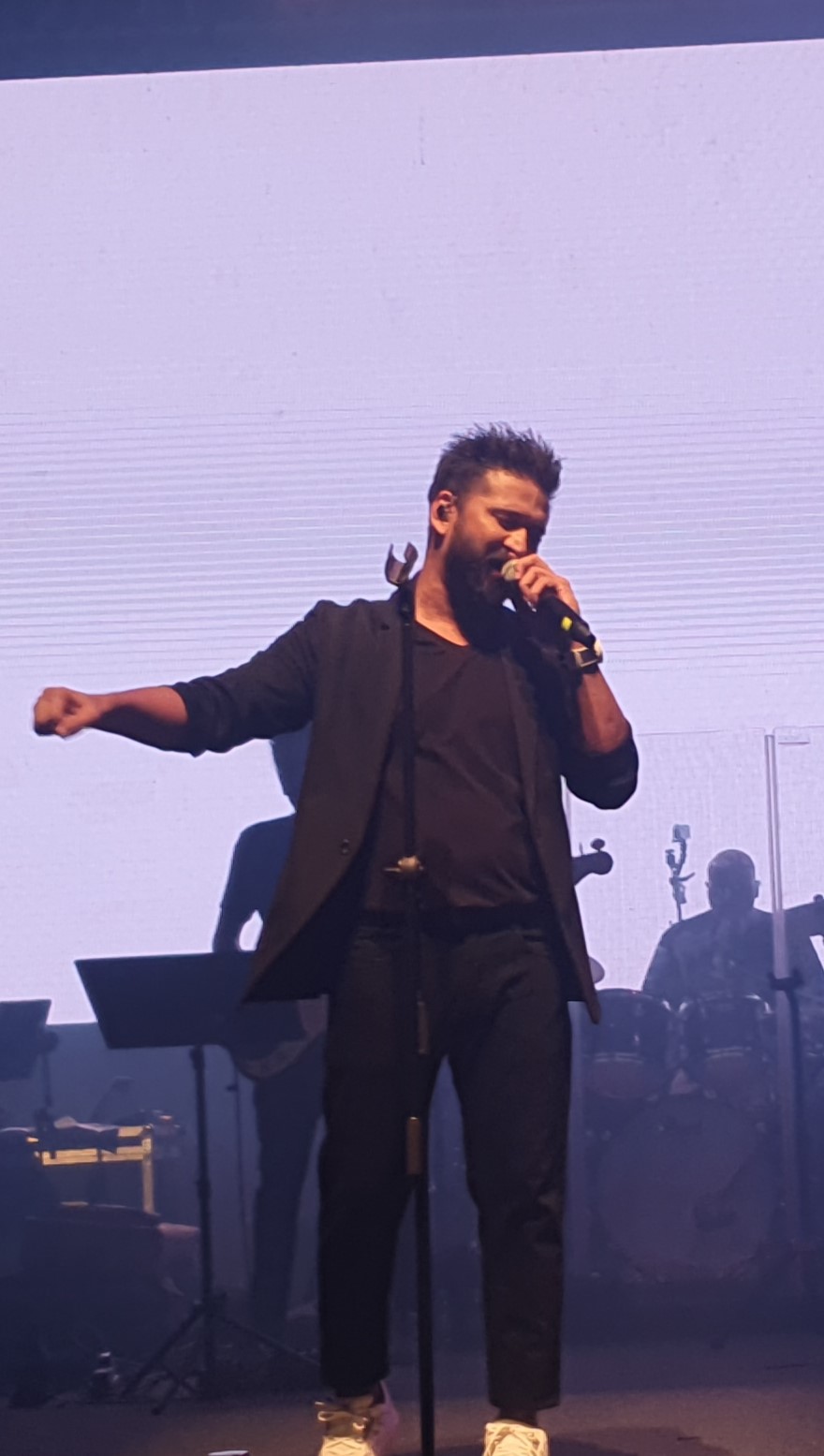
Cover photo: Amit Trivedi performing live, photographed by Thakuromkar. Source: Wikimedia Commons. Used under CC BY-SA 4.0; the locally stored version is retained with that licence.
Amit Trivedi’s career is useful because his breakthrough did not erase the work that came before it—or the independent work that followed. The Directorate of Film Festivals records that, by 20, he had spent three years in a local band and had begun in theatre, advertising and non-film albums. Aamir was his feature-film debut in 2008; Dev.D was the 2009 turning point. A decade later, he created AT Azaad to release music outside films. Directorate of Film Festivals, 57th National Film Awards catalogue The New Indian Express
The lesson for India-based musicians is not “become a film composer first.” It is more practical: a career can have parallel tracks. Client work can deepen technique. A breakout can create room. An independent catalogue can hold the ideas that do not fit a brief. The key is to know which project is doing which job—and who has credit for it.
Key takeaways
- Before his feature-film debut, Amit Trivedi worked in a local band, theatre, advertising and non-film albums; the early work built a working musician’s foundation. Directorate of Film Festivals
- His second film, Dev.D (2009), brought critical and commercial success and earned the National Film Award for Best Music Direction (Songs). Directorate of Film Festivals
- In 2020, he announced AT Azaad to release independent music alongside film projects—not as a rejection of film work. The New Indian Express
- A parallel career needs clear lanes: commission, collaboration and personal catalogue should not share blurry ownership or credits.
One Song, Six Credits: the credit map behind an independent release
The Amit Trivedi career began with working rooms, not a single big break
The official National Film Awards catalogue describes Trivedi’s early path plainly: by 20, he had spent three years in a local band; his professional work began with theatre productions, advertisements and non-film albums. After five years in advertising, he composed for Abhijeet Sawant’s Junoon and made his feature-film debut with Aamir in 2008. Directorate of Film Festivals, 57th National Film Awards catalogue
That sequence matters. It makes a music career look less like a spotlight and more like a set of working rooms. The theatre brief asks for one kind of timing. An advertisement forces concision. A band rehearses listening and compromise. A non-film album tests what remains when no director or brand has set the frame.
For a young vocalist, producer or composer, early paid work is not automatically a distraction from an artist project. It can be a place to learn delivery, revision and communication. But it helps to label the work honestly: this is a commission; this is a co-write; this is my own song. The distinction protects both creative intent and future credit.
The transferable part of this early chapter is its variety. A musician does not need one perfect entry point. A small theatre cue, an assist in a studio, an ad jingle or a college-band arrangement can all build a portfolio—if the person’s role is documented accurately rather than disappearing in a group chat.
Dev.D made a sound world, not just a résumé line
According to the Directorate of Film Festivals, Dev.D was Trivedi’s second feature film and the work that brought critical and commercial success in 2009. The same National Film Awards catalogue lists him for Best Music Direction (Songs) for the film. It is a useful turning point because the soundtrack’s identity depended on a whole creative team, not a generic “break.” Directorate of Film Festivals, 57th National Film Awards catalogue
For artists, the career lesson is not to wait for a famous title. It is to notice what a successful project actually demonstrates. Did the work establish a way of arranging? A trusted lyricist-composer relationship? A sound that audiences could recognise? A reliable ability to answer a director’s brief? Those are the capabilities a later collaborator can understand and hire for.
The credits matter here. A soundtrack can give a composer visibility, while its lyricists, singers, instrumentalists, engineers, music producers and visual teams each make indispensable decisions. Keep the release metadata and your own portfolio specific enough to show what you actually contributed. Our song split-sheet guide is a practical companion before a collaborative track goes live.
AT Azaad was a decision to make room outside the film brief
In March 2020, Amit Trivedi announced his own label, AT Azaad, saying he would release independent music while continuing his film work. He described having music he wanted to share “in a different way.” That framing is important: the move created another release structure; it did not require him to abandon cinema. The New Indian Express, “Amit Trivedi starts his own music label”
In a 2022 interview, Trivedi called Jadu Salona his first album on AT Azaad and described the six-song love-story project as something he had wanted to make independently alongside film work. That is a clear example of a separate lane doing a separate job: a self-directed concept, not a substitute for every commission. The Indian Express, “Music has the power to take you through all sorts of emotions”
“Independent” is often used as a mood word. Here it is more concrete: someone chooses the frame, sequence and collaborators for a release that is not driven by a film’s script or schedule. That freedom is valuable only when the ownership, budget, credits and distribution responsibilities are also clear.
Starting a label is not the default next step for every artist. It brings administration, accounting and release obligations. A smaller team can borrow the principle without copying the company structure: maintain a distinct personal catalogue, decide what it is for, and keep the master and contributor agreements organised.
Collaboration works when the frame is clear
India Today described Trivedi’s 2024 Azaad Collab as a non-film, genre-agnostic album featuring 22 artists. A multi-artist release can offer listeners a wider palette and introduce new creative relationships, but it also creates more credit, approval and split questions than a solo upload. India Today, “Q & A with Amit Trivedi | United in music”
That is where a professional record becomes practical. Before a collaboration is announced, each contributor should know the role, the credit wording, the ownership split, the payment arrangement and who can approve artwork or future edits. A good session can still become a difficult release if those details only surface after the teaser is posted.
For a composer or producer working across film, ads, live work and personal releases, this discipline makes parallel tracks easier to sustain. It lets a collaborator see the difference between a paid brief, a feature, a co-write and a personal project. Our music royalties explainer explains why the master and composition sides of a release should not be treated as one vague pot of money.
The people behind a song should be as visible as the finished track. Use Kredl to make real work and collaborator-confirmed credits easier to show.
Four decisions India-based musicians can take from this career
The Amit Trivedi career does not provide a formula. His opportunities, collaborators and catalogue belong to him. But it does make four useful decisions visible.
- Let early work teach you something. Choose opportunities that build a skill, relationship or credit you can explain later.
- Treat a breakthrough as evidence, not an ending. One recognised project can clarify your strengths, but it does not have to define every future release.
- Give personal work a real lane. An independent song, EP or series needs a purpose, release plan and accountable owner—not spare time after client work.
- Make collaboration legible. Credits, splits, masters, visual permissions and payment terms are part of the creative process, not cleanup after it.
The strongest takeaway is modest. A music career can grow sideways as well as upward. An artist can be a composer on one project, a collaborator on another and the principal creator of a separate catalogue. Knowing the role in each room is what keeps that flexibility from becoming confusion.
Frequently Asked Questions
What did Amit Trivedi do before film composing?
The National Film Awards catalogue says that by 20, Amit Trivedi had spent three years in a local band. It also records early work in theatre, advertising and non-film albums, followed by a five-year advertising stint before his feature-film debut with Aamir in 2008. Directorate of Film Festivals
Which film was Amit Trivedi’s breakthrough?
The Directorate of Film Festivals identifies Dev.D (2009) as Amit Trivedi’s second feature film and says it brought critical and commercial success. The National Film Awards catalogue lists him for Best Music Direction (Songs) for the same film. Directorate of Film Festivals
When did Amit Trivedi launch AT Azaad?
He announced AT Azaad in March 2020 as a label for releasing independent music alongside his film work. In 2022, he described Jadu Salona as his first album on the label, a six-song concept centred on a love story. The New Indian Express The Indian Express
Does an independent artist need to start a label?
No. A label is one way to coordinate releases, but it also brings responsibilities. The relevant lesson is to decide who owns the master, who controls the release, how collaborators are credited and how money is accounted for before the project gains momentum. A written band agreement can help a team begin that conversation.
Sources, methodology and image credits
This is a reported career analysis, not an authorised biography. It uses official National Film Awards material and primary interviews or reporting. It does not estimate income, current availability, chart results or future projects.
- Directorate of Film Festivals, 57th National Film Awards catalogue, retrieved 2026-11-10.
- The New Indian Express, “Amit Trivedi starts his own music label, to release independent music”, published 27 March 2020, retrieved 2026-11-10.
- The Indian Express, “Music has the power to take you through all sorts of emotions”, published 24 November 2022, retrieved 2026-11-10.
- India Today, “Q & A with Amit Trivedi | United in music”, published 13 December 2024, retrieved 2026-11-10.
- Cover image: “Amit Trivedi Live (OT)”, depicting Amit Trivedi performing live. Photographer and rights holder: Thakuromkar. CC BY-SA 4.0, retrieved 2026-11-10. The locally stored version is retained with that licence.