
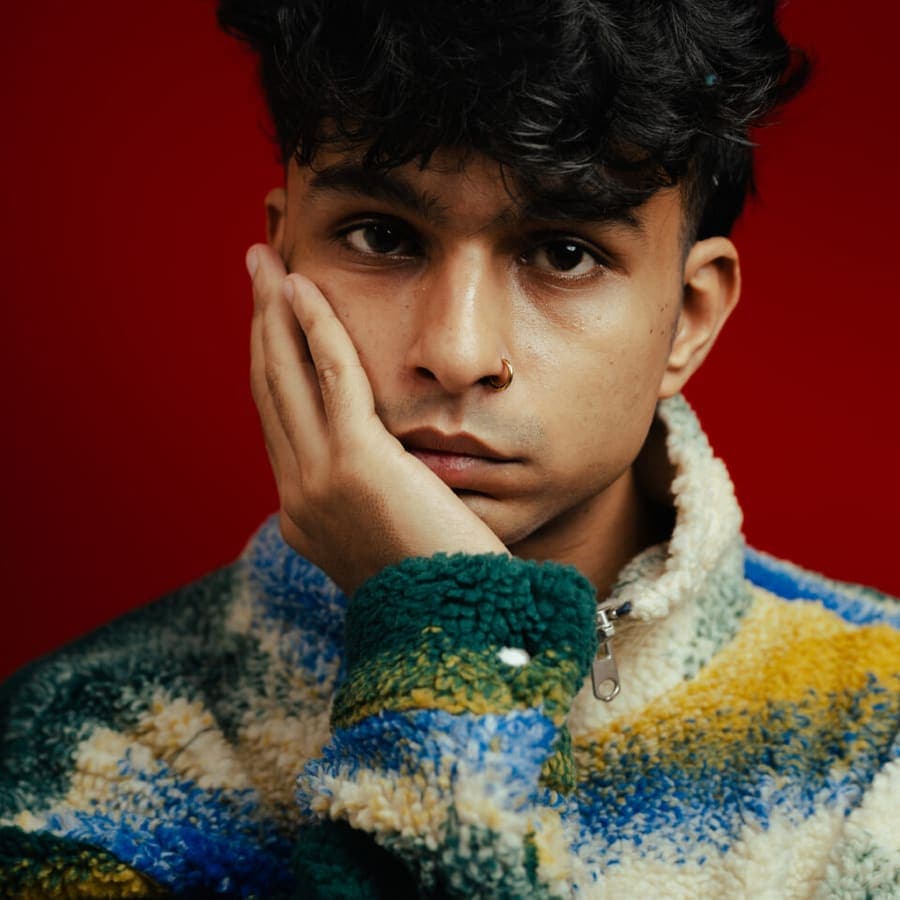
Photo: Rolling Stone India / Manawar Khan
Siegen Moopanar's introduction to hip-hop was a daily ritual, not a single discovery: tuning into VH1's "Hustle" at 6pm, over and over, until he'd memorized Eminem's "When I'm Gone" well before he ever wrote a line of his own. His first attempt at an original song was built to the beat of Drake's "0 to 100." Neither of those starting points suggested a rapper who'd end up defined, years later, by a Rolling Stone India tagline built entirely around restraint: "No gimmicks, no branding — just unfiltered stories from the ground up."
That restraint is the whole story of The Siege's career. He's spent close to a decade making narrative-driven, introspective rap out of a corner of Mumbai — Mira Road — that doesn't come pre-loaded with the mythology gully rap usually draws on, writing about real conversations and everyday middle-class life instead of manufacturing a persona to sell. It's a quieter path than most rap careers take, and it's exactly the path that got him to a Rolling Stone India Future 25 placement and a stage where, for the first time, his mother was in the crowd.
Key takeaways
- The Siege (real name Siegen Moopanar) is from Mira Road, Mumbai, and discovered hip-hop through daily viewings of VH1's "Hustle" as a kid, before starting to freestyle and write around age 11
- His 2019 debut album, "Bubblecars," was a nine-track, bilingual Hindi-English concept project he's described using as personal therapy, dealing directly with self-harm and its aftermath
- He's released several singles through Def Jam Recordings India — including "CBSC," "10 Peti," and "Ek Din" (2024) — while maintaining an independent artistic identity rather than operating as a fully signed label artist
- His songs "Kabhi Na Mili" and "Ek Din" are built from everyday observation rather than a constructed persona — a deliberate choice Rolling Stone India highlighted directly in his Future 25 profile
- He was named to Rolling Stone India's Future 25 in 2025, with his GullyFest 2024 performance — the first time his mother watched him perform live — cited as the defining moment of his career so far
Discover independent rappers and producers building careers on their own terms. kredl →
The Starting Point: A Mira Road Kid Discovering Hip-Hop on Cable TV
The Siege was born in Bengaluru to a Tamil Nadu father and a Karnataka mother, but the city that actually shaped him was Mumbai — his family relocated to Mira Road when he was around two, a move that also shifted his primary language from Kannada to Hindi. He grew up there mischievous but academically consistent, in a life he's described plainly as not having been "a fairy tale."
Hip-hop entered through a specific, repeated ritual rather than a single moment of discovery: watching VH1's "Hustle" every day at 6pm. That exposure led him to Eminem, whose "When I'm Gone" he memorized before he'd written anything of his own — a formative influence he's carried through a career built on channeling difficult emotion directly into lyrics rather than around them. By around age 11, he was freestyling and writing, with his first real attempt at a song built to the beat of Drake's "0 to 100."
Bubblecars: A Debut Album Built as Therapy
The Siege's actual debut, a nine-track concept album called "Bubblecars" released in 2019, wasn't a conventional rap-mixtape introduction. Framed as a kind of farewell speech and moving bilingually between Hindi and English, the album dealt directly with self-harm and suicidal ideation, and the process of surviving both. "I used this album as therapy for myself," he's said of the project. "It is an ongoing process, still."
That willingness to write toward the hardest material rather than away from it became the throughline of everything after. An earlier project, "Salim," contains a line about gifting his mother medical insurance for the first time in the family's history — a detail specific enough that listeners have reportedly cited it as the reason they went and bought insurance themselves.
Find collaborators who take difficult, personal material seriously. kredl →
Writing From What He's Actually Heard, Not What Sells
The Siege has been consistent, across nearly every interview available, about a single governing principle: nothing goes into a song unless it's real. "Most of what I write is based on what I've seen or heard around me," he's said. "Real things people have said." He's applied the same standard to his own presence as an artist, resisting the pressure to manufacture an online persona or chase virality for its own sake: "I'm not interested in gimmicks. If I'm going to put something out, it has to come from somewhere real."
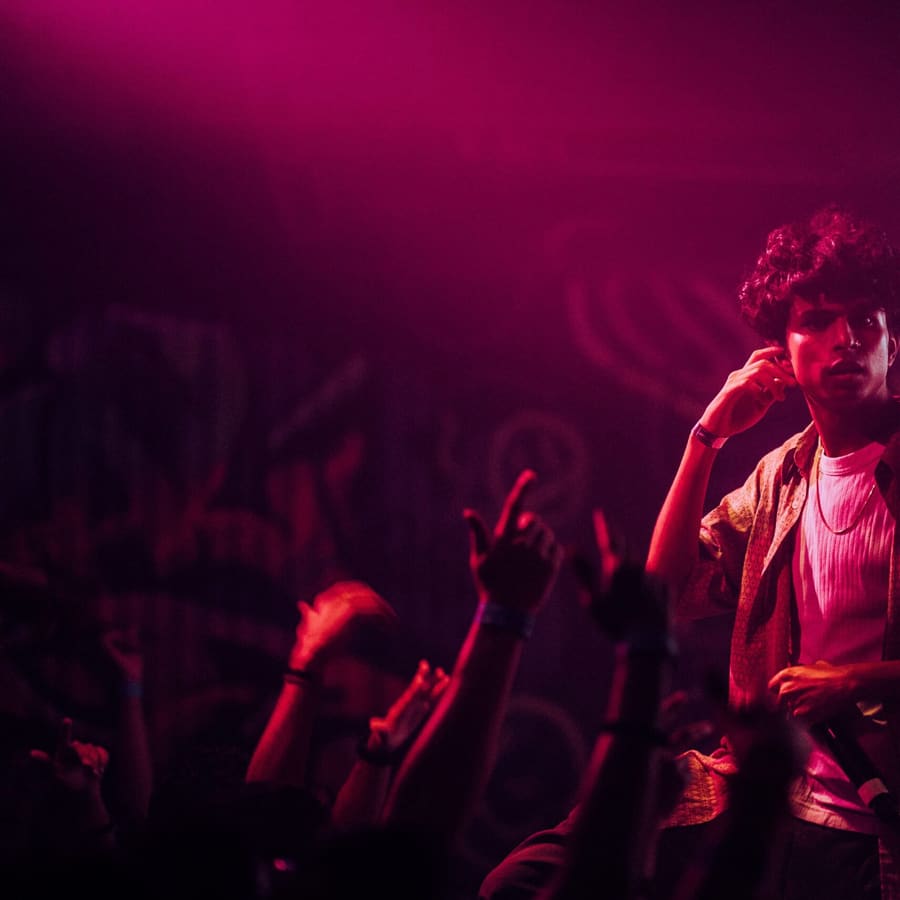
Photo: The Indian Music Diaries
How to Release a Song in India in 2026: Step-by-Step
That same directness shows up in how he talks about his creative process more broadly: "I try to put my life into rhymes," he's said. "I write lines whenever I feel like it and then implement them in songs that revolve around that emotion." He's also been unusually candid about the tension between authenticity and what the industry actually wants from him — describing label feedback that he's "rapping a bit too much" and "needs a hook," a note he's had to weigh against his own instinct that "I can never write a line that no one needs to hear."
The Siege, on staying selective about his own visibility: "I'm not a rapper who's constantly out there selling myself. But when I do speak, I know I have something to say." (Rolling Stone India, Future of Music 2025)
Kabhi Na Mili, Ek Din, and Working With Def Jam India
The Siege's catalogue has grown through a mix of independent releases and singles put out through Def Jam Recordings India, including "CBSC," "10 Peti" (featuring Devoniàn and Boyblanck), and "Ek Din" (featuring Nanku and Shreyas, produced by Devoniàn), released in November 2024. It's worth being precise about what that relationship actually is: rather than operating as a fully signed label artist, he's released a run of singles through Def Jam India while continuing to describe himself, in his own interviews, in terms that suggest an independent artist weighing label relationships carefully rather than one who's handed over creative control.
"Kabhi Na Mili" (featuring Kaala) and "Ek Din" are the two tracks Rolling Stone India's Future 25 profile points to specifically as evidence of his approach — songs it describes as not "screaming for attention" but instead sitting with a listener, built from observation rather than performance.
Connect with labels and collaborators on your own terms. kredl →
GullyFest 2024: The Moment That Actually Mattered
For an artist with a Def Jam India release history and a Rolling Stone India Future 25 placement, The Siege has been notably clear about what he considers the real high point of his career so far — and it wasn't a chart number or a label credit. It was performing at GullyFest 2024 with his mother watching him live for the first time. Rolling Stone India singled this out directly in his Future 25 profile as the moment that mattered most, a framing that fits an artist who's spent his whole catalogue insisting that the realest material is always the personal material.
He's also been candid about the wider state of the industry he's operating in, criticizing labels for chasing already-proven trends rather than taking risks on distinct voices: "The reality is that art has become a circus of sorts now," he's said — an observation he's paired with a deliberate refusal to chase the circus himself.
What Other Independent Artists Can Take From The Siege's Approach
A hard subject, handled honestly, can be a debut rather than a risk. "Bubblecars" tackled self-harm directly on a first full-length project — a subject most emerging artists are advised to save until they have an established audience willing to follow them there.
Working with a major label doesn't require becoming a major-label artist. The Siege has released singles through Def Jam Recordings India while continuing to describe his process and identity in independent terms — proof the two aren't mutually exclusive.
The realest material comes from specificity, not universality. A single line about buying his mother medical insurance did more for his catalogue's credibility than a generic anthem about family sacrifice would have.
Define your own milestone, publicly, even if it isn't the obvious one. The Siege didn't point to a stream count or a label deal as his career-defining moment — he pointed to his mother in a festival crowd, and said so directly in a national press profile.
Build a profile that shows the full range of your creative work. kredl →
Meet India's Next Generation of Music Talent: 25 Artists to Watch in 2026
Frequently Asked Questions
Who is The Siege?
The Siege (real name Siegen Moopanar) is an introspective hip-hop artist based in Mira Road, Mumbai. He debuted with the 2019 concept album "Bubblecars" and has since released singles including "Kabhi Na Mili" and "Ek Din" through Def Jam Recordings India, while maintaining an independent artistic identity. He was named to Rolling Stone India's Future 25 in 2025.
What is The Siege's debut album about?
"Bubblecars," released in 2019, is a nine-track bilingual (Hindi-English) concept album The Siege has described using as personal therapy, dealing directly with self-harm and its aftermath.
Is The Siege signed to Def Jam Recordings India?
He's released several singles — including "CBSC," "10 Peti," and "Ek Din" — through Def Jam Recordings India, but continues to describe himself in independent terms in interviews. The exact nature of that relationship (exclusive signing versus a singles arrangement) hasn't been stated publicly in detail.
What is The Siege's biggest career moment so far?
According to his own account and Rolling Stone India's Future 25 profile, it wasn't a chart placement — it was performing at GullyFest 2024 with his mother in the audience for the first time.
What makes The Siege's rap style distinct?
He writes introspective, narrative-driven hip-hop rooted in real conversations and everyday observation rather than a constructed persona or gully-rap mythology, drawing primary influence from Nas, Jay-Z, Eminem, and Kanye West.
The Siege's career doesn't read like a rapper chasing a moment — it reads like someone who decided early that the only material worth using was the material that actually happened to him, and has stuck to that rule since a nine-track album he made as therapy in 2019. A national magazine placement and a handful of Def Jam India singles later, the moment he still points to as the one that mattered most is the one with no chart position attached to it at all.
Find your next collaborator, manager, or creative partner in India's music industry. kredl →