Aditya Modak’s Practice-Led Career: When Classical Training Meets the Working World
Aditya Modak’s path links riyaz, a day job, teaching and a film role—without treating any one of them as a shortcut to the other.
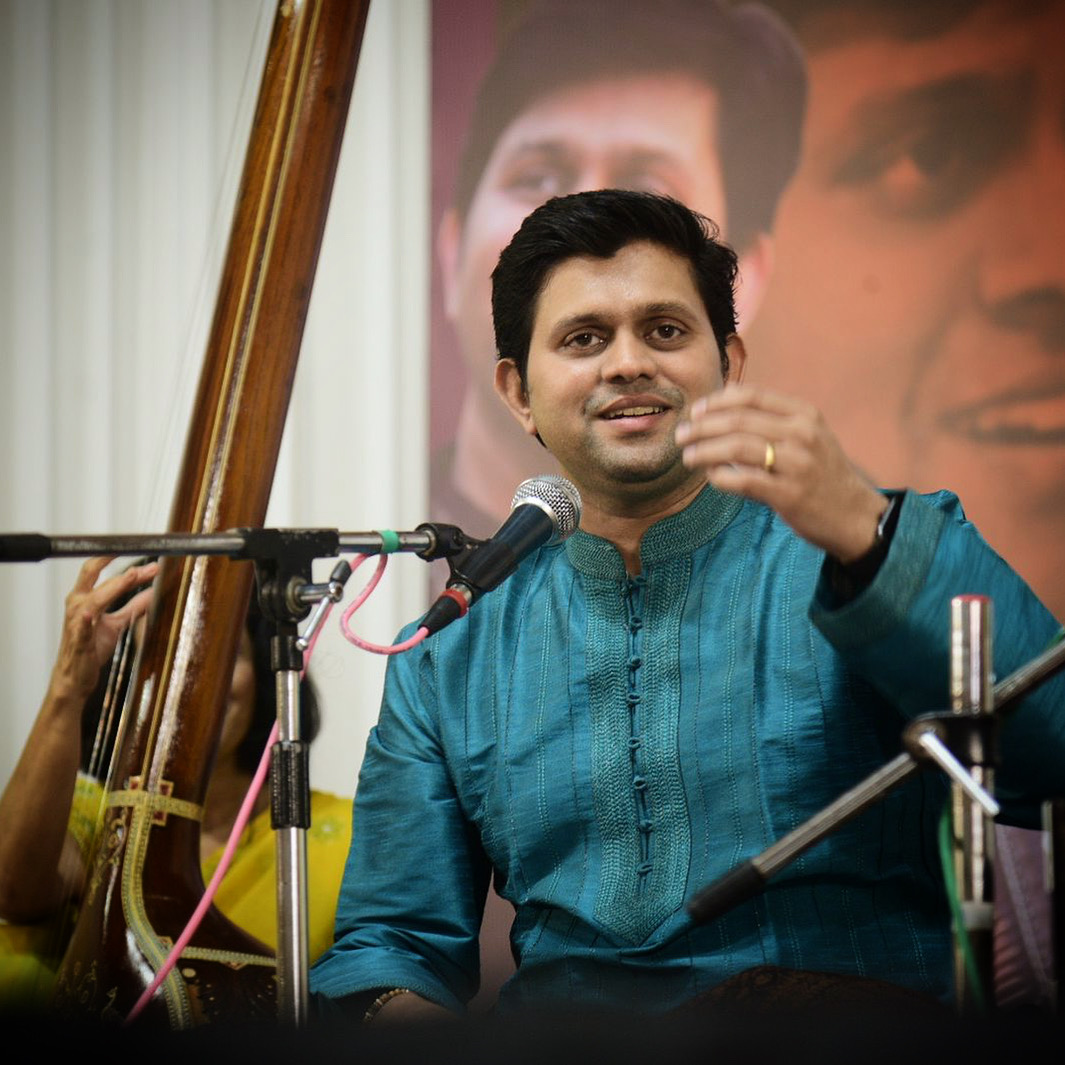
Cover photo: Aditya Modak performing, photographed by Adityamodakwiki. Source: Wikimedia Commons. Used under CC BY-SA 4.0; the locally stored version is retained with that licence.
Aditya Modak’s career is a useful counterpoint to the idea that a musician must choose one identity early: full-time artist, working professional, teacher or screen performer. His public story is more patient. He began learning Hindustani music at five, later worked during his chartered-accountancy training, continued concert practice, taught students and played the lead in The Disciple before returning his attention to riyaz and performance. Free Press Journal The Indian Express
The point is not to romanticise overload. Modak himself describes switching attention completely between the roles in front of him. For India-based musicians, that is the better takeaway: let the work that pays, the work that develops craft and the work that builds a public identity have clear boundaries. Then protect the practice that makes all three possible. Free Press Journal
Key takeaways
- Aditya Modak started learning Hindustani classical music at five after growing up around his father’s teaching room; early listening became a long-term practice, not a one-off audition. Free Press Journal
- He kept music alongside chartered-accountancy training and a corporate job before moving to music full time. That is a reminder to plan a transition rather than treat financial stability as artistic failure. The Live Nagpur
- His lead role in Chaitanya Tamhane’s The Disciple grew from musical fluency, but the film did not replace the daily work of a vocalist; after it, he returned to riyaz. The Indian Express
- Teaching can sharpen an artist’s own practice, but it is real work: communicate its scope, schedule and payment with the same care as a performance or session.
Session musician work in India: a practical guide to building the working track
A musician formed by listening before performance
In a 2024 interview, Modak recalled that while other children played, he listened in the music room as his father taught disciples. By five, he had begun learning ragas and musical details directly from him. That image matters because it puts listening before visibility. A young artist’s earliest professional asset is often not a social-media moment; it is the accumulated ear built in rehearsals, classrooms, homes and small stages. Free Press Journal
Later listings for Modak’s concerts identify him with the Gwalior gharana and describe more than two decades of training under Dr. Pandit Ram Deshpande. A Mumbai concert listing also identifies his accompanists by name—tabla player Yati Bhagwat and harmonium player Siddhesh Bicholkar—which is a small but important model for young performers: a vocal recital is not a solo brand exercise. It is a working ensemble with creditable roles. BookMyShow
For an emerging singer, “practice-led” does not mean practising privately forever. It means treating preparation as the centre of the career and each public moment as evidence of it. Keep a simple record of the material you can perform, the accompanists you have worked with, the repertoire you have permission to share and the event context. Those details make a portfolio more useful to a curator, collaborator or music school than a vague claim of being “versatile.”
The day job was part of the route, not proof that the route had failed
Modak is also a chartered accountant. In the Free Press Journal interview, he described working through chartered-accountancy articleship at a Big Four audit firm: on one occasion, he left work for a concert, performed for two hours, then returned to finish an assignment by the next morning. A 2019 profile reported that he had worked at JP Morgan for almost five years before deciding to pursue music full time, after first seeking financial security. Free Press Journal The Live Nagpur
That is not a prescription to copy an exhausting schedule. It is evidence that a transition can be designed. A salaried role can fund lessons, rehearsal travel, instruments and time to say no to a bad deal. At the same time, no artist should normalise chronic sleep loss or unpaid “exposure” as a requirement for seriousness.
The practical question is: what is your current work paying for, and what is your music practice asking of you? Write down both. A student might need a predictable rehearsal slot and two paid support gigs a month. A producer with a freelance edit job might need one protected day to finish a release. The answers are personal; the plan should be visible.
When the transition gets closer, convert memory into evidence. Save performance posters, contracts, invoices, credits and short notes about your role. If a future collaborator asks whether you can hold a two-hour set, arrange a vocalist or prepare a rehearsal, that record is more useful than a follower count. Kredl is built around this principle: confirmed work and collaborator credits make the work behind a name easier to see.
The Disciple showed what musical specificity can carry into another medium
Modak played Sharad Nerulkar, the central classical vocalist, in Chaitanya Tamhane’s 2020 film The Disciple. The Indian Express reported that the recording and filming process had a particular challenge: an improvised raga presentation could not simply be reproduced identically for lip-sync on location. Modak explained that a raga evolves, even when the same musician returns to the same piece. The Indian Express
That is a good example of why craft opens unusual doors. The film role was not a generic crossover; it depended on a performer who could inhabit the musical world with detail. In a discussion around the film, Mid-day described the story as engaging with devotion, learning and performance through Modak’s character. Mid-day
For a singer, instrumentalist, producer or sound designer, the lesson is not “try acting.” It is to make your speciality legible enough that an adjacent opportunity can find you. A music supervisor may need someone fluent in a style. A filmmaker may need a musician who understands how a performance is built. A theatre director may need a player who can collaborate through revisions. The transferable skill is dependable depth.
It also shows why credit language should be exact. “Actor,” “playback singer,” “vocalist,” “composer,” “arranger” and “teacher” are not interchangeable descriptions. Put the real role beside the project, and ask collaborators to confirm it where possible. Before a multi-person release, use a written split sheet; our guide to split sheets in India explains what to settle before launch.
Returning to riyaz is a career decision
After The Disciple, Modak told the Indian Express that he had returned to riyaz and to being a full-time musician. In the 2024 interview, he said he was a musician “at heart and soul” and that acting demanded time, energy and emotion. He did not frame a visible screen role as an obligation to abandon the musical path that had made the role possible. The Indian Express Free Press Journal
This is the most reusable part of the story. Big moments can distort a career plan: a viral clip, a competition win, a support slot, a placement in a film. They are opportunities, not instructions. Decide which work you want to deepen after the attention passes. Then make the schedule serve that decision.
A simple three-lane check can help:
- Practice lane: What keeps your technique alive each week—riyaaz, writing, production drills, band rehearsal or listening study?
- Income lane: Which paid work is sustainable, clear on terms and compatible with the practice lane?
- Public lane: Which performances, releases or collaborations show the work you want more of?
If the lanes conflict for a season, reduce the public lane first rather than cutting the practice that makes it credible. This is not an argument for hiding; it is an argument for choosing a pace you can repeat.
What Aditya Modak’s career says about a working musician
Modak’s story contains several identities, but they do not need to be blended into one vague bio. A promoter booking a baithak needs to know the repertoire, performance format and accompanists. A student needs to know the teaching structure. A filmmaker needs to understand performance experience. Each audience gets a precise version of the same career.
For your own profile or EPK, try a smaller version. Our music EPK guide for Indian artists can help turn this into a concise, usable page:
- Lead with the role you are pitching for now: vocalist, DJ, keyboardist, producer, music photographer or manager.
- Name two or three verifiable credits with your actual contribution.
- Link a live clip, release or work sample that matches the pitch.
- List collaborators accurately and ask them to confirm shared credits when the work is complete.
- Keep a separate private note for fees, availability and gear; do not promise what you cannot yet deliver.
That gives a music professional a way to see the work, not just the ambition. If you are gathering that record across songs, gigs and teams, create a Kredl profile and add the work you can stand behind. The goal is not to look finished; it is to make an honest next collaboration easier to begin.
FAQs
What is the main lesson from Aditya Modak’s career?
Build a repeatable practice first, then let paid work and public opportunities support it. Modak’s path shows that music training, employment, teaching and a screen role can coexist when each has a clear place rather than competing for the same attention.
Did Aditya Modak leave music for a corporate career?
No. Sources describe him maintaining music while pursuing chartered accountancy and corporate work, then moving to music full time after seeking financial security. The Live Nagpur
Is a film role necessary to build a music career?
No. The Disciple is useful here because it grew from a specific musical skill set. The broader lesson is to develop a depth that can travel into adjacent projects when the fit is real.
How can a student musician apply this right now?
Set one protected weekly practice block, take only paid or genuinely useful commitments you can sustain, and document each completed project with an accurate credit. Start with a small, repeatable system rather than a grand career announcement.
Sources and image credit
- Free Press Journal interview with Aditya Modak (2024) — early training, teaching, professional work and reflections on acting.
- The Indian Express on Modak’s preparation for The Disciple (2021) — performance process and return to riyaz.
- BookMyShow’s Udayswar@Prithvi listing — concert biography, gharana and ensemble credit context.
- The Live Nagpur profile (2019) — reported account of Modak’s employment-to-music transition.
- Cover image: Aditya Modak, photographed by Adityamodakwiki, via Wikimedia Commons, CC BY-SA 4.0. The cover depicts Aditya Modak; the local file keeps the required attribution and licence notice.