
How Shankar Mahadevan Built a Cross-Genre Music Career
Shankar Mahadevan's career shows Indian musicians how deep training, a working runway, artistic risk and collaboration can build a long creative life.
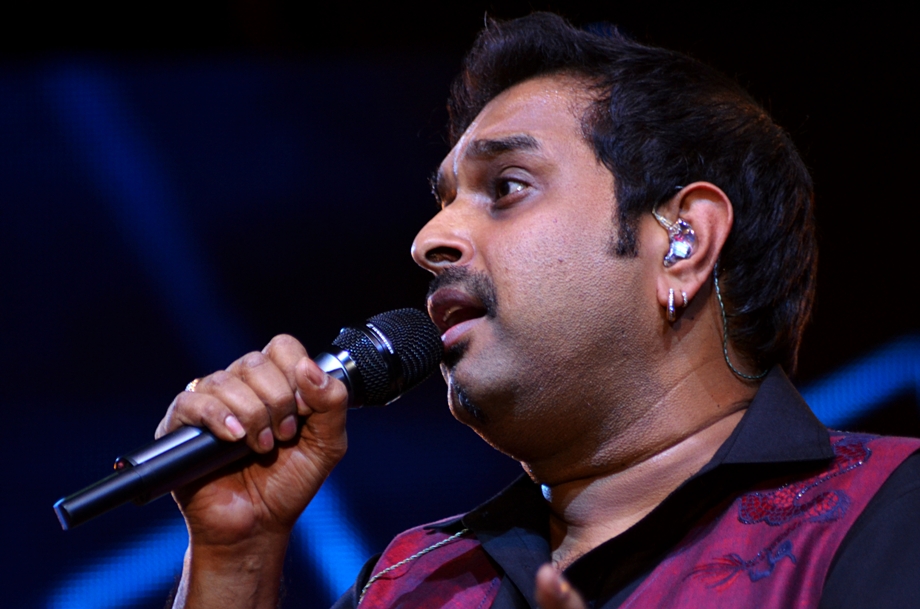
Cover photo: Shankar Mahadevan performing with Shankar-Ehsaan-Loy at Idea Rocks India in Bengaluru, photo by Jim Ankan Deka, via Wikimedia Commons, used under CC BY-SA 3.0.
Shankar Mahadevan built his career by keeping several musical doors open at once: disciplined Carnatic training, an engineering job, commercial jingle work, a daring independent release, film composition and international collaboration. The lesson is not that every musician must do all of those things. It is that a durable career can be designed as connected practice, not one lucky break.
For an Indian artist, his path offers a practical sequence. Build a skill worth trusting, keep enough financial room to choose carefully, make a memorable creative bet, and turn each collaboration into stronger work and relationships. Fame may arrive late, or differently than expected. The habits can begin now.
Key takeaways
- Mahadevan trained in Carnatic music before he entered professional work, and later kept learning across styles. Wharton Knowledge
- His 1998 independent song Breathless turned a formal vocal idea into a widely recognisable public moment. The Indian Express
- In 2024, Shakti won the Grammy Award for Best Global Music Album for This Moment; the win came from long-running musical collaboration, not a shortcut. Recording Academy
How Shubha Mudgal built a career between classical music and popular song
How Raghu Dixit built a Kannada folk-rock career
Why did training matter before Shankar Mahadevan's public breakthrough?
Shankar Mahadevan's career began with musical curiosity and Carnatic study, not with a viral release. In a Wharton Knowledge interview, he described learning harmonium as a child and training under Carnatic vocalist T. R. Balamani. That foundation gave him a way to keep developing across forms instead of treating his first commercial opportunity as the end goal. Wharton Knowledge, “Musician Shankar Mahadevan: Creating Means Taking Risks in Untapped Territory”
Technique is not a substitute for character. It is a place to return when the work gets demanding. A singer who knows how to practise, listen and ask a better question can adapt to a new composer, stage, language or ensemble without losing their centre.
Mahadevan's range is often described through its contrast: Indian classical music, film songs, pop, composition and the jazz-facing work of Shakti. Berklee College of Music presented him as an artist whose work spans Indian classical traditions, popular music and cross-cultural collaboration. The useful takeaway is narrower: a broad career needs a strong musical core, otherwise variety becomes a collection of disconnected attempts. Berklee College of Music, “Berklee Indian Ensemble Welcomes Shankar Mahadevan as Artist in Residence”
If you are still studying, choose one practice that compounds. It might be daily vocal work, tala and rhythm, sight-reading, production, lyric writing or learning to lead a rehearsal. Record what improves and what stalls. You do not need a perfect ten-year plan to build a useful first year.
The career lesson is not “be versatile” in the abstract. Be reliable in one musical language first. That reliability is what lets collaborators trust you when you stretch into another.
Why did he keep an engineering career while music was growing?
Before he committed fully to music, Mahadevan worked as an engineer and made advertising jingles. In a 2021 Mid-day interview, he said he had been on track for a company posting in the United States before telling his employer he was choosing music instead. That period gave him professional experience while he built a music route with real-world constraints. Mid-day, “Today's talent is better equipped”
That does not mean every artist should keep the same day job for the same length of time. It means income and creative ambition do not have to be enemies. A job, freelance client or teaching practice can give a developing musician more negotiating room than a rushed attempt to make every song pay immediately.
Jingle work also teaches skills that translate directly to independent music: finishing on deadline, responding to a brief, hearing feedback without losing your taste, and delivering cleanly with other people in the room. For a current artist, a dependable part-time role can be a rehearsal-space fund, a release budget or simply the breathing room to say no to a bad deal.
Ask a practical question: what does your runway protect? Put a number on monthly essentials, separate personal and project money, and decide how many paid music or adjacent-work commitments you can take without exhausting the practice that makes you better. Our guide to setting up a creative portfolio for freelance work in India can help make that professional work visible without pretending it is your entire identity.
How did Breathless turn a technical idea into a career signal?
Mahadevan's 1998 song Breathless, written with Javed Akhtar, made a difficult vocal conceit easy to understand: the title track appeared to be sung in one unbroken breath. In 2021, Mahadevan told The Indian Express that he composed its central idea during a cab ride from work. The creative value was not virtuosity alone; listeners could immediately describe what was unusual about it. The Indian Express, “I composed Breathless in a cab on my way from work”
For new artists, the question is not “what stunt can I copy?” It is “what is the clearest thing only I can make?” A strong release needs a human-sized description. Perhaps it is a regional lyric approach, a percussion idea, a live arrangement, a production texture or a story in the songwriting. If you cannot explain the centre of the song in one sentence, the audience may not know where to enter.
Berklee's 2016 artist announcement noted that Breathless held the top spot on Indian music charts for more than ten weeks. The chart result matters less than the design behind it: a trained voice, a simple premise and a song structure that gave the premise an emotional reason to exist. Berklee College of Music, “Fall 2016 Signature Series”
A signature release is easier to pitch when the craft and the story point in the same direction. Do not bolt a “hook” onto a song after the fact. Develop the one decision that makes the whole song feel inevitable.
Before you release, test that description with three people who do not work on the song. Ask them what they remember after one listen. Then give the finished recording accurate songwriter, composer, performer, producer and engineer credits. A song split sheet will not manufacture a breakthrough, but it can prevent a promising one from becoming a credit dispute.
What does Shakti's 2024 Grammy win say about collaboration?
In 2024, Shakti won Best Global Music Album at the Grammy Awards for This Moment, with Mahadevan credited among the group’s performers. The Recording Academy’s listing confirms the award; it reflects an ensemble with a long musical history rather than a one-off brand pairing. Collaboration works when each player brings a distinct practice and the group makes room for it. Recording Academy, Shakti artist page
This is useful for Indian artists because “collaboration” is often treated as a posting strategy. A tagged reel can be useful, but it is not the same as a musical partnership. The more valuable question is whether the other person changes the quality of your work: a producer who hears the right arrangement, a percussionist who alters the song’s pulse, a writer who sharpens a line, or an engineer who makes a live band translate on record.
Start small and make the terms clear. Agree on the song’s goal, who is responsible for each decision, the deadline, the budget, credit wording, file delivery and how revenue is handled. Then document it. Those conversations feel less awkward before the work becomes visible.
Mahadevan's story also shows why style should be a meeting point, not a fence. Shakti’s work connects Indian rhythmic and melodic traditions with musicians who arrive from other disciplines. You do not need an international stage to use that principle. A thoughtful local collaboration can be just as ambitious if everyone is listening.
For a more grounded starting point, see our guide to collaborating with musicians in India. Begin with a clear brief, two or three relevant references, and evidence that you will show up prepared.
Why did he build a teaching route alongside performance and composition?
The Shankar Mahadevan Academy launched in March 2011, according to the academy’s official press page, with Mahadevan and CEO Sridhar Ranganathan as founders. It represents a second kind of music work: creating a way for students to learn while building an organisation beyond shows and releases. Shankar Mahadevan Academy, “Press”
Teaching is not an automatic fallback for a performing artist. It is a distinct responsibility. But it can also deepen a career: explaining an idea exposes gaps in your own understanding, students can become a real community, and an ethical teaching practice creates paid work that is related to the music rather than distracting from it.
The same principle applies at a smaller scale. You could run a focused workshop, make a paid lesson series, assist a teacher, offer production feedback or document a rehearsal process. Choose a format you can deliver well. Do not promise outcomes you cannot control, and pay collaborators fairly if the work grows.
Kredl is built for the professional relationships behind creative work: the people who rehearse, record, photograph, promote and produce alongside an artist. Make your contributions and credits truthful and easy to understand. That gives a potential collaborator something more useful than a vague claim that you are “passionate.”
A practical Shankar Mahadevan career checklist for emerging musicians
Mahadevan’s public career crosses several forms, but the useful steps are concrete. His reported move from engineering and jingle work to music, the 1998 Breathless release, the 2011 academy launch and Shakti’s 2024 Grammy win each show a different stage of sustained work. You can borrow the operating principles without copying the exact route.
- Make a weekly practice commitment. Pick one core skill and keep a simple log for eight weeks.
- Protect a runway. Know what your work costs and what income lets you make choices calmly.
- Finish one distinct piece. Give the next song or live set a clear creative centre that a listener can repeat back.
- Choose collaborators for musical fit. Confirm responsibilities, credits and money before recording or announcing.
- Build a second professional lane carefully. Teaching, session work, arranging or production can support the main practice when the quality and boundaries are clear.
The point is steady accumulation. One good rehearsal, one accurate split sheet and one respectful follow-up may not look dramatic online. Together, they make the next opportunity easier to trust.
Frequently Asked Questions
Was Shankar Mahadevan an engineer before becoming a full-time musician?
Yes. In a 2021 Mid-day interview, Mahadevan described working as an engineer before choosing music full time; he also spoke about making advertising jingles during that period. The useful lesson is not that artists need engineering degrees, but that a practical income path can give early creative decisions more room. Mid-day
When was Shankar Mahadevan's Breathless released?
Breathless was released in 1998. In a 2021 interview, Mahadevan recalled composing its central idea on a cab ride from work; The Indian Express identifies lyricist Javed Akhtar as a collaborator on the project. The song is a useful example of a clear musical premise supported by real craft. The Indian Express
Which Grammy Award did Shankar Mahadevan win?
Shankar Mahadevan was part of Shakti, which won Best Global Music Album at the 2024 Grammy Awards for This Moment. The Recording Academy’s artist page lists the win. It is an ensemble recognition, and a reminder that long-term musical partnership can lead to work no individual artist could make alone. Recording Academy
What can a new musician learn from Shankar Mahadevan’s career?
His documented path includes Carnatic training, professional work before a full-time music decision, a 1998 independent release and an academy launched in 2011. The reusable pattern is to pair a serious practice with clear creative risks and professional relationships. Build those parts in sequence; you do not need to imitate his genre or timeline. Wharton Knowledge
Sources, methodology and image credits
This editorial profile is not an authorised biography. It uses reported interviews, official institution pages and the Recording Academy’s artist records. Kredl’s career recommendations are editorial interpretation for working musicians.
- Wharton Knowledge, “Musician Shankar Mahadevan: Creating Means Taking Risks in Untapped Territory”, retrieved 2026-10-31.
- Mid-day, “Today's talent is better equipped”, published 2021, retrieved 2026-10-31.
- The Indian Express, “I composed Breathless in a cab on my way from work”, published 2021, retrieved 2026-10-31.
- Berklee College of Music, “Berklee Indian Ensemble Welcomes Shankar Mahadevan as Artist in Residence”, published 2016, retrieved 2026-10-31.
- Berklee College of Music, “Fall 2016 Signature Series”, published 2016, retrieved 2026-10-31.
- Recording Academy, Shakti artist page, retrieved 2026-10-31.
- Shankar Mahadevan Academy, “Press”, retrieved 2026-10-31.
- Cover image: “Shankar Mahadevan at Idea Rocks India 5, Bangalore, India”, depicts Shankar Mahadevan performing with Shankar-Ehsaan-Loy at Idea Rocks India, NICE Grounds, Bengaluru, 6 April 2013; photo by Jim Ankan Deka, CC BY-SA 3.0, retrieved 2026-10-31. The locally stored version is the original image file; no edits were made.