
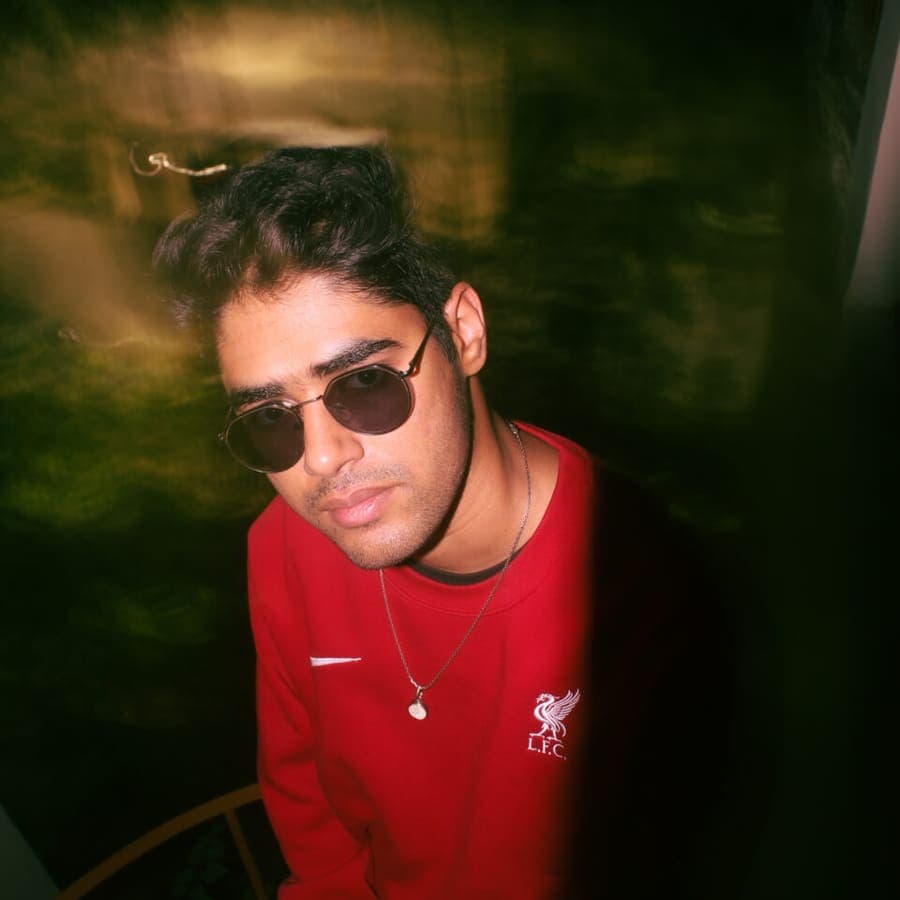
Photo: Rolling Stone India
Vibhu Singh was a trained drummer, tabla lessons first, then a formal drum kit, playing in his college band — and then lockdown took the physical instrument away entirely. What he had left was a laptop and FL Studio, and a habit he's described plainly: "That was a very quiet time. I made quiet music." That quiet, lo-fi output eventually turned into Kalbaisakhi, a name chosen deliberately for being hard for non-Indian audiences to pronounce and rooted in the pre-monsoon storms of eastern India — and a sound built to do the opposite of quiet.
"That's what I want my music to feel like," he's said of the project since. "Something that shakes you up, leaves you lighter." From a bedroom EP made during a period with no live drums to reach for, to support from the UK's South Asian music collective Daytimers, a DJ boot camp in London under scene figures Gaia and Papa Nugs, and a Rolling Stone India Future 25 placement, Kalbaisakhi's rise has been a study in turning a forced constraint into a genuinely distinct sound.
Key takeaways
- Kalbaisakhi is the solo project of Vibhu Singh, a Delhi-based producer-DJ, trained originally as a drummer before pivoting to production during pandemic lockdown
- The project began as a joint effort with a college friend before becoming Vibhu Singh's primary solo vehicle — sources differ on exactly how collaborative the earliest days were
- His debut EP, "Tunnels" (released around 2020-2021), an instrumental project spanning lo-fi, hip-hop, and experimental production, reportedly crossed a million streams
- He drew support from the UK-based South Asian collective Daytimers, and was selected for a DJ boot camp in London under UK scene figures Gaia and Papa Nugs
- He was named to Rolling Stone India's Future 25 in 2025, described as bringing "a rave education from London" to a "chaotic sound" shaking up India's underground scene
Discover producers and DJs building distinct sounds in India's electronic scene. kredl →
The Starting Point: A Drummer With Nothing to Drum
Vibhu Singh's musical foundation was built the traditional way — tabla lessons as a child, then formal drum training through Trinity exams, eventually playing drums in a band he co-founded during college. "Drummers didn't have to smile," he's said, describing what drew him to the instrument in the first place. "They didn't have to show you anything. They just felt it — and hit back."
That physical, percussive identity hit a wall when pandemic lockdown made a drum kit inaccessible. Rather than stop making music, Singh moved into FL Studio, teaching himself production largely out of necessity. "That was a very quiet time," he's said. "I made quiet music." The shift wasn't glamorous or planned — it was a drummer working around the one thing lockdown had taken from him, and stumbling into an entirely new register in the process.
Tunnels: A Debut Built Collaboratively, Then Carried Solo
Kalbaisakhi's origin as a name and a project is genuinely a little tangled in the record — some early accounts describe it as a joint effort, co-founded with a college friend, while more recent profiles frame it squarely as Vibhu Singh's own solo electronica vehicle. What's consistent across every version is the debut: "Tunnels," a seven-track instrumental EP released around 2020-2021, moving through lo-fi, hip-hop, R&B, and experimental textures, described by one reviewer as "a hallucinatory set of calming instrumentals, echoing several styles and influences."
Singh has described the project in terms that treat it as a genuine creative statement rather than a stopgap: "It's been the most robust project of mine, and I aim to strike the same emotional chord with my audience as any other commercial, vocal track would." He named the project Kalbaisakhi specifically for what the word represents — the sudden, intense pre-monsoon storms common across eastern India — and for a more practical reason as well: "I wanted something uniquely Indian," he's said. "Something white people couldn't pronounce easily."
Connect with producers building sounds rooted in specific cultural identity. kredl →
A Sound Built From Indian Samples and UK Dance Genres
Kalbaisakhi's catalogue since "Tunnels" has moved fluidly between new-age hip-hop, house, and UK dance subgenres like garage and bass music, layered consistently with Indian instrumentation and sampling. "I tend to use a lot of Indian instruments and samples in my productions," Singh has said. "I try to showcase where I come from." That's shown up directly in his catalogue of Bollywood and Punjabi bootlegs and edits — reworked versions of familiar tracks built for international dancefloors, treated as a way to carry Indian musical references into scenes that wouldn't otherwise encounter them.
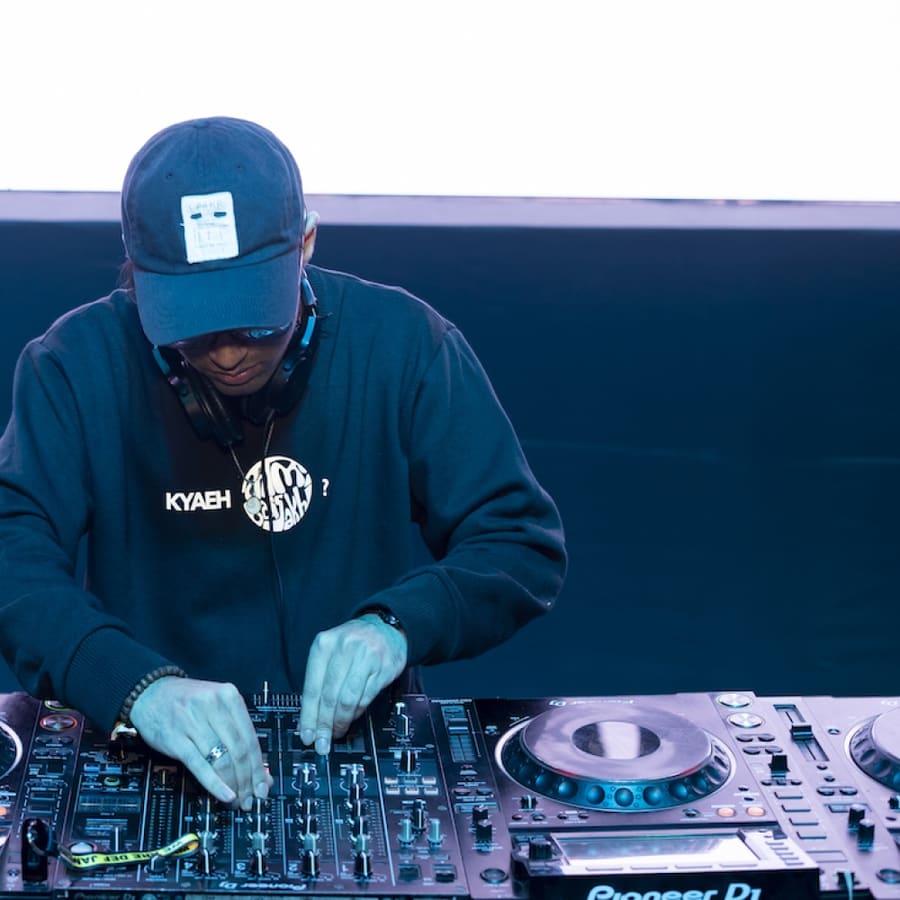
Photo: Platform Magazine
How to Collaborate With Musicians in India
Kalbaisakhi, on what he wants a listener to walk away with: "That's what I want my music to feel like. Something that shakes you up, leaves you lighter." (Rolling Stone India, Future of Music 2025)
That international reach picked up through the support of Daytimers, a UK-based collective spotlighting South Asian electronic artists — a connection that, according to Rolling Stone India's profile of him, brought his work to Boiler Room and BBC Radio.
London: Studying Under the Scene's Own Tastemakers
One of the clearest turning points in Kalbaisakhi's development came through time spent in London, where he was selected for a DJ boot camp led by UK scene figures Gaia and Papa Nugs — reportedly the only international participant in the program. He's been clear that the trip wasn't about networking his way into a foreign scene, but about learning from inside it: "I didn't go there to break into a scene," he's said. "I went there as a listener." He's described the experience in stark terms: "It changed everything."
Build a profile that shows genuine range, not just a single sound. kredl →
Building the Scene Around Him, Not Just a Solo Catalogue
Kalbaisakhi's activity beyond his own releases has leaned toward building infrastructure for other artists as much as his own name — including reported involvement with New Delhi Community Radio, and a track record of direct, unglamorous outreach to the artists he admires. "I have shamelessly DM'd my favourite artists, sent them my edits, and asked for guidance," he's said — a strategy that reads as far more practical than mysterious, and consistent with someone building a scene from inside a bedroom-producer starting point rather than through industry connections.
His 2024 collaboration with Kimeraa, "Saynapiano," and a reworked version of "Yeh Mera Dil" with vocalist Lush Lata, extended that same instinct into direct partnership — treating collaboration as a way to keep pulling Indian musical references into international dance contexts, one track at a time.
What Other Producers Can Take From Kalbaisakhi's Approach
A forced constraint can produce a genuinely new sound, not just a workaround. Losing access to his drum kit during lockdown didn't stop Singh's music — it redirected him into production entirely, and that redirection is the whole reason Kalbaisakhi exists.
A hard-to-pronounce, culturally specific name is a feature, not a barrier. Singh chose "Kalbaisakhi" precisely because it wouldn't be easy for international audiences — a bet that specificity would build a stronger identity than a more generic, easily marketable name.
Learning internationally doesn't require positioning yourself as a networker. Framing his London boot camp as listening rather than scene-breaking gave Singh room to actually absorb what he encountered, rather than performing confidence he hadn't yet earned.
Direct, unpolished outreach still works. "Shamelessly" DMing artists he admired for guidance is a strategy available to anyone — Singh's career is evidence it can actually lead somewhere.
Build a profile that shows the full range of your creative work. kredl →
Meet India's Next Generation of Music Talent: 25 Artists to Watch in 2026
Frequently Asked Questions
Who is Kalbaisakhi?
Kalbaisakhi is the stage name of Vibhu Singh, a Delhi-based electronic music producer and DJ. Originally trained as a drummer, he pivoted to production during pandemic lockdown and has since built a catalogue blending house, UK garage and bass music, and Indian instrumentation and sampling. He was named to Rolling Stone India's Future 25 in 2025.
What does the name "Kalbaisakhi" mean?
"Kalbaisakhi" refers to the sudden, intense pre-monsoon storms common across eastern India. Singh chose the name partly for that meaning and partly because it would be difficult for international audiences to pronounce easily — a deliberate choice to keep the project's identity distinctly Indian.
What is Kalbaisakhi's debut project?
"Tunnels," a seven-track instrumental EP released around 2020-2021, blending lo-fi, hip-hop, R&B, and experimental production. It has reportedly crossed a million streams since release.
Has Kalbaisakhi performed or trained internationally?
Yes. His work reportedly gained support from the UK-based South Asian collective Daytimers, and he was selected for a DJ boot camp in London led by UK scene figures Gaia and Papa Nugs, an experience he's described as changing everything about his approach.
What makes Kalbaisakhi's sound distinct?
He blends new-age hip-hop, house, and UK dance genres like garage and bass music with Indian instruments, samples, and reworked Bollywood and Punjabi tracks — treating cultural specificity as a central part of his production rather than something to smooth over for international audiences.
Kalbaisakhi's whole catalogue traces back to a single interrupted routine: a trained drummer with no drum kit to reach for, filling the gap with a laptop instead. What came out of that gap wasn't a workaround — it became a genuinely distinct sound built on the same instinct that made him a drummer in the first place: something that doesn't ask to be liked so much as it asks to be felt.
Find your next collaborator, manager, or creative partner in India's music industry. kredl →