
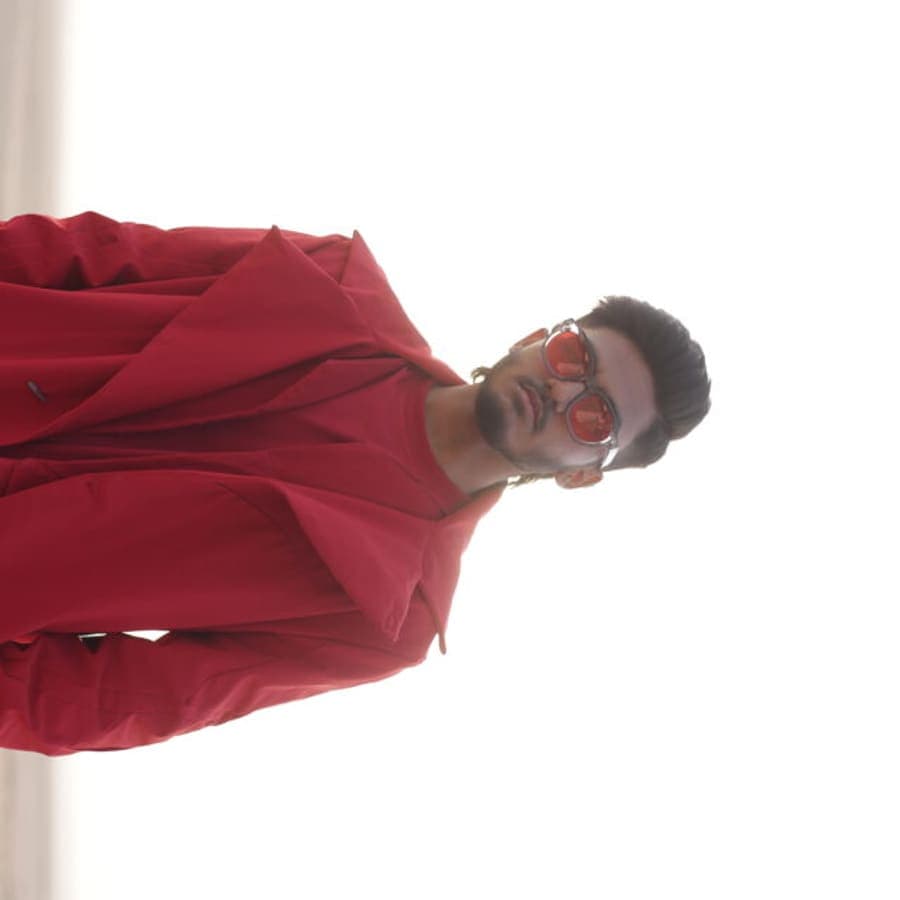
Photo: Rolling Stone India
Sai Abhyankkar had released exactly one independent single when Rolling Stone India described him as heading toward becoming "Tamil pop's biggest hitmaker." By the time the description proved accurate, he'd released two more — "Katchi Sera," "Aasa Kooda," and "Sithira Puthiri" — and that was the entire independent catalogue behind a career that would go on to include a film originally scored by A.R. Rahman, a Telugu debut under director Atlee, and enough simultaneous film commitments to draw online criticism for moving too fast.
Growing up the son of two established South Indian playback singers, Tippu and Harini, gave Abhyankkar an early, unusually direct relationship with the mechanics of the industry he'd eventually enter. What it didn't guarantee was a sound distinct enough to stand out inside it — and building that sound, on his own terms and largely outside the traditional film-soundtrack pipeline, is the actual story behind a rise that from the outside can look almost too fast to be real.
Key takeaways
- Sai Abhyankkar is the son of South Indian playback singers Tippu and Harini, and trained across multiple instruments — tabla, mridangam, piano, drums, guitar — before focusing on composing and production
- His independent debut single, "Katchi Sera" (January 2024), released via Think Indie, reached roughly 18 million Spotify streams and topped Spotify's Global Viral chart within weeks of release
- He built a three-song independent catalogue — "Katchi Sera," "Aasa Kooda" (featuring his sister, singer Sai Smriti), and "Sithira Puthiri" — before pivoting hard into film composing
- He was brought on to score "Karuppu," starring Suriya, after the project was originally attached to A.R. Rahman — a transition he's said involved a direct, cordial conversation with Rahman himself
- He was named to Rolling Stone India's Future 25 in 2025, with a tagline crediting him with "pushing the boundaries of Tamil pop"
Discover composers and producers shaping regional-language music in India. kredl →
The Starting Point: A Household Built on Music, Not a Head Start Handed to Him
Abhyankkar grew up in Virugambakkam, Chennai, in a household where music wasn't a hobby layered onto childhood — it was the environment. Both of his parents, Tippu and Harini, are established playback singers in South Indian cinema, and his sister, Sai Smriti, is also a professional singer. He trained across an unusually wide range of instruments as a kid — tabla, mridangam, piano, drums, guitar — and studied vocals under Sriram Parthasarathy, among other teachers, before eventually shifting to online schooling after 10th standard specifically to make more room for music.
That access mattered, but it didn't substitute for building his own catalogue. His first playback credit came in 2022, on a self-written composition — a starting point that put him in the industry's orbit without yet giving him an identity distinct from his family's. That identity came later, and on terms he chose deliberately: not a film score handed to him through a connection, but an independent pop single released with no guaranteed audience behind it.
Katchi Sera: A Debut Single That Topped a Global Chart
"Katchi Sera," released in January 2024 via Think Indie — Think Music's independent-artist imprint — became the single that put Abhyankkar's name in front of an audience well beyond his family's industry connections. Written with lyricist Adesh Krishna and built during a period of daily, pandemic-era music-making, the song reached roughly 18 million Spotify streams and topped the platform's Global Viral Songs chart within weeks of release, as of Rolling Stone India's February 2024 reporting on the single.
He's described his mindset heading into that period with a mix of ambition and restraint: "With God's grace, I have around six new independent tracks lined up for release," he said shortly after the single's success. "A couple of production houses are in touch for film music as well." The framing is notable — he treated the independent singles and the film opportunities as running in parallel from the very start, rather than one being a stepping stone to abandon for the other.
Connect with lyricists and collaborators for your next independent release. kredl →
Aasa Kooda and Sithira Puthiri: Building a Catalogue, Not Chasing a Repeat
"Aasa Kooda," released in June 2024, kept the momentum going and brought his sister, Sai Smriti, into the fold as a featured vocalist — a rare instance of an artist's family collaboration functioning as both a personal and commercial choice at once. The same day the single dropped, Abhyankkar signed on to score his first feature film, "Benz," a decision that marked the real beginning of his double career as independent artist and film composer running simultaneously rather than sequentially.
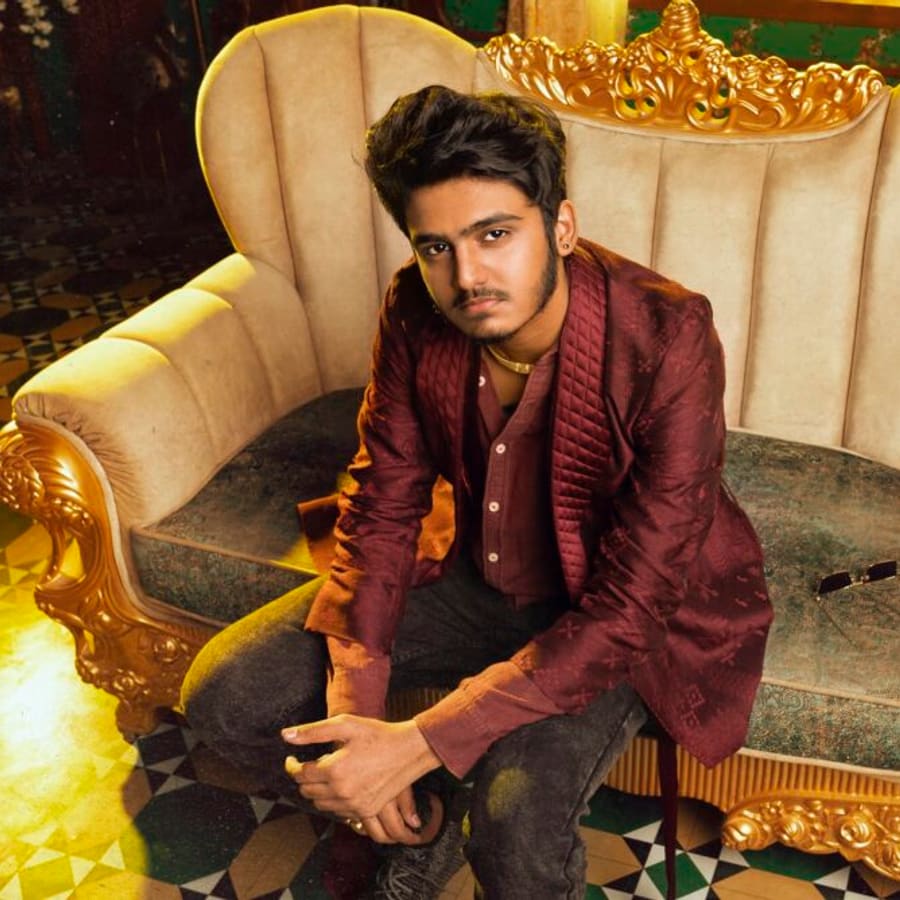
Photo: Rolling Stone India
How to Release a Song in India in 2026: Step-by-Step
"Sithira Puthiri," released in January 2025 and featuring actress Meenakshi Chaudhary, pushed the production values further — a brass-laden arrangement shot across Jaipur and Mumbai with elaborate choreography, a clear step up from the rawer, more intimate feel of "Katchi Sera." He's spoken candidly about the deliberateness behind that shift: "I was a little more prepared this time, because I wanted to prove something with the dance stuff," he's said. "I wanted [the video] to be very aesthetically rich, and a little ethnic, with traditional values."
Sai Abhyankkar, on staying accountable to his own creative choices: "I want to take the ownership, even if it's good or even if it's bad, because I've tried to stay 100 percent true to what I want to do." (Rolling Stone India, Future of Music 2025)
Replacing A.R. Rahman on Karuppu
The clearest marker of how quickly Abhyankkar's standing shifted came in December 2024, when he was announced as composer for "Karuppu," a Suriya-starring project directed by RJ Balaji — a film that had originally been attached to A.R. Rahman, arguably the most significant figure in the history of South Indian film music. Rather than treat the transition as something to downplay, Abhyankkar has spoken about it directly, describing a cordial, direct conversation with Rahman himself about the change and framing the opportunity as carrying real weight: a chance he's described in interviews as both "a blessing and a responsibility." He's credited director RJ Balaji specifically for the confidence to bring him on, describing Balaji as someone who had genuine faith in him from early on.
Build a portfolio that gets you into rooms you haven't earned yet by reputation alone. kredl →
A Rapid Expansion — and the Criticism That Came With It
By 2025, Abhyankkar's film slate had grown fast: "Raaka" (his Telugu debut, under director Atlee, starring Allu Arjun), Silambarasan's 49th film, "Dude" (director Pradeep Ranganathan, released October 2025), the Malayalam-Tamil bilingual "Balti," and projects with Karthi and Sivakarthikeyan. That speed drew visible backlash — online criticism in mid-2025 over having signed roughly eight films before his debut film had even released theatrically, with some framing it as evidence of industry favoritism rather than earned opportunity. He's pushed back on that reading directly, describing his rapid signings as the product of genuine networking and relationships built through consistent, visible work rather than inherited access alone — a distinction that matters given how directly his parents' industry standing could otherwise explain away his rise.
He's also continued building a playback singing career alongside composing, including his debut playback vocal on "Salambala" from "Madharaasi" (2025, composed by Anirudh Ravichander) and self-sung tracks across "Dude" and "Karuppu" — expanding his public identity beyond composer and producer into performer as well.
What Other Young Composers Can Take From Sai Abhyankkar's Approach
Family access opens doors, but it doesn't write the songs behind them. Abhyankkar's industry connections got him into rooms early — his independent catalogue is what made people want to keep him there.
A small catalogue, deliberately built, can outweigh a large one released carelessly. Three independent singles, each with a clear creative evolution between them, did more for his reputation than a rushed stream of lower-effort releases would have.
Run parallel tracks instead of sequential ones. Abhyankkar didn't treat his independent pop career and his film composing career as one leading to the other — he built both at the same time, letting each reinforce the other's visibility.
Own your choices publicly, especially the risky ones. His response to backlash over signing multiple films wasn't defensiveness — it was a direct explanation of how those relationships actually formed, a harder but more durable way to handle public scrutiny.
Build a profile that shows the full range of your creative work. kredl →
Meet India's Next Generation of Music Talent: 25 Artists to Watch in 2026
Frequently Asked Questions
Who is Sai Abhyankkar?
Sai Abhyankkar is a Tamil pop composer, producer, singer, and keyboardist, and the son of South Indian playback singers Tippu and Harini. He built his independent reputation on three singles — "Katchi Sera," "Aasa Kooda," and "Sithira Puthiri" — before becoming a sought-after Tamil, Telugu, and Malayalam film composer, and was named to Rolling Stone India's Future 25 in 2025.
What is Sai Abhyankkar's biggest independent single?
"Katchi Sera," his January 2024 debut single released via Think Indie, reached roughly 18 million Spotify streams and topped Spotify's Global Viral Songs chart within weeks of release, as of Rolling Stone India's February 2024 reporting.
Did Sai Abhyankkar replace A.R. Rahman on a film?
Yes. He was announced in December 2024 as composer for "Karuppu," starring Suriya and directed by RJ Balaji — a project originally attached to A.R. Rahman. Abhyankkar has said he spoke directly with Rahman about the transition and described the change as cordial.
What films has Sai Abhyankkar scored?
His film composing credits include "Benz," "Dude" (2025), "Karuppu," "Raaka" (his Telugu debut, under director Atlee), Silambarasan's 49th film, and the Malayalam-Tamil bilingual "Balti," among others signed across a fast-moving 2025 slate.
Does Sai Abhyankkar sing his own music?
Yes. Beyond composing and producing, he performs as a playback singer, including his debut playback vocal on "Salambala" from "Madharaasi" (2025) and self-sung tracks in "Dude" and "Karuppu."
Sai Abhyankkar's rise reads fast from the outside — three independent singles, a handful of major film signings, and an A.R. Rahman handoff, all inside about two years. But the actual mechanism behind it is narrower and more deliberate than the pace suggests: a small catalogue built with visible intent, and a willingness to own every choice in it publicly, good or bad. That's a slower kind of fast than it looks.
Find your next collaborator, manager, or creative partner in India's music industry. kredl →