
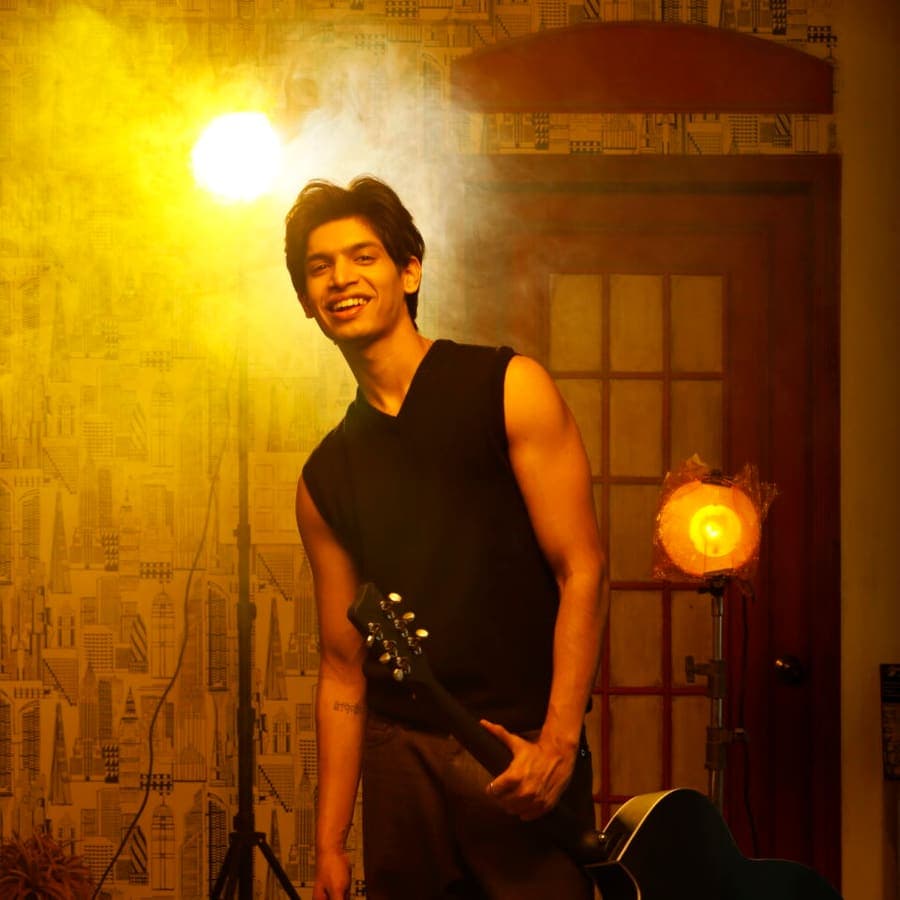
Photo: Rolling Stone India
Maahi has said the quiet part out loud more than once: "The audience is smart — they don't give anyone their full commitment just because they are somebody's son." It's an unusually direct thing for a 19-year-old with a famous surname to say about his own advantage, and it's the tension that defines his entire early career. His father is Shaan, one of Bollywood's most recognizable playback voices for over two decades. That connection gets Maahi a first listen. It's never been enough, on its own, to build an actual audience — and he's talked about knowing that from the start.
What he's built instead is a genuinely independent catalogue: a debut single that found its own audience, a viral collaboration with producer Paradox, a Bollywood playback credit of his own, and a debut EP built around an unusually collaborative format — a Saregama-FilterCopy microdrama series where each episode ties to a different track. That work is what got him a Rolling Stone India Future 25 placement, not the family name attached to it.
Key takeaways
- Maahi is the son of Bollywood playback singer Shaan and grew up around music from an early age, beginning formal classical vocal training around age 7 and committing seriously to a music career around 12
- His debut single, "Sorry," released via Saregama Talent in February 2024, launched his career independent of his father's label relationships
- His March 2025 collaboration with producer Paradox, "Dil Behkaaye," gave him his first real foothold in India's I-pop scene, per Rolling Stone India
- His debut EP, "Talab" (October 2025), released through Saregama, was paired with an unusual promotional format — a FilterCopy microdrama series called "Ishq at Campus," where each episode was built around a different track from the EP
- He was named to Rolling Stone India's Future 25 in 2025, and has been candid in interviews that his father's name gets him attention but not commitment from an audience
Discover the next generation of Indian pop artists building their own identity. kredl →
The Starting Point: Growing Up Inside a Musical Dynasty
Maahi grew up in Mumbai in a household where music wasn't a career choice so much as an atmosphere — his father, Shaan, is one of the most consistent playback voices in Hindi cinema, and his brother, Soham, is also a musician, playing in the alt-rock-leaning band Citimall. He began formal classical vocal training around age 7, and has described his father encouraging him to listen broadly across styles rather than narrowly toward any one genre.
That access came with real privilege attached, and Maahi hasn't pretended otherwise. "Dad and mom could get me into the room, and obviously that's a huge privilege," he's said — pairing that admission immediately with the harder truth that followed it: privilege gets you into the room, not a career inside it. He's described his approach to that gap directly: "I have not entered singing blindfolded," he's said, describing a specific fear that came with going public as a teenager — "being a dud... that guy in entertainment who has started at 18."
Sorry: A Debut Built to Stand on Its Own
Maahi's debut single, "Sorry," released via Saregama Talent in February 2024, was the first real test of whether an audience would follow him past his father's name. He's been clear about how seriously he took that test: "My goal is to ensure those ears and eyes stay on the music video... for me," he's said — a distinction he's drawn deliberately between attention that arrives because of Shaan and attention that stays because of his own work.
That same year, he performed internationally at the Cannes Film Festival's Bharat Parv cultural showcase alongside his father and brother — a high-visibility moment that, notably, put the whole family on stage together rather than positioning Maahi as a solo act breaking away from them.
Connect with labels and collaborators who back independent debut releases. kredl →
Dil Behkaaye: The Collaboration That Found His I-Pop Footing
Maahi's clearest breakout moment came in March 2025 with "Dil Behkaaye," a collaboration with producer Paradox featuring Akaisha Vats, Rutvik Talashilkar, Harjot Kaur, and Shloke Lal. Rolling Stone India's Future 25 profile credits the track specifically with giving him "his first real foothold in India's I-pop scene" — a genre he sees not as a niche but as part of a broader push toward globally competitive Hindi pop. "It's about showing the world what we have here," he's said of that ambition.
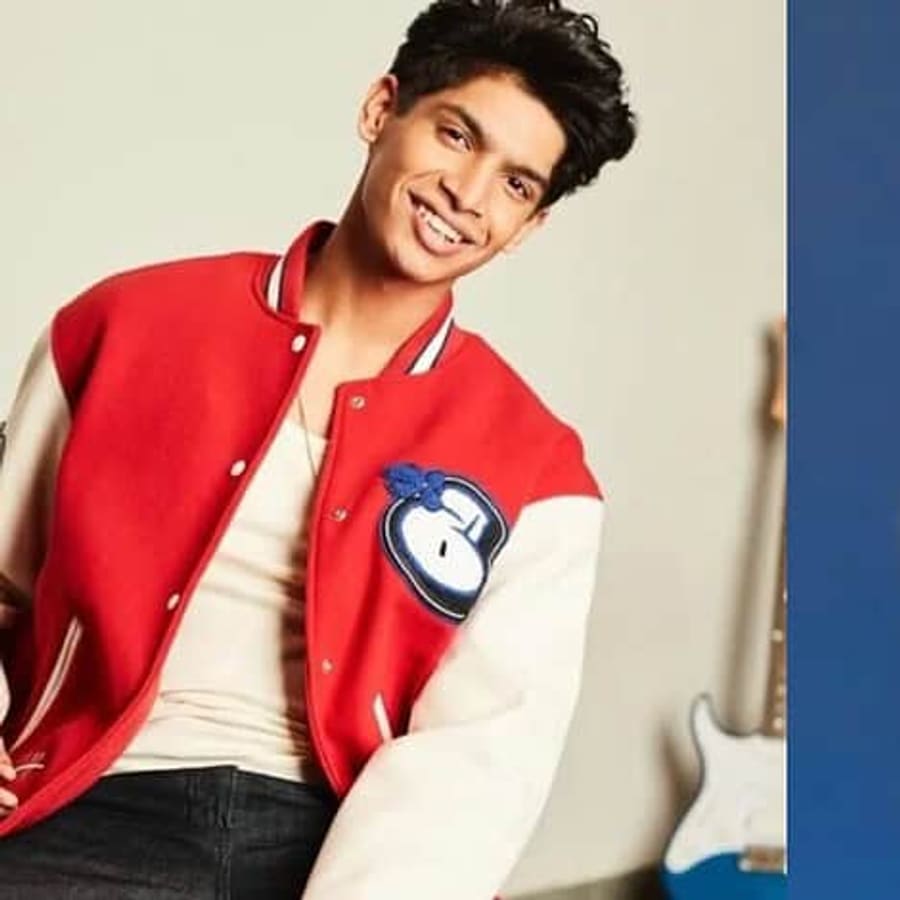
Photo: Siasat
The Complete Guide to Building an Independent Music Career in India
He's been selective about how he frames collaboration, treating it as something that has to feel earned rather than strategic: "It needs to come from a genuine place," he's said. His influences span an unusually wide range for a teen pop artist working in Hindi — Justin Bieber, Dominic Fike, and Charlie Puth internationally, Arijit Singh, Gini, and Kushagra domestically, plus a formative pull toward Kishore Kumar's open, unguarded singing style, which he's connected to his own "baritone voice."
Maahi, on what he's actually chasing with his music: "I want people to feel good when they listen to my songs... that happy-go-lucky vibe, you know?" (Rolling Stone India, Future of Music 2025)
Talab and a Microdrama Built Around the EP
Maahi's debut EP, "Talab," released through Saregama in October 2025, marked his most ambitious project to date — four tracks ("Talab," "Dildaari," "Rahein," "Vaari Vaari") built with collaborators including Bharath, Rohh, Saaheal, Samad Khan, and Akash Kaushal. Saregama paired the release with an unusual promotional format: a partnership with FilterCopy on a microdrama series called "Ishq at Campus," where each episode was structured around a different track from the EP. "If you hear the music in the episodes, they're all stems from the song, even the rhythm or the groove that's playing in the back," he's explained.
He's also spoken about the emotional range the EP represented compared to his earlier work: "I've usually operated in a very lovey-dovey space," he's said. "Moving to a little bit of a darker space here was fun." When the microdrama series wrapped, he and his collaborators made a point of giving the story a proper ending rather than treating it purely as promotion: "We just felt it wouldn't be fair to be like, 'Promotion ho gaya series ka.' Just because of the amount of love that we've gotten on it, we felt like the audience deserved at least a proper conclusion to it."
Build a profile that shows the full range of your creative work. kredl →
Carrying a Legacy Forward Without Copying It
Maahi's Bollywood playback debut came via "Tera Kya Karoon," from the film "Nadaaniyan," composed by Sachin-Jigar — a credit that puts him formally in the same lane his father has worked for decades, even as he's said playback work will happen "when it has to" rather than being the center of his focus while he's "still developing my sound." His father has been publicly supportive of the distinction Maahi is drawing between the two of them as artists: "I like that Maahi puts his own spin on songs," Shaan has said. "He doesn't try to emulate the original."
Maahi has described their relationship in musical terms that fit the family's whole orientation toward sound: "In music, intervals are the space between two notes... That's how I'd describe our relationship" with his father — a framing that treats the distance between them as structure, not distance for its own sake.
What Other Artists With Famous Family Names Can Take From Maahi's Approach
A famous name buys attention, not commitment. Maahi has said this directly and repeatedly — treating it as a fact to work around rather than a credential to lean on.
A debut single should be built to be judged on its own. "Sorry" wasn't framed as "Shaan's son's first song" in how Maahi has talked about it — it was framed as a test of whether his own work could hold an audience.
An unconventional promotional format can outperform a standard rollout. Tying "Talab" to a scripted microdrama series gave the EP a narrative hook that a conventional single-by-single release wouldn't have had.
Respect a legacy by building something distinct from it, not by repeating it. Maahi's own father has publicly praised him specifically for not emulating the originals he covers — proof that the goal was never to sound like Shaan, but to sound like himself.
Find your next collaborator, manager, or creative partner in India's music industry. kredl →
Meet India's Next Generation of Music Talent: 25 Artists to Watch in 2026
Frequently Asked Questions
Who is Maahi?
Maahi is an Indian I-pop singer and the son of Bollywood playback singer Shaan. He debuted independently in February 2024 with the single "Sorry," broke out further with "Dil Behkaaye" (a 2025 collaboration with producer Paradox), and was named to Rolling Stone India's Future 25 in 2025.
What is I-pop?
I-pop (Indian pop) is a genre Maahi has described as part of a broader push toward globally competitive Hindi pop music — drawing on international pop influences like Justin Bieber and Charlie Puth while staying rooted in Indian musical traditions and playback-style vocal delivery.
What is Maahi's debut EP?
His debut EP, "Talab," was released through Saregama in October 2025. It was promoted through an unusual partnership with FilterCopy on a microdrama series, "Ishq at Campus," where each episode was structured around a different track from the EP.
Has Maahi sung playback for Bollywood films?
Yes. His playback debut came with "Tera Kya Karoon," from the film "Nadaaniyan," composed by Sachin-Jigar. He's said playback work will factor more into his career "when it has to," while he continues developing his independent sound.
Is Maahi's father, Shaan, involved in his music career?
Shaan has been publicly supportive but has described stepping back to let Maahi find his own creative identity, praising him specifically for putting his own spin on songs rather than emulating the originals. The two have discussed collaborating directly in the future but had not released a joint project as of early 2026.
Maahi's early career reads like a deliberate argument against the easiest version of his own story. He could have leaned entirely on his father's name and let a debut single coast on curiosity alone. Instead, from "Sorry" through "Dil Behkaaye" to a debut EP built around its own promotional format, he's built a catalogue that would hold up with or without the surname attached to it — which is, by his own account, the only kind of attention that was ever actually worth having.
Find your next collaborator, manager, or creative partner in India's music industry. kredl →