
Sync Licensing in India: How to Get Your Music Into Films, Ads, OTT Shows and Games
A practical India-first guide to clearing music rights, preparing sync-ready files, pitching decision-makers and managing payments after placement.
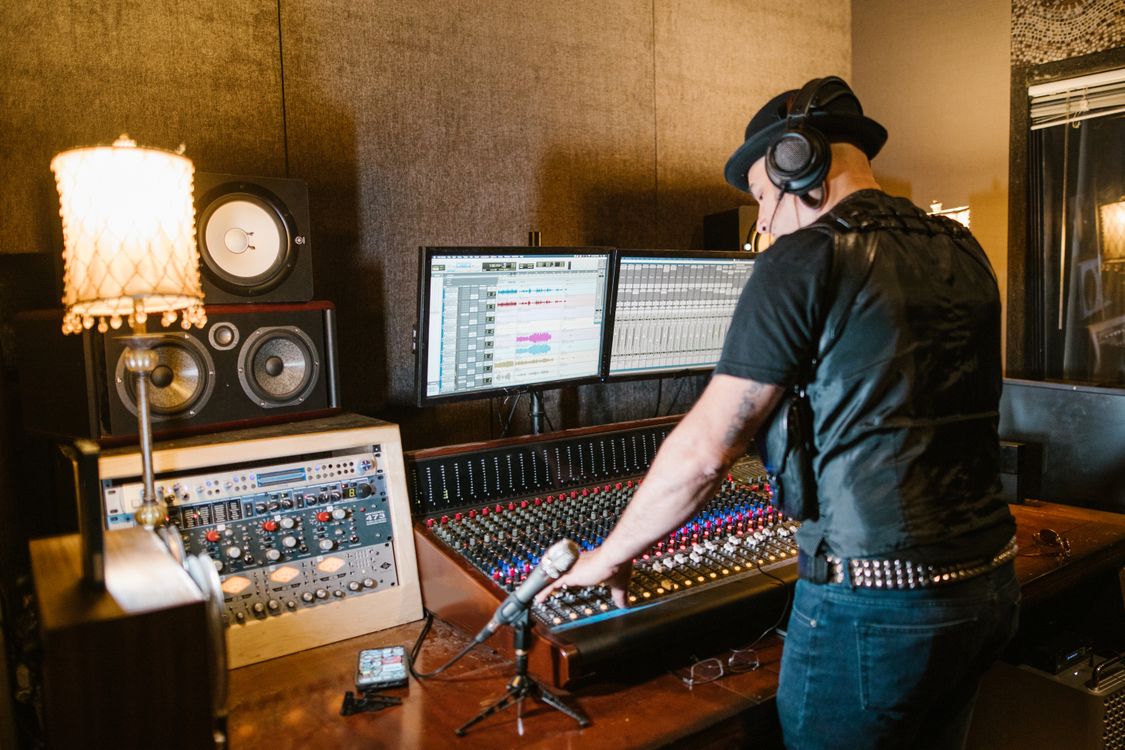
Cover photo: RDNE Stock project via Pexels.
Sync licensing in India for an existing recording normally requires two permissions: clearance for the underlying song and a master-use licence for the recording. That makes the process less like uploading a song and more like preparing a rights-cleared creative product.
For independent artists in India, the opportunity starts before the pitch. You need documented ownership, complete metadata, usable audio files and a clear person who can approve each right. This guide explains that process without invented rate cards or promises of automatic placements.
If you are still organising the broader release workflow, start with Kredl Journal's guide to releasing a song in India.
Key takeaways
WIPO's Rights Clearance Guide explains that authorization from one coauthor does not clear the other writers, the composition or the recording. Becoming sync-ready therefore means preparing ownership records, audio deliverables, metadata and licensing authority before pitching.
- Existing recordings usually need both composition and master clearance.
- Every necessary co-owner and assignee must be identified.
- Price depends on the use, media, territory, term and exclusivity.
- Cue sheets support later identification, credit and royalty administration.
Important: This article provides general educational information, not legal advice. Rights ownership and contracts vary, so consult a qualified Indian copyright lawyer for a specific deal.
Editorial note: Kredl checked the statutory claims in this guide against the Copyright Office, WIPO and IPRS sources listed below. This source review is not a substitute for advice on a specific agreement.
What is sync licensing in India?
The World Intellectual Property Organization defines synchronization as using music with moving images in films, series and video games. In practice, sync licensing is the written permission that lets a producer, agency, platform or game studio combine protected music with visual content.
The Indian Copyright Act does not use every piece of everyday music-business language. Terms such as “sync licence,” “publishing side” and “master-use licence” help contracts translate statutory rights into a practical clearance process.
For a released song, the industry usually separates two sides:
| Rights side | What it covers | Typical controller |
|---|---|---|
| Publishing side | The musical composition and associated lyrics | Composers, lyricists, publishers or valid assignees |
| Master side | The specific recorded performance and production | Artist, label, producer or another master owner |
Lyrics are protected as a literary work, while the composition is a musical work. “Publishing side” is convenient shorthand for these underlying works. It should not obscure who owns each share.
In plain language, the underlying work means the melody and lyrics rather than a particular recording. An assignee is a person or company that received specified rights through a written assignment. Communication to the public broadly concerns making a work available to an audience. A one-stop track has one authorized contact who can clear both the underlying work and the master.
If a production commissions original music, the composer and recording agreements may cover ownership, performance, delivery and future use differently. A new recording of an existing composition can remove the need to license the old master. It does not remove the need to clear the composition and lyrics.
A sync-ready song is not simply a good song with clean production. It is a song whose creative value can survive a rights audit, a deadline and a distribution plan without unanswered ownership questions.
Understand how music royalties work in India
Which music rights and owners must you clear?
Sections 13 and 14 of India's Copyright Act recognize separate protection for literary and musical works, cinematograph films and sound recordings. The Act also states that copyright in a film or recording does not erase the separate copyright in the underlying work. Copyright Office India
Section 14 gives the owner of a musical work exclusive rights that include making a cinematograph film or sound recording in respect of that work. A production should therefore identify who can authorize every necessary share instead of treating a finished track as one indivisible asset.
The practical rights map
| Element being used | Permission normally investigated | Who may grant it |
|---|---|---|
| Existing composition and lyrics | Synchronization or equivalent reproduction permission | Writers, publishers or valid assignees controlling every share |
| Existing sound recording | Master-use permission | Label, artist, producer or current master owner |
| Newly recorded cover | Composition and lyric clearance | Publishing-side owners |
| Commissioned score | Rights defined by composer and recording agreements | Parties identified in those agreements |
| Adapted lyrics or translation | Composition, lyrics and adaptation permissions | Relevant owners or authorized representatives |
WIPO's rights-clearance guide for filmmakers says authorization from one coauthor does not authorize the complete lyric, music or recording. All necessary coauthors and rightsholders must be covered before use.
The two-layer map is only the starting point. Performers can hold separate statutory rights, while samples, interpolations, translations and adapted lyrics may add more permissions. Indian law also preserves certain author and performer protections even after some rights have been assigned. Do not assume that clearing the master and publishing sides automatically resolves every contribution. Copyright Office India
That makes split documentation essential. If four contributors wrote a song, the production needs a reliable path through the ownership chain, not four conflicting memories of the session. Resolve splits early and keep signed records. Kredl's guide to collaborating with musicians explains how to reduce those disputes.
Where does IPRS fit?
IPRS administers musical compositions and associated lyrics for its members and represented repertoire. Its registration as a copyright society was renewed on January 21, 2025, retrospectively effective from November 28, 2022, for five years. IPRS
IPRS membership or work registration does not automatically grant every producer every sync or master permission. A society may help identify owners, administer rights within its mandate and collect certain royalties. Authority for a proposed use still depends on the repertoire, ownership chain, mandate and contract.
How do films, advertisements, OTT shows and games differ?
An existing recording generally needs publishing-side and master clearance, but the requested scope changes across advertisements, films, OTT programmes and games. The safest approach is to describe every intended use before pricing because a licence written for one medium may not cover another.
| Medium | Questions the licence should answer | Common scope pressure points |
|---|---|---|
| Advertising | Which campaign, products, platforms and edits use the song? | Category exclusivity, cutdowns, paid media, social edits and extensions |
| Film | Where does the cue appear, and will it enter promotional materials? | Theatrical, trailers, festivals, home entertainment, airlines and dubbed versions |
| OTT series | Which episodes, platforms, territories and language versions are covered? | Global availability, recaps, trailers, dubbing and platform promotion |
| Games | Where can the track appear inside and outside the game? | Gameplay, menus, cinematics, trailers, livestreams, updates and downloadable content |
Advertising deals deserve special attention to exclusivity. A brand may want to prevent the song from appearing in a competitor's campaign. The agreement should identify the product category, territory and restricted period instead of relying on the undefined word “exclusive.”
Film and OTT licences should address trailers, teasers, festival screenings, dubbed versions and platform distribution. These uses may sit outside the original scene unless the agreement includes them. If a series later moves to another platform or territory, the licence should say whether that move is covered.
Games create a different usage pattern. Music may loop during gameplay, sit in a menu, accompany a cinematic or appear in a launch trailer. Livestreaming, updates and downloadable content can create additional uses. The licence should name those uses instead of assuming “game” covers every future exploitation.
Photo: Los Muertos Crew via Pexels.
An eight-step process for making music sync-ready
Section 19 of the Copyright Act requires an assignment to identify the work, rights, duration, territory and royalty or other consideration. A sync arrangement is often a licence rather than an assignment, but the same categories are an excellent checklist for preparation and negotiation. Copyright Office India
1. Audit who owns each right
Identify every composer, lyricist, producer, performer, publisher, label and assignee connected to the track. Separate the publishing side from the master side. Review earlier agreements because control may have moved after the recording or release.
Create a simple ownership sheet containing names, roles, shares, contact details and supporting documents. If any necessary share is disputed, keep that track out of the pitch until the conflict is resolved.
2. Confirm splits and signing authority
Ask contributors to confirm their agreed shares and who can approve a licence. A collaborator may own a share but have assigned its administration to a publisher. An artist may have transferred the master under a label agreement.
Split sheets help, but they do not replace a review of existing assignments. For the broader protection workflow, see how to register copyright for a song in India.
3. Decide whether the track is one-stop
A one-stop track lets a requester clear both the underlying song and the master through one authorized contact. Indian publisher and sync company Outwrite describes this model as one negotiation and one paper trail for both rights layers.
Do not call a track one-stop unless the appointed contact can approve every necessary share. If separate approvals remain necessary, state that and provide the right contacts. Accurate complexity is better than a fast claim that collapses during contracting.
4. Prepare usable audio deliverables
Keep a high-quality master ready, plus an instrumental version where available. A supervisor may also request a clean version, stems, a television mix, shorter edits or an alternate ending. Label every file consistently and avoid confusing duplicates.
Listen to each export before delivery. Check that versions begin and end correctly, contain no accidental tags and match the metadata sheet. A strong recording still creates friction when nobody can identify the approved file.
5. Build a searchable metadata sheet
Include the song title, writers, ownership shares, publishers, master owner, performer credits, language and clearance contact. Add ISRC, ISWC and IPI identifiers where they exist, without inventing missing codes.
Creative search fields matter too. Include mood, genre, tempo, lyrical themes, explicit-language status and a short description of suitable scenes. Ownership metadata helps clearance; creative metadata helps the song get found.
How should you pitch and close a sync opportunity?
6. Match the brief before pitching
A useful brief identifies the scene or cut, mood, territory, media and budget band. Read those details before selecting music. Do not send an entire catalogue when the requester needs one focused answer.
Ask whether the use includes trailers, social promotion, soundtrack release, dubbing or exclusivity. A reference track can reveal pace and emotional direction, but your submission should explain why your track fits the actual scene.
7. Pitch the right decision-maker clearly
Music supervisors, production houses, advertising agencies, directors, editors, publishers and sync representatives may influence selection. Pitch only where your music suits the recipient's work, and make the listening link immediately accessible.
Use a short subject line, describe the track's mood and confirm its clearance position. Avoid oversized attachments. The practical outreach principles in Kredl's cold-DM guide for music producers and directors also apply to sync introductions.
8. Negotiate, sign and deliver
Confirm the exact track, scene, duration, media, territory, term, languages, promotion, exclusivity, fees, credits and approvals. WIPO recommends signed written licences and retained clearance documentation.
After signature, deliver only approved files and preserve the final agreement. Record renewal dates, restrictions and payment milestones. A friendly email thread can clarify intent, but it should not replace complete written permission.
A worked example: an indie song in an OTT episode
Imagine that an OTT production wants 20 seconds of an independently released Hindi song in one episode and its trailer, available worldwide for five years. The artist owns the master, but two writers share the composition and one publisher administers a writer's share.
The production must identify the people authorized to clear both rights layers. The episode and trailer should be stated expressly because promotional use should not be assumed from permission for the scene. The agreement should also define the term, territory, languages, edits, fee allocation, credit and cue-sheet responsibility. After signature, the artist delivers the approved version, invoices according to the milestones and keeps the final cue information with the agreement.
This example is deliberately simple. A sample, adapted lyric, commissioned re-recording, brand conflict or additional performer agreement would add another question before clearance.
The strongest pitch asset is often not another polished playlist. It is a compact clearance packet that lets a buyer understand the song, verify authority and request terms without restarting the conversation across several inboxes.
Make your work easier to evaluate. Present your music, credits, collaborators and clearance contact together on kredl →
What should a sync deliverables and metadata pack contain?
IPRS reported in its Annual Report 2024-25 that more than 90% of DSP usage was consistently matched and its CISAC-certified data-accuracy score had surpassed 96%. Those figures concern IPRS systems, but the lesson travels: accurate creator metadata matters after a placement. IPRS
Audio deliverables
- Approved full-quality WAV master
- Instrumental version, where available
- Clean version for broadcast-sensitive uses
- Stems or alternate mixes when requested
- Clearly named preview and download files
- Lyrics and translations relevant to the proposed use
Rights and metadata
- Song title and exact version title
- Composer and lyricist names
- Ownership shares and publisher details
- Master owner and authorized clearance contact
- Featured and supporting performer credits
- ISRC, ISWC and IPI identifiers, where assigned
- Language, mood, genre, tempo and lyrical themes
- Existing restrictions, samples and prior exclusivity
- One-stop status, stated accurately
- Links to split sheets, assignments and approvals
Missing metadata can delay matching, credit and payment. IPRS urges members to register works, check repertoire data and submit cue sheets for film and audiovisual uses.

Photo: Anna Pou via Pexels.
Sync deal terms and pricing factors that matter
If an assignment omits duration, Section 19 presumes five years. If it omits territory, the presumed territory is India. These statutory defaults apply to assignments and illustrate why a licence or assignment should state its own scope precisely instead of relying on assumptions.
| Term | What to define |
|---|---|
| Licensed work | Exact composition, lyrics and recording version |
| Usage | Scene, duration, prominence and permitted edits |
| Media | Theatrical, television, OTT, digital, social, games or other named media |
| Territory | India, selected countries or worldwide |
| Term | Start date, end date, renewal options or perpetuity |
| Languages | Original, dubbed, subtitled or translated versions |
| Promotion | Trailers, teasers, cutdowns, social clips and behind-the-scenes material |
| Exclusivity | Product category, competitors, territory and restricted period |
| Credits | Exact wording, placement and cue-sheet obligations |
| Approvals | Scene, edit, context or adaptation approval requirements |
| Payment | Upfront fee, schedule, taxes, invoicing and other consideration |
India has no universal sync rate card. Treat pricing as a negotiation shaped by the requested use and by who controls each right. WIPO identifies duration, prominence, distribution windows, territories and promotional use as relevant variables; Outwrite also highlights media, territory, term and exclusivity.
A brief background cue is not the same request as a title theme used in worldwide trailers. There is no honest single-price answer until the brief defines those differences.
Production costs can help establish a personal floor, especially for commissioned work. Use Kredl's India music-producer pricing guide to understand costs without treating production fees as sync rates.
Payment and invoicing checklist
- State whether the quoted amount covers the master, publishing side or both.
- Define signing, delivery, usage and renewal payment milestones.
- Say whether the quote includes or excludes applicable taxes.
- Put the correct legal names, addresses and tax details on the invoice where applicable.
- Record any withholding and request the corresponding TDS certificate or documentation.
- Set invoice dates, payment deadlines and the treatment of late or renewal payments.
This is an operational checklist, not tax advice. Ask a qualified accountant how GST, withholding and invoicing rules apply to your entity and transaction.
Which sync licensing red flags should stop you?
There is no automatic duration below which commercial music use becomes permitted. Section 52 exceptions turn on purpose and facts, not a universal number of seconds. A supposed “five-second” or “ten-second” rule should therefore trigger scrutiny. Copyright Office India
Watch for these warning signs:
- Someone offers verbal approval but refuses written permission.
- Only the master owner signs while composition rights remain unclear.
- One writer approves a jointly owned song without authority from the others.
- A requester assumes IPRS registration replaces every direct clearance.
- “All media” appears without explaining platforms, promotion or games.
- Worldwide exclusivity is requested without a defined category or duration.
- Trailers, cutdowns, dubbed versions or downloadable content remain unaddressed.
- A sample or interpolation appears without documented clearance.
- The contract calls a limited deal an assignment or transfers more rights than discussed.
- Nobody accepts responsibility for credits and cue-sheet information.
The most dangerous deal is not always the lowest offer. It is the agreement whose scope expands faster than its definitions, especially when “digital,” “promotional” or “all versions” quietly absorbs future uses.
Assess each licence against your wider independent music career plan, not only the immediate fee.
What should happen after your music gets placed?
A WIPO cue sheet contains at least six information groups: the production, music title, cue duration, use type, entitled parties with shares and production-company details. Placement is therefore the start of an administration process, not the end.
First, store the signed sync and master agreements with the approved audio. Confirm the actual scene, episode, campaign or game usage. If the delivered use differs from the licence, address that difference before treating the placement as complete.
Next, verify the contractual credit and cue-sheet details. The cue sheet should identify the production, track, duration, usage type, writers, publishers, ownership shares and production contact. IPRS says cue sheets for television and film can be submitted through its documentation process.
Register or update the work with the appropriate rights administrator where relevant. Confirm that contributor names and shares match the signed records. Registration can support later administration, but it does not guarantee that every use will be detected or paid.
Finally, invoice the upfront fee according to the agreement. Track downstream public-performance royalties separately. Those royalties depend on actual exploitation, reporting, applicable rights and collection arrangements. They should not be confused with the negotiated fee for the original placement.
Turn a credible placement into a focused music PR story
Frequently Asked Questions
Do I need IPRS registration before pitching music for sync?
No. Copyright ownership does not begin only after IPRS registration. However, IPRS membership, work registration and accurate repertoire data can support identification, matching and royalty distribution. Its copyright-society registration currently runs for five years from November 28, 2022. IPRS
Can a film or advertisement use a few seconds without permission?
There is no automatic seconds rule for commercial use. Exceptions under Indian copyright law depend on purpose and the specific facts, not clip length. Treat even a short proposed use as a clearance question and obtain legal advice where necessary.
Does re-recording a song avoid every licence?
No. Re-recording can remove the need for permission to use the existing master. It does not remove the need to clear the underlying composition and lyrics. A translation, lyrical rewrite or other adaptation may require additional authorization.
How much should an artist charge for sync licensing in India?
There is no reliable standard rate. Media, territory, term and exclusivity are central variables. Duration, prominence, promotional use, artist profile and distribution scope can also affect negotiations. Request the full brief before naming a fee, and separate the master and publishing interests when different parties control them.
Are upfront sync fees the same as performance royalties?
No. The upfront fee compensates rightsholders for the agreed licence. Later public-performance royalties may arise when the production is communicated publicly and properly reported. WIPO identifies cue sheets as a key link between audiovisual usage and royalty administration.
If you are comparing sync with traditional label pathways, read how record deals work in India.
The practical bottom line
Most placements involving an existing recording begin with two clearance tracks: the underlying song and the master. Your best preparation is operational. Resolve ownership, document authority, organize files, describe the proposed use clearly and insist on written terms.
Great music earns attention. Clear rights help that attention become a signed placement. Prepare both before approaching supervisors, agencies, production houses or game studios. Then protect the licence fee, credits, cue sheet and downstream royalty administration as separate parts of the same working relationship.
References (9)
- Copyright Office India — Copyright Act, Chapter III, retrieved 2026-10-07.
- Copyright Office India — Copyright Act, Chapter IV, retrieved 2026-10-07.
- Copyright Office India — Copyright Act, Chapter VIII, retrieved 2026-10-07.
- Copyright Office India — Copyright Act, Chapter XI, retrieved 2026-10-07.
- WIPO — Intellectual Property and Music, retrieved 2026-10-07.
- WIPO — Rights Clearance: A Guide for Independent Filmmakers, retrieved 2026-10-07.
- IPRS — Licensing FAQ and Copyright Society Registration, retrieved 2026-10-07.
- IPRS — Annual Report FY 2024-25, retrieved 2026-10-07.
- Outwrite — Sync Licensing, retrieved 2026-10-07.


